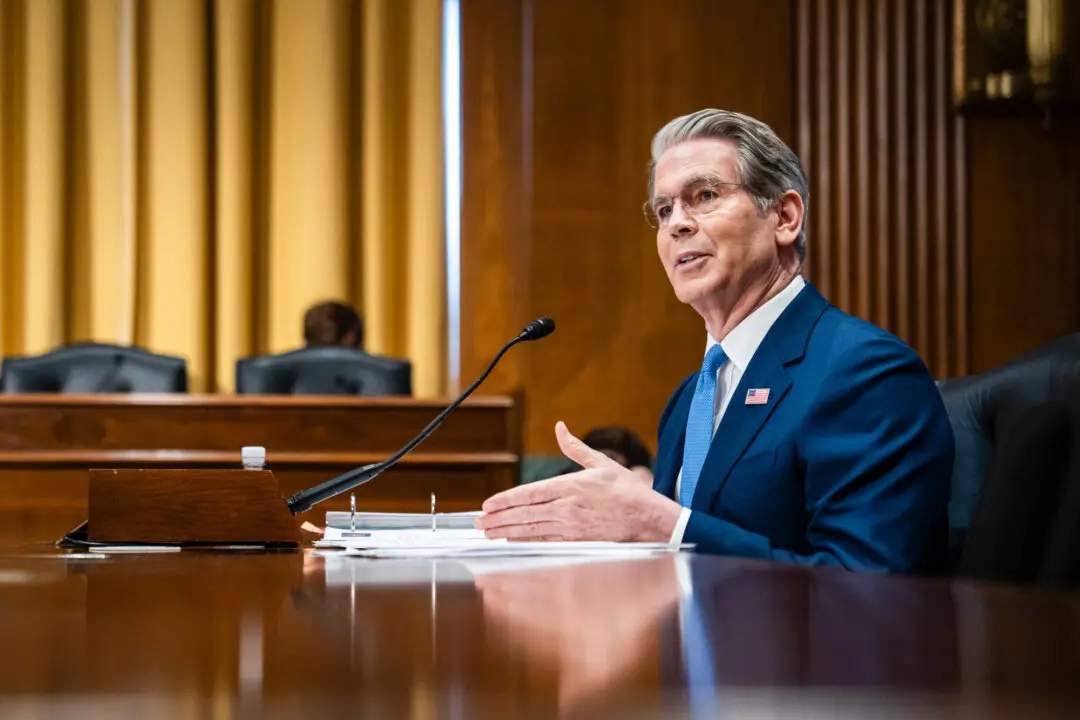
Acting Attorney General Todd Blanche told senators that the Department of Justice (DOJ) has terminated nearly 1,000 employees at the department since last March, according to a transcript of questions and answers relating to his nomination released by the judiciary panel on Monday.
“Approximately 935 individuals out of our nearly 107,000 employees have been terminated,” Blanche said in a response to questions posed by senators on the Senate Judiciary Committee, adding that the figure represents fewer than 1 percent of his department’s workforce.
He gave the response when asked about the number of career DOJ employees who have been terminated since March 5, 2025.
“The department maintains this information in its personnel records. Individualized or component-level disclosure tied to specific personnel actions implicates Privacy Act protections and the confidentiality of matters now in litigation,” the acting attorney general said.
Later in the questioning, which was held on July 17, the senators asked Blanche about how the DOJ determines which employees should be terminated after the Trump administration took over in January 2025.
“Decisions regarding the Department’s personnel are committed to the Attorney General and component leadership and are made in furtherance of the department’s mission, its priorities, and the president’s lawful direction,” he responded, while maintaining that he wouldn’t comment further, citing internal DOJ rules.


President Donald Trump nominated Blanche to serve as the attorney general on a permanent basis. He was named as acting attorney general after former Attorney General Pam Bondi left her position in April.
Blanche said that he cannot comment on specific matters related to the termination of U.S. attorneys because it involves ongoing litigation and pointed to DOJ court filings.
When pressed on the removal of immigration judges, Blanche told lawmakers that the DOJ is evaluating “all immigration judges on factors such as conduct, impartiality/bias, adherence to the law, productivity/performance, and professionalism.”
“The failure to meet such standards necessarily undermines the fair and orderly processing of immigration matters, and judges who fail to meet those standards, especially those who demonstrate partiality or bias, may face disciplinary action, including removal,” he said.
Throughout the nomination process, senators pressed Blanche on more contentious cases, including those related to an anti-weaponization of government fund. The $1.776 billion fund was established in a bid to resolve Trump’s lawsuit against the IRS over the leak of his tax returns.
The Justice Department had said it was an appropriate measure to correct what officials have insisted was the weaponization of federal law enforcement during the Biden administration.
Regarding the fund, which was announced in May, Blanche said in the July 17 interview that no funds were transferred, no commissioners were appointed, and no claims have been paid, while declaring it “dead.”
Blanche confirmed to lawmakers that he met with several of sex offender Jeffrey Epstein’s alleged victims on July 16 and that “everyone at the Department, including myself, remains committed to engaging with victims of Jeffrey Epstein through appropriate legal channels.”
The DOJ and Blanche received criticism from several lawmakers, who accused the department of slow-walking the release of Epstein files under the Epstein Files Transparency Act, which was passed by Congress and signed into law late last year. They also accused the DOJ of making improper redactions, although Blanche has previously defended the department’s work.