“This will enable DOE to return to its core mission of supporting projects most critical to America’s energy security while maintaining responsible stewardship of taxpayer dollars, something DOE failed to do in the previous administration,” he said.
The streamlining to which he was referring includes budget cuts across the department’s two dozen-plus program offices, 17 national labs, and 83 field installations, along with enacted or proposed trims in its 14,300-person workforce and 94,000 contractors.
Wright said that since he took office, DOE has “begun slashing more than 47 regulations as part of the largest deregulatory effort in history” that will save “the American people approximately $11 billion.”

That’s in addition to $3.7 billion in clawbacks of funding for 24 projects authorized under the IRA and IIJA that a newly created review team discontinued in May—the first round in examining the fiscal viability of 500 projects set to receive $300 billion through 2032.
Senate Energy and Natural Resources Committee Chair Sen. Mike Lee (R-Utah), during the June 18 hearing, commended Wright “for taking strong action to protect taxpayers’ dollars, including by canceling nearly $4 billion in funding for worthless IRA projects.”
Sen. John Barrasso (R-Wyo.) added: “Congress irresponsibly saddled you with a department with 71 new programs overseeing hundreds of billions of taxpayer dollars. I think that the situation is fraught with waste, fraud, and abuse, and it left the department, your department now, without a clear direction.”
But the odds appear to be slim that Wright’s spending request and Trump’s overall proposed FY26 budget survive intact.
While Democrats fiercely contested across-the-board “green energy” cuts, Republicans in the 53–47 GOP-led chamber also raised objections, citing concerns about national lab staffing and funding slashes and lobbying to restore or approve projects in their states.
The Senate is under pressure to kick the plan back to the House, where Republicans hold a slim 220–212 majority and Speaker Rep. Mike Johnson (R-La.) aims to get a bill onto the president’s desk by July 4.
Such a tight timeline in narrowly divided chambers won’t likely be achieved without concessions—especially in energy development and funding.
Intermittent Debate
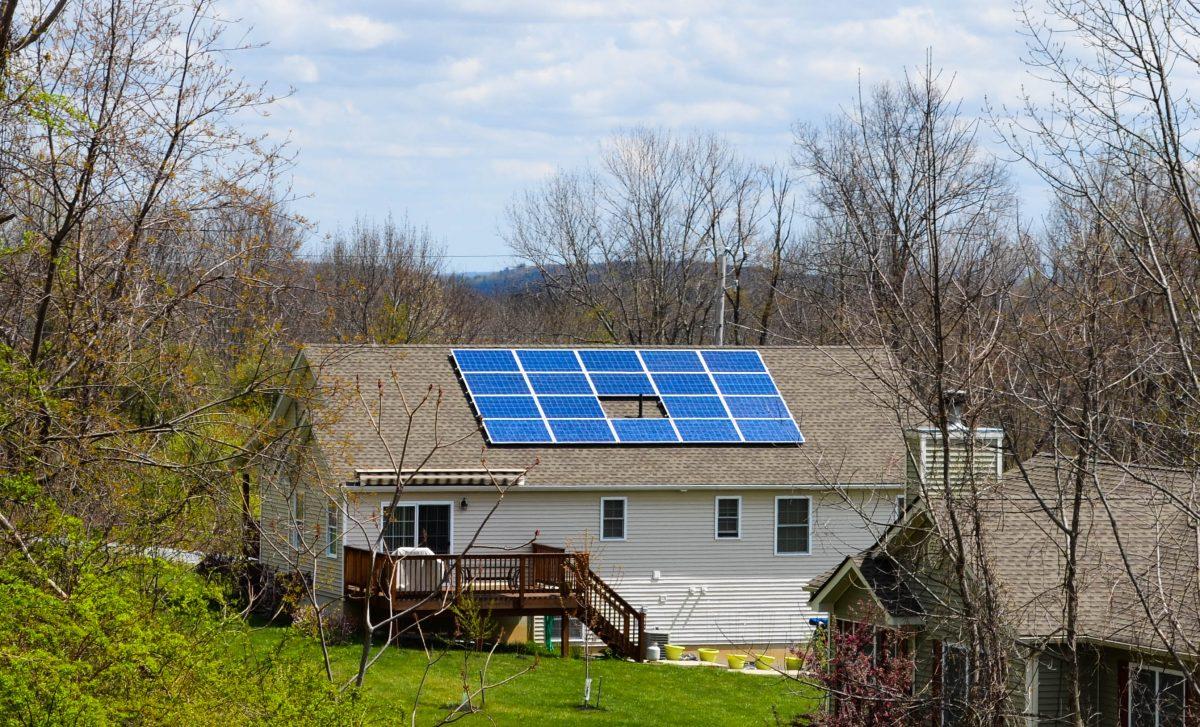
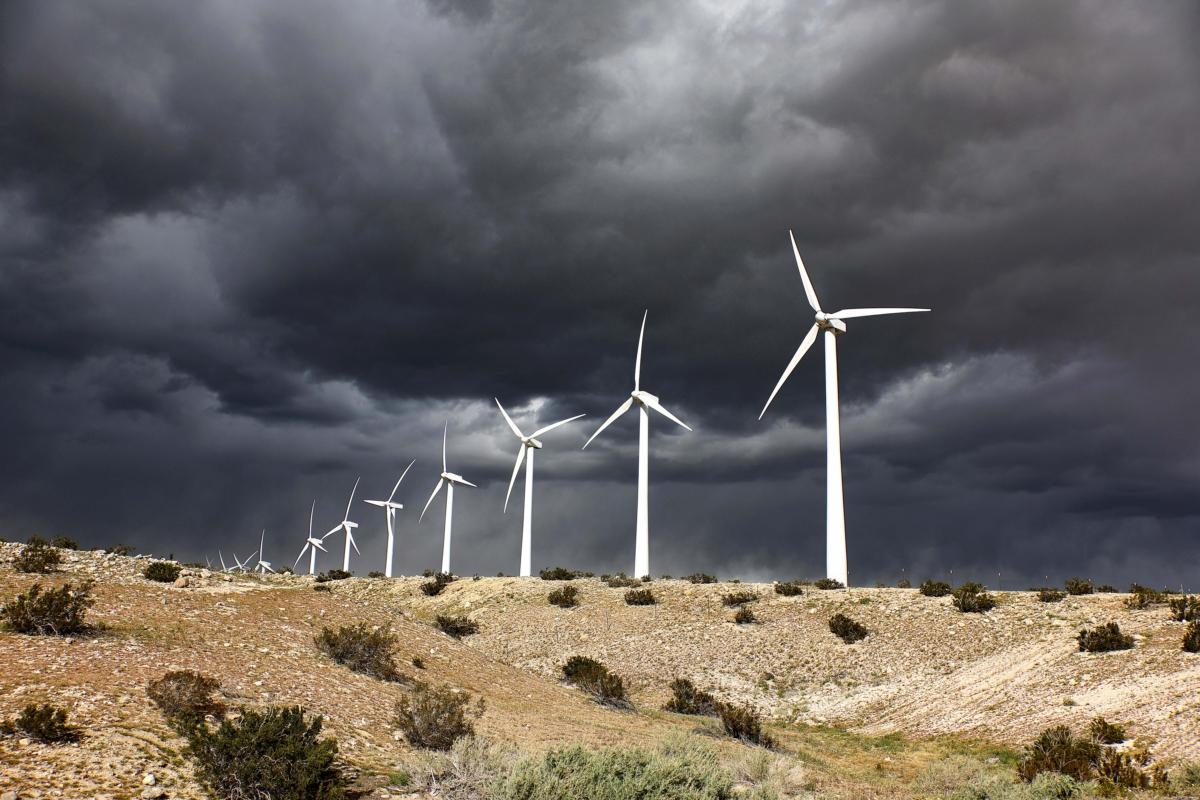
Lee said “wind and solar have been shown in many instances to have a negative effect” on energy costs “because generation like gas, nuclear, coal, among others, are forced to reduce output while still having fixed operational costs ... all to accommodate for electrons put onto the grid by other sources—intermittent renewable generation sources.”Sen. Martin Heinrich (D-N.M.) disagreed, saying that an electron in transmission is not intermittent and that when consumers unplug from the grid—even if only for a few hours—to generate their own power, it ultimately trims utility fuel costs and electric bills.
Americans pay on average 17 cents per kilowatt hour, he said, but consumers in his New Mexico utility area, which is powered by 35 percent solar, 23 percent natural gas, 15 percent wind, 15 percent battery storage, and 5 percent coal, pay 10.8 cents per kilowatt hour.
“Today, with a little bit of storage, [utilities] manage the grid with low cost and reliability with renewables,” he said.
Meanwhile, Heinrich accused the Trump administration of crippling the nation’s solar and wind industries, saying that it’s pushing coal as its preferred baseload energy.
Sen. John Hickenlooper (D-Colo.) asked Wright why DOE’s budget eliminates weatherization assistance programs that, he said, save households an average of $372 a year.
The “cheapest energy,” he said, is “energy we didn’t have to use.”
“You’re right, senator, energy efficiency is a huge opportunity, and of course, it’s pursued in different ways,” Wright said. “But I think the biggest drivers of efficiencies, like most things, has been market forces, right?”
“If we just keep regulating—you can only buy this super-efficient Cadillac. Well, other people can’t afford the Cadillac,” he said. “So different people evaluate trade-offs differently. So I’m always skeptical of fitting a one-size-fits-all answer onto our whole population.”
Lee said tax incentives for “intermittent sources” increase costs “of firm resources, thereby increasing costs for consumers at the end of the day,” noting he’s sponsoring a “bill that would repeal all the IRA subsidies for inferior generation, like wind and solar.”
But that bill, like the proposed wholesale slashes in “green energy” development in the president’s budget, faces bipartisan opposition—including among Lee’s Utah constituents.
GOP Green Support
According to Energy Innovation, more than $3 billion in clean energy development is underway in Utah, with $10 billion in planned projects potentially nixed if IRA allocations are rescinded.“Many American companies have made substantial investments in domestic energy production and infrastructure based on the current energy tax framework,” Curtis and Sens. Lisa Murkowski (R-Alaska), Thom Tillis (R-N.C.), and Jerry Moran (R-Kansas) wrote.
“Many credits were enacted over the course of a 10-year period, which allowed energy developers to plan with these tax incentives in mind,” they wrote.
“These timelines have been relied upon when it comes to capital allocation, planning, and project commitments, all of which would be jeopardized by premature credit phase-outs or additional restrictive mechanisms.”
“At a time when billions of dollars are being invested in states that overwhelmingly voted for President Trump, this proposed legislation will effectively dismantle the most successful industrial on-shoring effort in U.S. history,” the group said.
Meanwhile, many analyses warn that the proposed IRA cuts are penny-wise but pound-foolish, and if enacted as written, will cost jobs, derail momentum in reshoring manufacturing, and raise electricity costs for millions of Americans.
These spikes would “translate into a $75–$100 increase in national average annual electricity bills in 2030, with a peak increase of $100–$150 per year” with “the highest impact seen in the upper plains states,” as much as $300–$400 per year, it states.