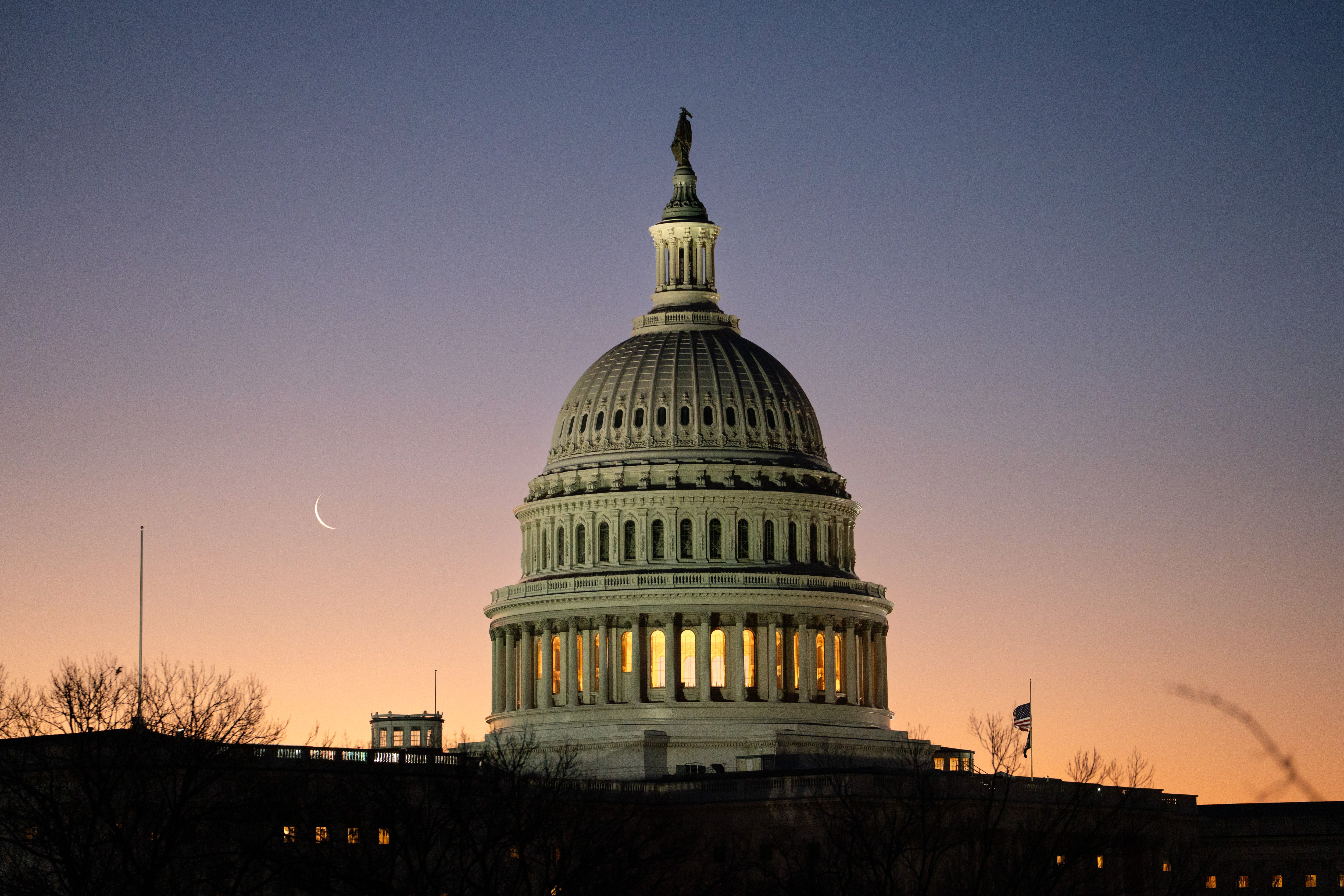


On Jan. 20, the House Appropriations Committee released a spending bill package funding the departments of Defense, Homeland Security, Labor, Health and Human Services, Education, Transportation, and Housing and Urban Development.
The package unveiled by the House on Jan. 20 includes some of the largest-ticket items still waiting to be considered.
Currently, the deadline for a government shutdown is Jan. 30, although both sides have indicated that they want to avoid a repeat of last year’s 43-day impasse.
House Appropriations Committee Chairman Tom Cole (R-Okla.) applauded the legislation.
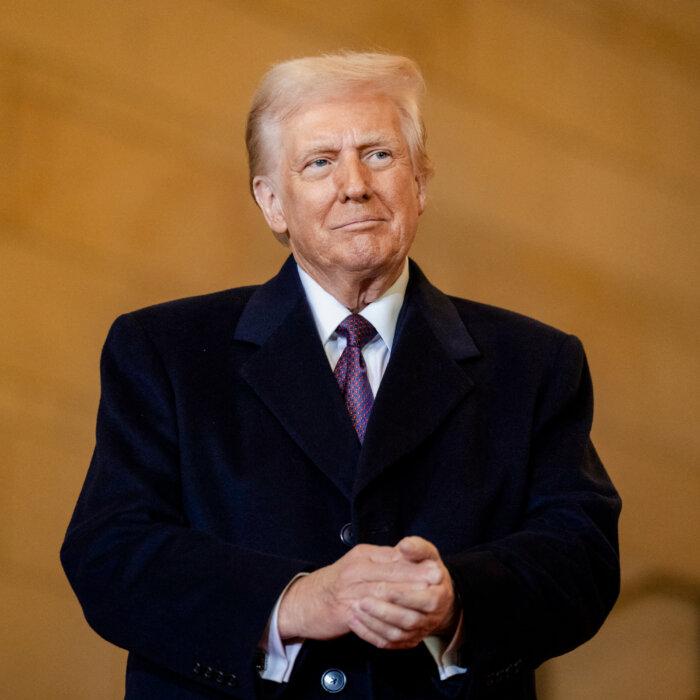
“It reflects the core tenets of American strength: combat-ready forces, secure communities, effective education and health systems, and modern transportation. At every level, it applies innovation and discipline to deliver results without waste.”
Defense
One appropriations bill provides $839.2 billion for the Department of War, keeping funding levels roughly commensurate with those included in fiscal year (FY) 2025 funding.Of that total, approximately $13.4 billion is designated for missile defense and space programs supporting the Golden Dome initiative, a proposed network of missile defense systems intended to protect the United States. An additional $4.5 billion is set aside for hypersonic weapons development, including test infrastructure and weapons testing.
The bill includes a 3.8 percent pay raise for all U.S. service members and allocates $193.3 billion for active-duty, reserve, and National Guard personnel—$10.8 billion more than FY 2025 levels.
Funding for operations and maintenance totals $294.4 billion, supporting military readiness, base operations, and department initiatives such as the Counter-ISIS Train and Equip Fund. The measure also provides $1.1 billion for counter-drug programs.
Procurement funding for military services and other department entities is $167.5 billion.
This includes $7.6 billion for 47 F-35 fighter jets, as well as $440 million for F-35 and F135 engine spare parts.
The bill also includes significant international security assistance.
It allocates $1 billion for the Taiwan Security Cooperation Initiative and $150 million to replace defense articles and reimburse defense services provided to Taiwan. Israel would receive $500 million for cooperative missile defense programs and $202.5 million for joint defense efforts.
Additionally, $40 million is designated for security assistance to the Philippines.
Homeland Security
One of the most debated appropriations measures this year, this bill provides $64.4 billion for the Department of Homeland Security, including $3 billion designated for defense-related activities.This similarly keeps funding near FY 2025 levels.
Most legislative efforts at increasing funding for ICE were handled under the One Big Beautiful Bill Act, which allocated funding to increase the number of ICE agents.
ICE funding includes $3.8 billion for custody operations supporting detention and deportation efforts, $743.9 million for the transportation and removal of individuals determined to no longer have legal authorization to remain in the United States, and $165 million for fugitive operations.
The bill also provides $18.3 billion for U.S. Customs and Border Protection. This includes border enforcement initiatives and staffing increases; $513 million is allocated to support a workforce of up to 22,000 Border Patrol agents. The measure eliminates funding for certain border management programs that critics say contributed to increased unauthorized crossings. The Trump administration has said border security has improved since the president took office in January 2025.
In addition, the legislation sets aside $25 million to support security operations related to the 2026 FIFA World Cup and official events marking the 250th anniversary of the founding of the United States.
To address strategic competition with China, the bill directs $116 million to expand the U.S. Coast Guard’s operational presence in the Indo-Pacific region.
Labor, Health and Human Services, Education, and Related Agencies
The third bill includes funding for the departments of Labor, Health and Human Services, and Education.The Labor Department gets $13.7 billion, including roughly $62 million in cuts to the federal bureaucracy. The funding is a substantial uptick from the FY 2025 level, which was roughly $10.7 billion.
That bill also includes about $13 million in cuts to federal labor law enforcement agencies, including the Occupational Safety and Health Administration.
It also includes $285 million to carry out the intention of Trump’s executive order 14278, which seeks to increase the number of apprenticeships in the United States.
The Department of Health and Human Services (HHS) gets a top-line total of $116.6 billion, including about $100 million in reductions of the federal bureaucracy. That’s a minor reduction over the approximately $123 billion allocated to HHS in FY 2025.
Most of that funding, $49 billion, is allocated to the National Institutes of Health, and $418 million is earmarked for rural health, with a focus on supporting rural hospitals “at risk of imminent closure.”
The bill also eliminates funding for the Centers for Disease Control and Prevention’s work regarding “social determinants of health,” which are non-medical factors such as lifestyle, income, and residence that broadly affect health.
A Republican summary of the bill says these criteria promote “social engineering while distracting grant recipients from combating infectious and chronic diseases.”
The bill also provides $79 billion to the Department of Education, with a $24 million cut to the federal bureaucracy. Although Trump requested a cut to the department’s funding, the Republican bill would broadly hold it at FY 2025 levels.
That includes $500 million in funding for charter schools.
Transportation, Housing and Urban Development, and Related Agencies
The fourth bill provides about $25 billion for the Department of Transportation, a slight reduction from the previous year. In conjunction with $83 billion in obligation limitation for highway and airport programs, the bill allocates about $108.3 billion to transportation.Of that, $22 billion is allocated to the Federal Aviation Administration, including $10 billion to fully fund air traffic control operations and replace retiring members of the workforce.
About $64 billion is allocated to the Federal Highway Administration, a $1.9 billion increase from 2025 levels.
The bill also allocates more than $4 billion to railroad safety and operations in the United States, including $2.4 billion for Amtrak. It includes $950 million in spending recissions, most of which come from $928 million in grants for high-speed rail projects.
The bill also provides $77.3 billion for the Department of Housing and Urban Development, most of which is dedicated to funding federal housing and rental assistance programs.