
WASHINGTON—As a Jan. 30 deadline to fund the federal government draws closer, Senate Republicans are asking Democrats to clarify their expectations around funding for the Department of Homeland Security (DHS) to find a compromise.
The atmosphere on Capitol Hill on Jan. 27 was one of uncertainty as Democrats unite against funding DHS unless there are substantial reforms—although Democrats have not put forward a unified proposal on what these would look like.
Until a few days ago, this so-called “minibus” spending package seemed on track to pass the Senate, as leaders in both parties expressed their hopes to avoid a repetition of the 43-day government shutdown in 2025.
That changed in the wake of the shooting of Alex Pretti, a U.S. citizen, in Minneapolis by Customs and Border Protection agents.
President Donald Trump on Jan. 27 called for a “very honorable and honest investigation” into the incident, and has expressed a desire to reduce tensions in Minnesota. The administration has withdrawn Greg Bovino, commander at large of the U.S. Border Patrol overseeing operations in Minnesota’s Twin Cities, in favor of border czar Tom Homan.
However, Democrats have said they are unswayed by promises offered by the administration and are demanding legislative changes before they will back any bill containing DHS funding.
For now, Senate Majority Leader John Thune (R-S.D.) has indicated that Republicans plan to move forward on their original plan to advance the spending bill as a single package.
“What happens ... if the bill fails?” a reporter asked Thune outside the Senate chamber.
Thune said, “Well, we will obviously go to Plan B,” although he did not elaborate.
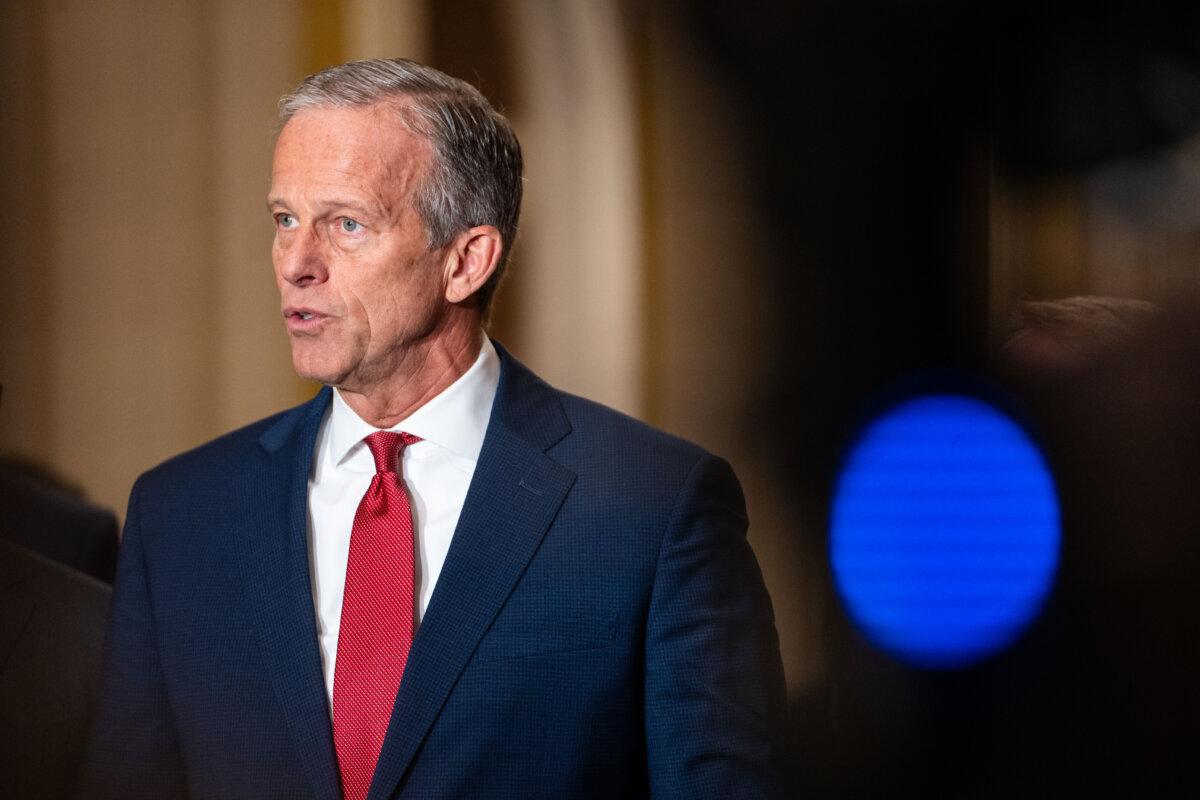
On Jan. 27, it was obvious on Capitol Hill that such a Plan B may become necessary to avoid a government shutdown—but the shape and contents of that alternative remain unclear.
In the interim, Thune and other Republicans have said they need clarity on what Democrats expect.
Schumer Calls for Stand-Alone Votes
Schumer has indicated that his preference is that the DHS funding bill be separated from the broader package, allowing stand-alone votes on funding for each sector rather than wrapping the legislation into a single package.When he first announced his opposition to the measure, Schumer wrote that Senate Democrats “will not provide the votes to proceed to the appropriations bill if the DHS funding bill is included.”
In a Jan. 27 speech on the Senate floor, Schumer expanded on his position.
“In the wake of [Immigration and Customs Enforcement’s] abuses and the administration’s recklessness, the Senate must not pass the DHS budget as currently written,” he said. “It must be reworked to rein in and overhaul [Immigration and Customs Enforcement] to ensure the public’s safety.”
“In the meantime, I will vote no on any legislation that funds [Immigration and Customs Enforcement],” Schumer said. He said Senate Democrats are “overwhelmingly united” on this issue.
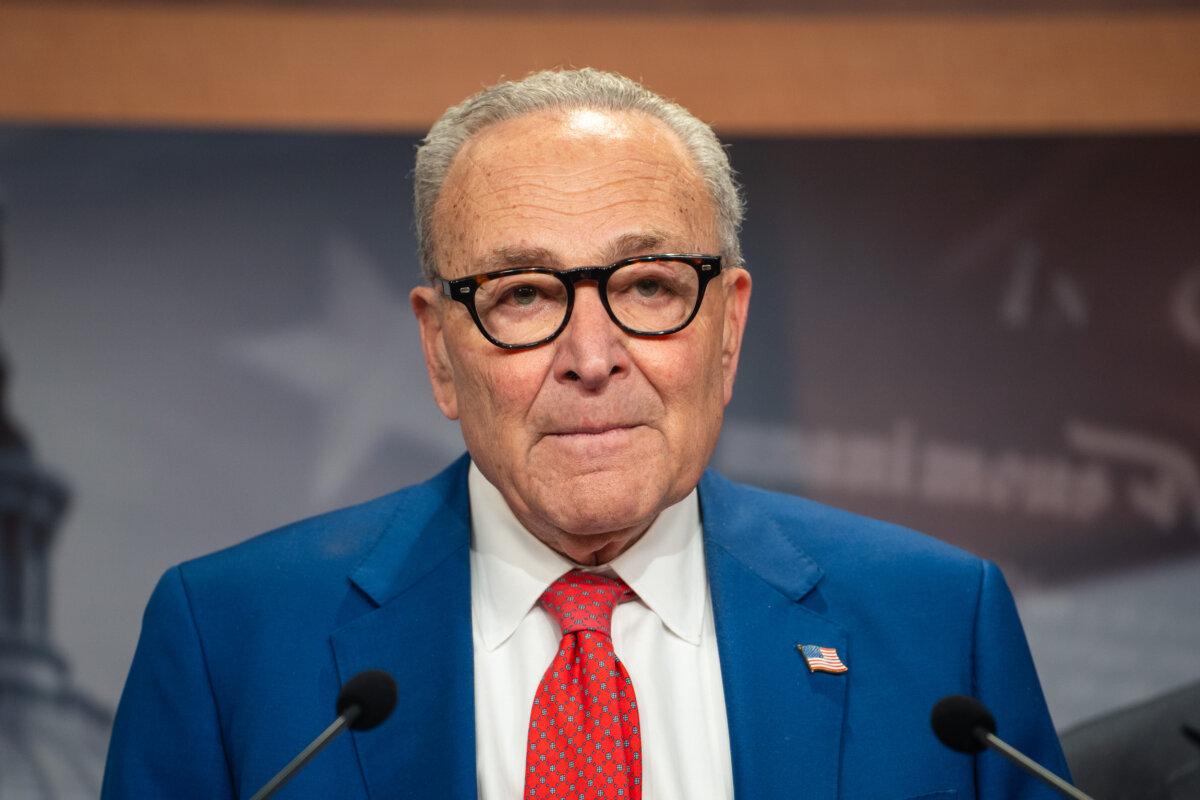
He called on Thune to allow stand-alone votes on the five noncontroversial spending items, noting that passing these would leave “96 percent of the federal government ... funded.”
“If Leader Thune agrees to split the bills just as [House Speaker Mike Johnson (R-La.)] split them in the House and puts the five on the floor, I’m confident they will sail, sail through the chamber,” Schumer said.
Sen. Tim Kaine (D-Va.) echoed Schumer’s demands in comments to reporters.
He called for Republicans to separate the DHS funding bill, in which case he said “Dems will provide the votes to get the five bills passed.”
Splitting Bills ‘Risky’: Thune
Thune, meanwhile, characterized Schumer’s proposal as “risky.”“I would prefer that there be a way that we keep the package together,” he said, likely referencing the risk that the bill could fail to pass muster in the House if brought back for another vote. “I think it becomes really complicated and frankly, risky for that matter.”
That comment comes as some of the moderate House Democrats who helped pass the bill initially, including Rep. Tom Suozzi (D-N.Y.) and Rep. Vicente Gonzalez (D-Texas), have distanced themselves from that initial vote.
Amid the outrage over Pretti’s shooting, the same bill could struggle to garner Democratic votes if an amended version were returned to the House.
Thune said that “the ideal thing” would be for Democrats to offer proposals to see if “it can be accomplished via some mechanism whereby you don’t have to either change the bill or split it out and have to send something back to the House.”
Reform Proposals Taking Shape
Although no unified message has emerged, several Democratic senators have suggested potential reforms, including some members who say they are working on drafting legislative language for these proposals.Sen. Chris Murphy (D-Conn.) provided several potential reforms, giving his appraisal of where Senate Democrats’ thinking on the issue is.
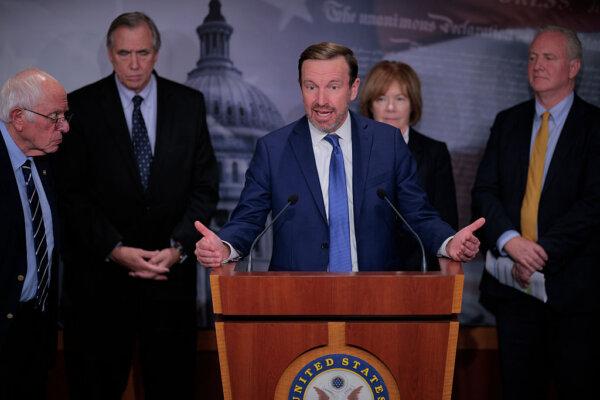
“The things that we care most about are getting an independent investigation [into Pretti’s shooting] and ending the roving patrols that are terrorizing Minneapolis ... getting some education, body cams,” he said. “So I think those are the things that matter most to folks.”
Sen. Richard Blumenthal (D-Conn.) said he has been “drafting language” for potential reforms, “particularly on the warrants.”
Asked about reforms to DHS, Kaine listed several potential options that Democrats could pursue as a condition to pass the funding: He said federal law enforcement should not “be doing enforcement actions in the cities and states without the permission of and coordination with state local law enforcement,” and cited his legislation to prohibit immigration officials from wearing masks or entering homes without a warrant.
Republicans Open to Reforms
Several Republicans indicated openness to reforms.Sen. Josh Hawley (R-Mo.) seconded Trump’s calls for “thorough investigation” into Pretti’s shooting.
Hawley said his primary concern was preventing a shutdown, which he said would be “terrible for everybody, for [Missouri], for working people.” To that end, he said, he planned to vote for the DHS funding bill.
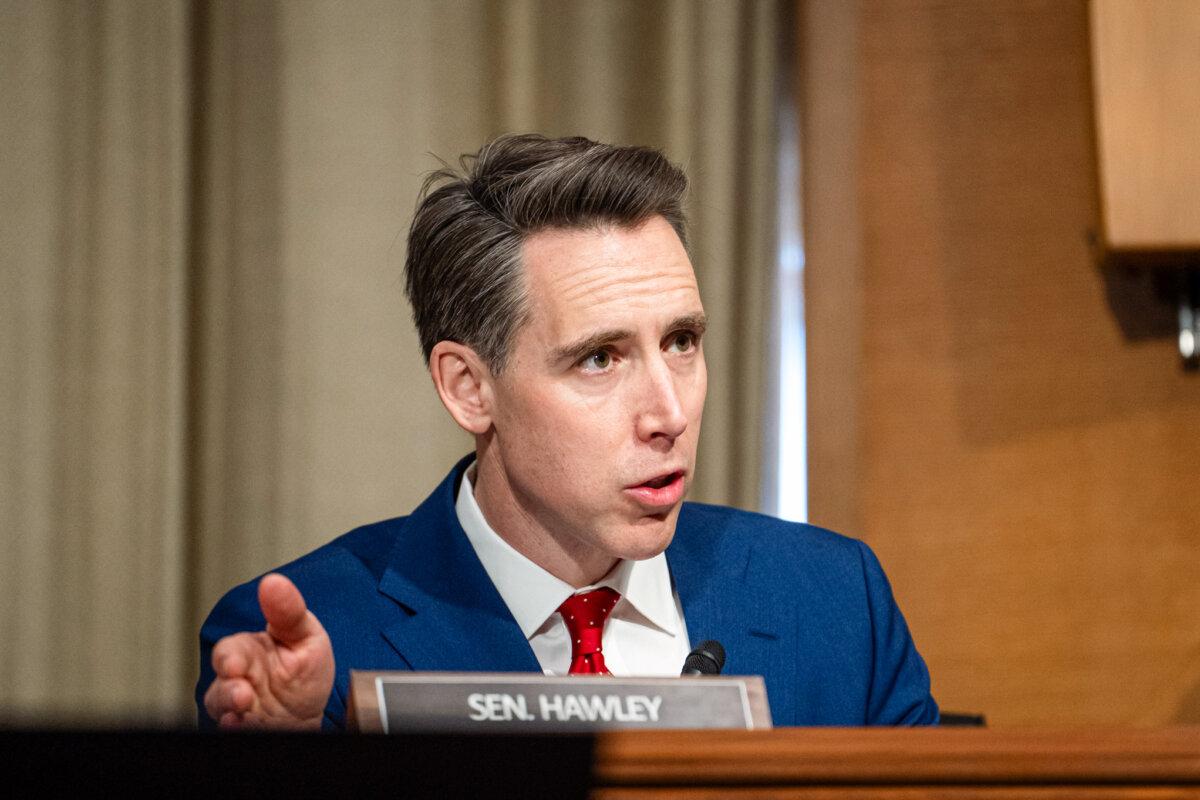
However, Hawley said, “if [Democrats] are going to block that,” Republicans should attempt to find a compromise to avoid a shutdown.
Sen. Thom Tillis (R-N.C.) suggested that DHS Secretary Kristi Noem was “way out of her depth.”
In response to a question about whether the administration should consider changing its tactics, Tillis said: “Yeah, I think so. I think Noem has proven to be way out of her depth. They need to get people there that actually ... have more training in law enforcement, deescalate.”
Tillis expressed support for “going after that criminal element” of the illegal immigrant population, but suggested that DHS’s current approach may be taking attention off of deporting criminals.
Sen. Susan Collins (R-Maine), meanwhile, said she had spoken to Noem and “urged her to have a pause, in Minnesota and Maine, on this surge of enforcement.”