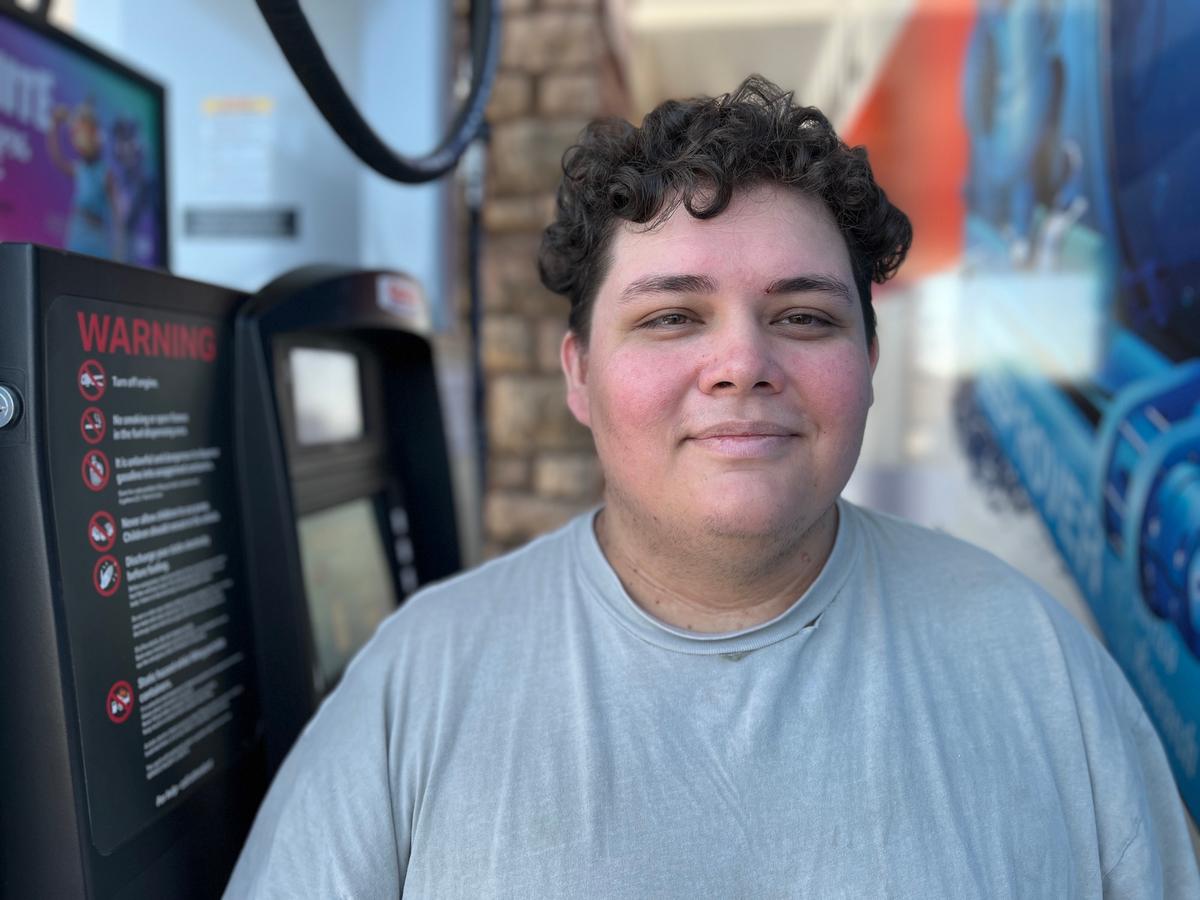
PHOENIX—Kane Dougherty doesn’t own a car—and with gas prices climbing, he figures that’s probably for the best.
The 26-year-old Arizona resident was topping off a U-Haul truck at a Costco gas station before heading to Tennessee, where he plans to live with family while attending school to become an electrician.
As fuel costs rise and fears grow that the U.S.–Iran war could disrupt global oil supplies, Dougherty sees vehicle ownership as more burden than benefit.
“It’s hard, you know,” Dougherty told The Epoch Times. “It’s a necessity. You gotta get gas if you’re gonna drive.”
Dougherty said he typically votes Democrat and feels rising gas prices and concerns about the Strait of Hormuz could become a political liability for Republicans heading into the midterm elections.
“I feel like a lot of it has to do with, it’s not really supposed to be our fight,” he said, referring to U.S. involvement in overseas conflicts. “It wasn’t supposed to be to begin with.”
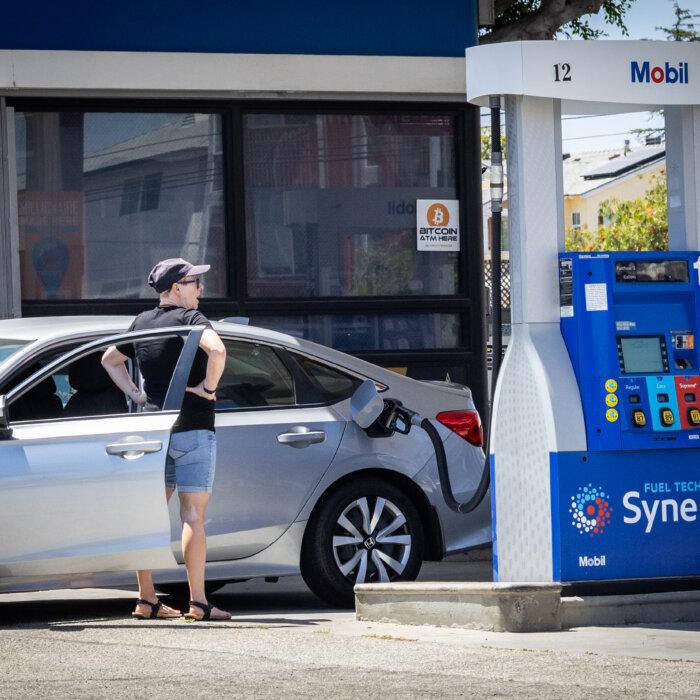
Looking ahead to his move, he’s hoping fuel costs will be easier on the wallet.
“It'll probably be a little cheaper out in Tennessee, I would think,” he said.
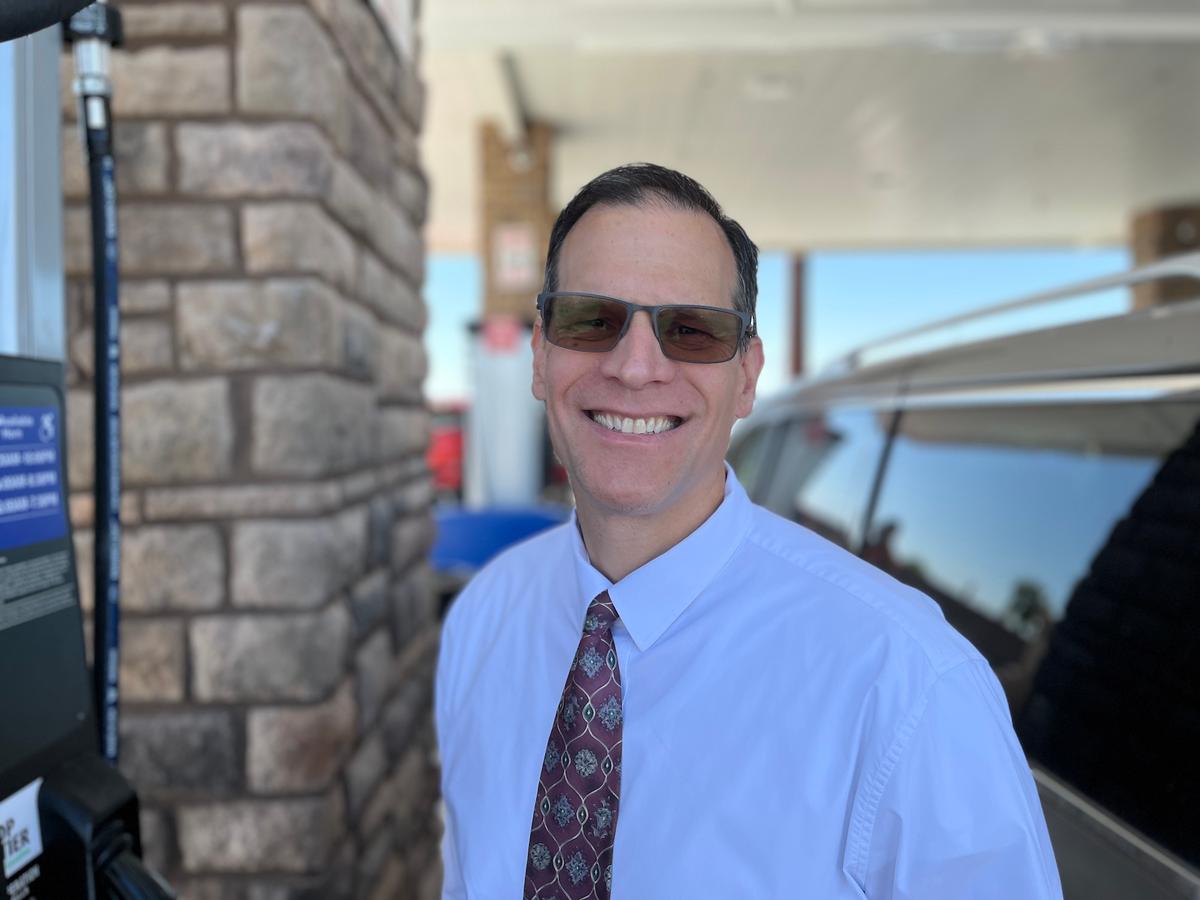
A few pumps away, Andre Mossman was taking advantage of Costco’s lower prices, paying $4.09 per gallon for regular unleaded.
“I guess it’s kind of the modern day that we live in,” Mossman said of the uncertainty surrounding fuel prices and the broader cost of living.
Calling the conflict with Iran “a shame,” he said global events increasingly carry consequences for everyday Americans.
“It’s a cost to live in a time where a lot of things are happening,” Mossman said.
“I think there'll be consequences. Things haven’t flowed.”
Similar concerns surfaced across gas stations and truck stops in Maricopa County, home to more than 4 million residents.
At Ray’s Mini Mart in Gilbert, a man originally from the Middle East who declined to give his name said the future of fuel prices remains uncertain.
“No one knows how high gas prices will go—or maybe go down,” he said. “This is politics. Some crises have to change. Life has to go on.”
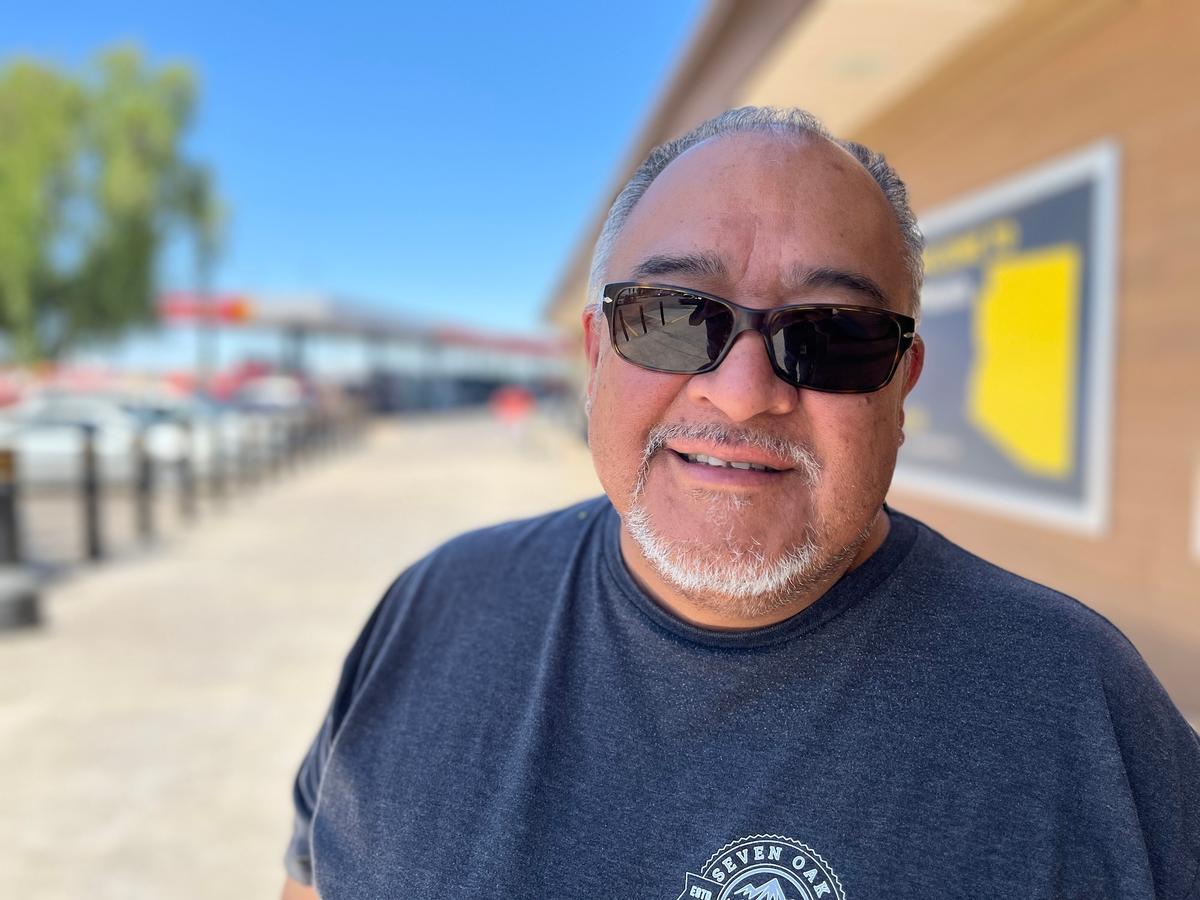
At the Flying J truck stop in Phoenix, Sal Olivas, a Texas resident and former Californian, said higher fuel costs make him feel as though he’s being “taxed into oblivion.”
‘Lucked Out’
“I lucked out when I moved to El Paso,” Olivas said. “It’s actually closer to my job than it was in California, and gas is cheaper.
“So it hasn’t affected me as much. But I still feel it. When I put it in context against California, it’s like, ‘Wow, this is way cheaper.’ Now it’s $3.89.”
Olivas said voters often hold the party in power accountable when economic pressures mount.
“The ruling party usually takes a beating in the midterm elections,” he said. “It’s almost like a tradition at this point.”
He said the United States should focus more heavily on developing domestic energy.
“We’ve got the resources to take care of ourselves and do what we need to do right,” Olivas said.
“It opens up opportunities for us to sell to other countries too. Look at Russia. They’re a huge producer of oil, but they’re so sanctioned right now it’s hard to export that oil.”
For now, he said, Americans are left navigating rising costs and uncertainty one tank at a time.
“One step at a time.”
‘Feeling Broken’
Nearby, Jason, a fuel truck driver, was refilling his 10,000-gallon diesel tanker while watching prices fluctuate.
“I don’t really see a slowdown,” he said. “Every company is different.”
Originally from California, Jason said fuel prices dominate conversations with friends back home.
“Everybody’s talking about fuel, how it goes up and down,” he said. “Technically, we produce more oil than any other nation. We pull more oil from the ground. We just sell it overseas.”
What concerns him most is the strain on working people.
“People are feeling broken,” Jason said. “They don’t have money. They’re going to vote money. That’s what affects people most—their wallet.”
Although he doesn’t vote strictly along party lines, he expects energy costs to remain a major issue.
“I vote issues a lot,” Jason said. “Oil is going to be an issue, apparently.”
Carlos Caraballo, a truck driver from Las Vegas, said he’s taking a longer view.
“I'll adjust,” he said. “We go through this every once in a while.

“I don’t really know what’s going on behind closed doors. But if people stay cool and ride it out, it shouldn’t last forever—if history repeats itself.”
Caraballo remembers paying $2.93 per gallon in Las Vegas before tensions escalated in the Middle East.
While fuel prices are beyond his control, he said his response is not.
“If you watch the left-leaning news, that’s what you’re going to believe,” Caraballo said. “If you watch the right-leaning news, that’s what you’re going to believe.”
Instead, he said, he tunes out the noise.
“I just turn off the TV and radio,” Caraballo said.
Another customer outside the Flying J agreed that gas prices are “high as hell.”
“What can we do about it, you know—the war and everything?” he said.
“It’s going to get rougher and rougher if we don’t turn loose our own fuel. We’ve got fuel. We don’t even use it. So it’s crazy.”
Luis Gutierrez, 38, a cross-country truck driver from California, said higher fuel costs hit him on the road and at home.
His pickup with a large V-8 engine is what he calls a “real gas guzzler.”
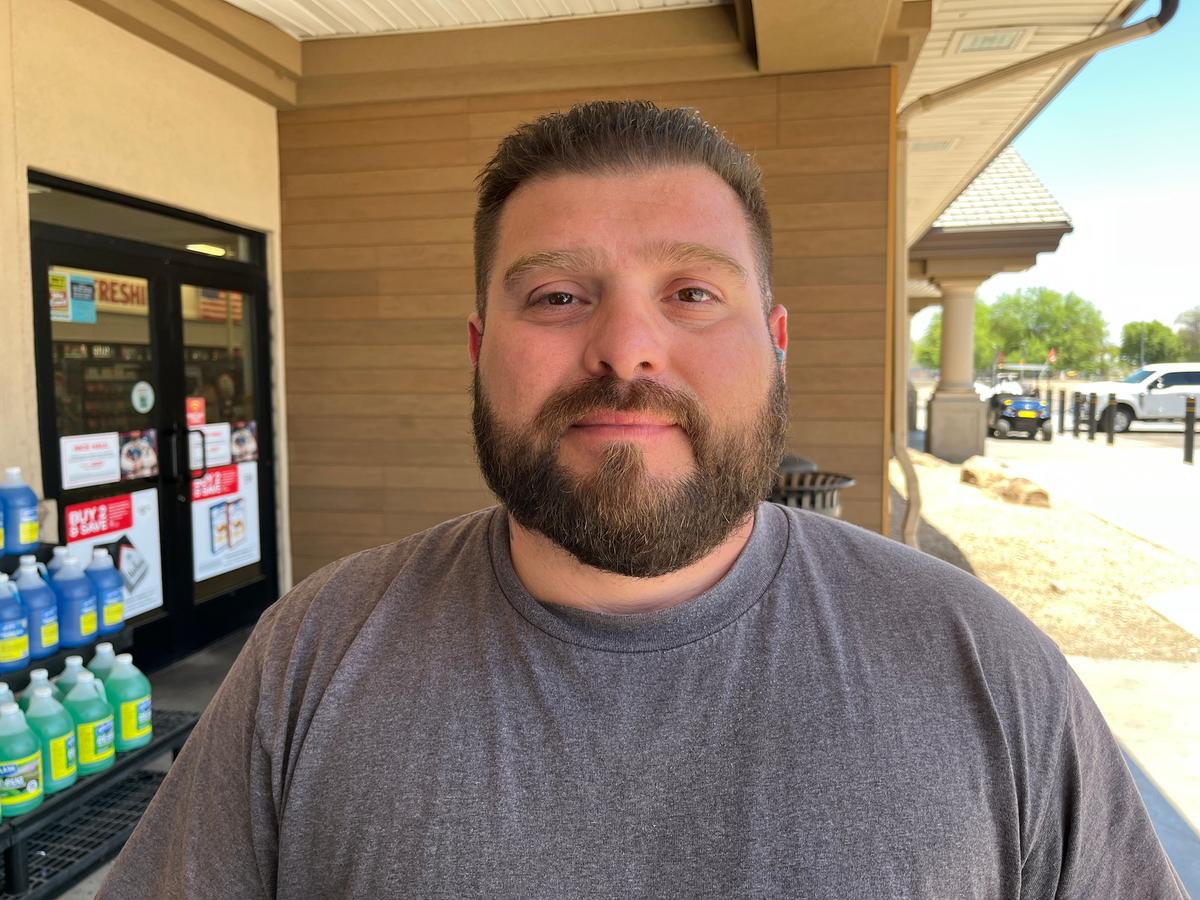
“The prices are just so high—especially in California. It is ugly out there,” Gutierrez said.
“If we were to get some kind of help from the governor, let’s spend those tax dollars on fixing our roads.”
Despite frustrations, he remains proud of his home state.
“California is a beautiful state—don’t get me wrong. I love being a Californian, born and raised,” Gutierrez said.
“But from being a child to now that I’m an adult, I see the changes. I hear all this talk about how we’re going to make a good change, do this, do that. But it never happens.”
Then he laughed.
“I remember when gas was like 90 cents a gallon, man,” Gutierrez said.
Politically unaffiliated, he said economic strain could shape outcomes in heavily Democratic California.
For now, Gutierrez is trying to make ends meet.
“I’m spending a good $300 or $400 more on gas a month,” he said. “That adds up.”
Gone are the leisurely drives he once enjoyed.
“I used to like to go out for drives,” Gutierrez said. “But now it’s a hassle because I’m having to go to work in Los Angeles. That commute is just horrible.”
But For a Few Dollars
Not everyone at the Flying J was behind the wheel.
A homeless man sat in the shade outside the truck stop, hoping to earn money washing truck wheels and rims.
“I ended up homeless a couple of months ago,” he said.
A few dollars is all he wants, he said, saying he is probably better off not owning a car with gas prices where they are.
What he hears from truckers is telling.
“The drivers here are saying, ‘Oh God. It’s a tough time,’” he said.
Then he paused.
“I remember when a dozen eggs used to be 50 cents,” he said.
Truck driver Jacob Roland from Rush, Colorado, summed the situation up in two words: “It sucks.”
“That’s all I can tell you,“ he said. ”It’s hard.
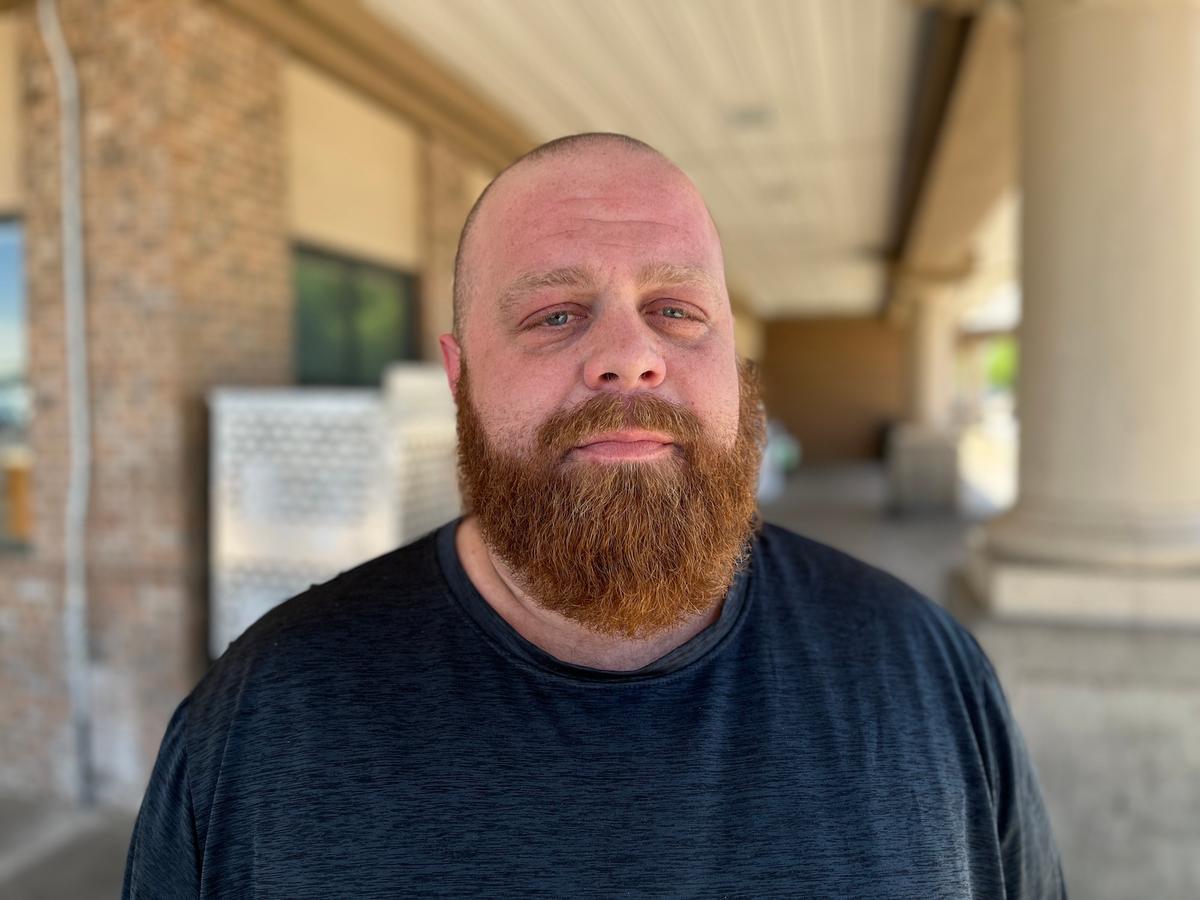
“We probably do $1,500 to $1,800 extra a week, just in diesel. Per truck.”
With diesel at about $5.35 per gallon in Phoenix, Roland said he’s seen prices top $6.05—and even higher elsewhere.
According to AAA fuel price data, California’s average on June 11 stood at $5.80 per gallon for regular gasoline, $6.04 for midgrade, $6.23 for premium, and $7.09 for diesel.
“[In Colorado,] we had a truck hauling livestock probably three weeks ago, and it was a little more than $7,” Roland said.
“Personal gas, I probably spend another $1,000 a month, depending on where you’re going, the travel, and your distances.
“It’s horrible—awful.”
Next year is probably “going to suck, regardless,” he said.
“The big thing about trucking is the fuel goes up, but the rates don’t,“ Roland said. ”We’re making the same by the mile as we were a year ago.”
As for voting in the midterms, he said he feels caught between the gas tank and the fuel pump.
“I don’t know what to do, really,“ Roland said. ”I’m kind of in the middle there because last time I voted, I voted for the wrong one.”
‘Do What You Gotta Do’
At Love’s Travel Stop in Tolleson, a woman said that higher gas prices are “definitely a problem—just more out of your paycheck”—and hoped for better days.
Jim, from Houston, was gassing up his RV, feeling the pinch at the pump.
Being from “gas country,” he believes that there’s “too much gas” in the ground in the United States—“and that’s the problem.”
He remembers the 1973 Arab oil embargo but doesn’t see a return to those conditions.
Ricardo Garcia, 25, a Lyft driver from California, said rising fuel costs are cutting into his earnings.
“I do notice the gas price is going up,“ he said. ”I feel like they try to accommodate it, though, through the [Lyft] app. They try to give us cash back when we try to get gas at certain gas stations.

“But I’m seeing a lot less in return out of doing what I do like for Lyft.
“It’s tiring.”
Garcia said he is skeptical of politics.
“I’m very skeptical,” he said. “I feel like, what’s my one vote gonna do, you know?”
“Do what you gotta do,” another woman said entering the store.
Asked how he felt about rising gas prices, another man didn’t hold back.
“I hate it,” he said.