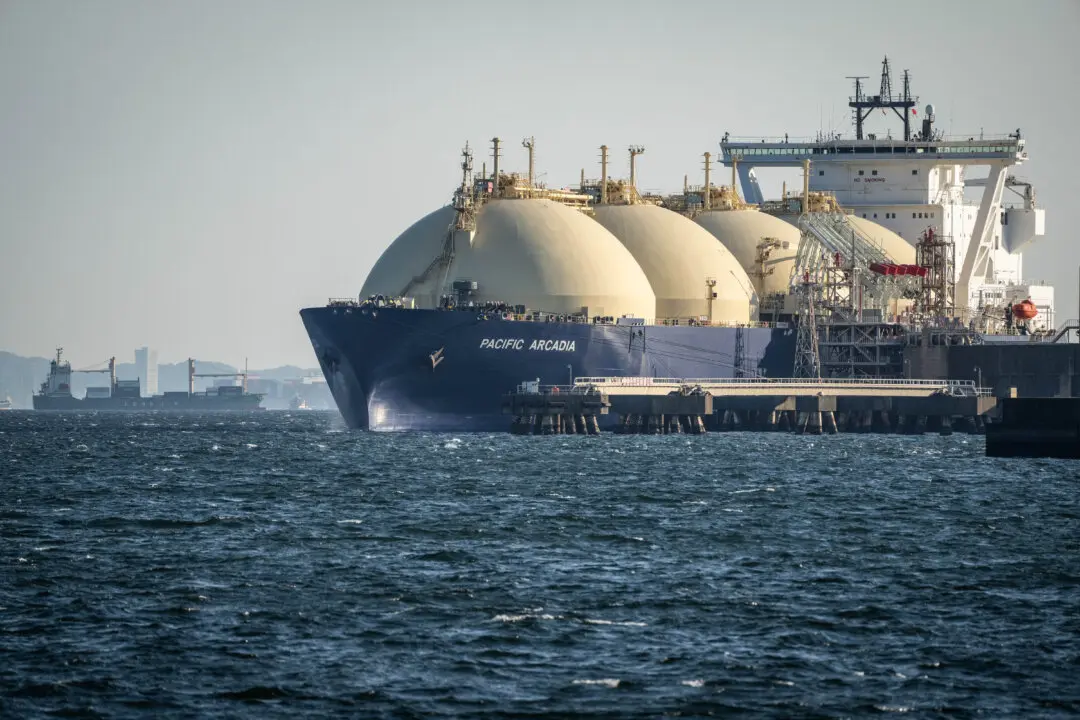
Since President Donald Trump unveiled the contours of his global tariff plans, the U.S. trade deficit has registered a sharp turnaround after years of staggering trade imbalances.
Expanding the lens reveals further narrowing of the imbalance since the president revealed his sweeping trade agenda on April 2.
The April-October trade gap fell by 25 percent compared with the same period in the previous year, totaling $397.33 billion, according to historical data from the Bureau of Economic Analysis. By comparison, the U.S. trade deficit was $527.06 billion from April to October 2024.
While the United States is importing roughly the same amount, the economy has seen a sizable increase in aggregate exports.
Shifting Trade Balances
Industrial supplies and materials—nonmonetary gold, precious metals, crude oil, fuel oil, and plastics—have accounted for much of the increase in U.S. exports in recent months.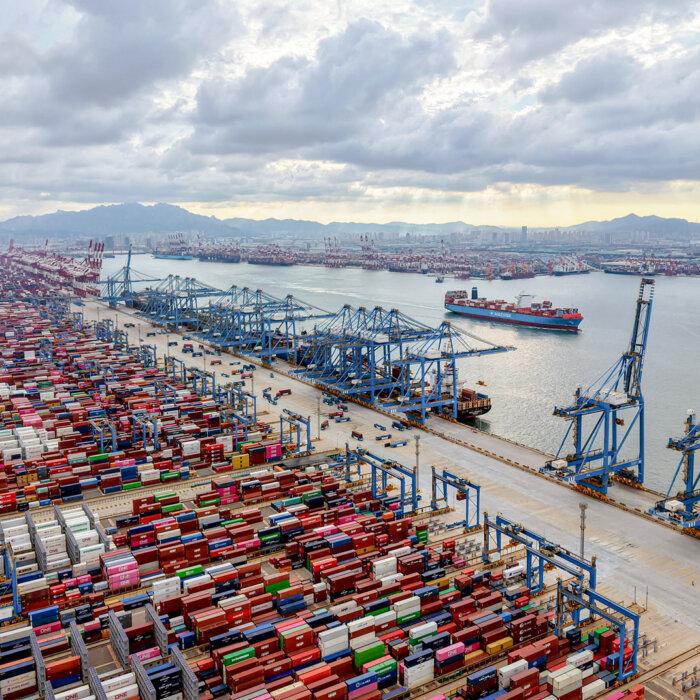
Exports of industrial supplies and materials soared by more than $10 billion in October alone.
Conversely, the United States is relying less on the world for consumer goods, a vast umbrella that consists of apparel, household goods, and pharmaceuticals.
Although cumulative April-to-October imports of consumer goods ticked up—driven by a surge in category-specific items—purchases decreased by $14.3 billion in October. This was fueled mainly by a sharp drop in pharmaceuticals.
But while the United States aims to rebalance international trade, the first six months of sweeping reciprocal tariffs have seen mixed bilateral trade data.
From April to October, the U.S.-China trade deficit was approximately $105 billion, a 43 percent decrease from the same period in the previous year, when it was more than $184 billion.
Economists say that the administration’s tariffs are accelerating already fractured U.S.-China trade relations.
Trade has been gradually rebalancing with the European Union since Trump imposed tariffs.
Exports to the 27-member trade bloc increased 16 percent year over year to $251 billion, from $216 billion in the six months of the previous year. Imports dipped about 4 percent to $346 billion.
It remains to be seen whether the president’s threats to implement tariffs on NATO members in Europe, following his attempts to purchase Greenland, will impact trade on either side of the Atlantic.
In Pacific Rim countries—such as Indonesia, Thailand, the Philippines, and Vietnam—U.S. exports have changed little. However, imports have declined by about 9 percent to $549 billion from April to October.

With Washington completing trade agreements with these markets, the numbers could change further in the coming years.
Isabela Lara White, economist at CaixaBank Research, says she sees last year’s data as evidence of more structural change in global trade flows than of substantially reducing the goods trade imbalance.
Strong Dollar Policy
Economic theory dictates that tariffs could make foreign-made goods less attractive, prompting businesses and consumers to shift their consumption to products manufactured in the United States.Tariffs have played an integral role in worldwide trade, but so has the U.S. dollar.
The Nominal Broad U.S. Dollar Index—the administration’s preferred gauge that measures the buck against currencies of major trading partners—declined about 7 percent last year.
For years, the U.S. dollar has been one of the strongest currencies in global markets. While this can lower import costs, it can also make U.S. exports more expensive for foreign consumers, especially in countries with extremely weak currencies, particularly in the Pacific Rim countries.
Forty years ago, major U.S. trading partners agreed to depreciate the dollar by coordinating currency interventions and imposing domestic fiscal and monetary policy adjustments.
In a weaker-dollar climate, U.S.-made goods could become more appealing to foreign markets—a key objective for the administration’s reindustrialization effort.
In the 1980s, the U.S. dollar rocketed amid high interest rates and surging capital inflows, harming exporters and exacerbating the trade deficit. The United States led a global foreign exchange intervention scheme with several major economies, including Japan and the United Kingdom, to weaken the dollar.
The White House has not officially committed to a deliberate dollar reset, although the president has sent mixed messages.
Other administration officials have endorsed the idea of global dollar dominance. Still, the mighty greenback had a weak 2025, including the worst first-half performance since 1985.