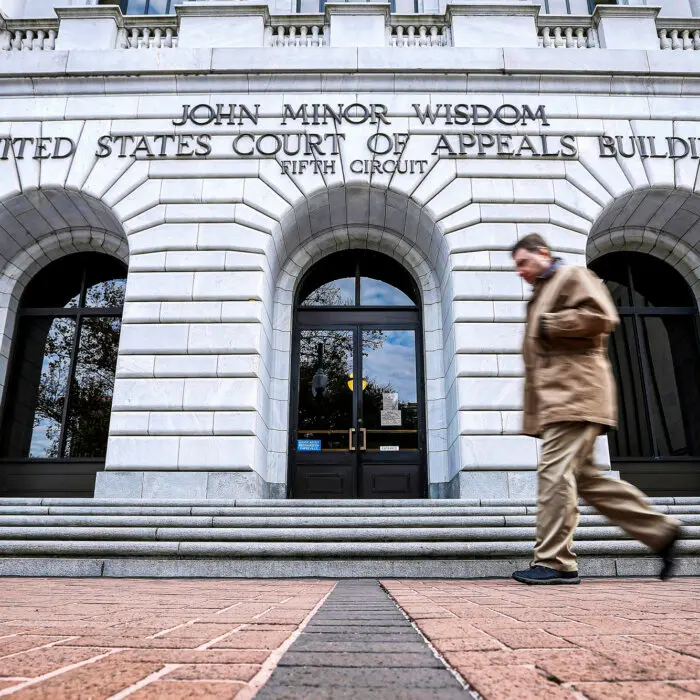
A federal appeals court on Aug. 13 dismissed a major challenge to President Donald Trump’s use of the Alien Enemies Act, ruling that the appeal had become moot after the government deported the three plaintiffs using ordinary immigration law.
The U.S. Court of Appeals for the Fifth Circuit’s decision effectively ducked the core legal question. By dismissing the appeal as moot, or legally irrelevant, on procedural grounds, the court avoided ruling on whether the president’s use of the Alien Enemies Act was lawful.
Writing for the court, Chief Judge Jennifer Walker Elrod said the government had removed all three named petitioners under the Immigration and Nationality Act instead of the Alien Enemies Act, a rarely used statute from 1798.
“This development is unobjectionable: The Supreme Court expressly said that the government could remove the named petitioners and putative class under other laws,” she said. “And petitioners point out no infirmities in their removal.”
Federal and state court rules govern whether a class action gets certified and is allowed to proceed. Until a class is certified, the members are referred to as putative members of the class. Because no named petitioners remained in the United States and the case featured no certified class, the court dismissed the appeal for lack of jurisdiction.
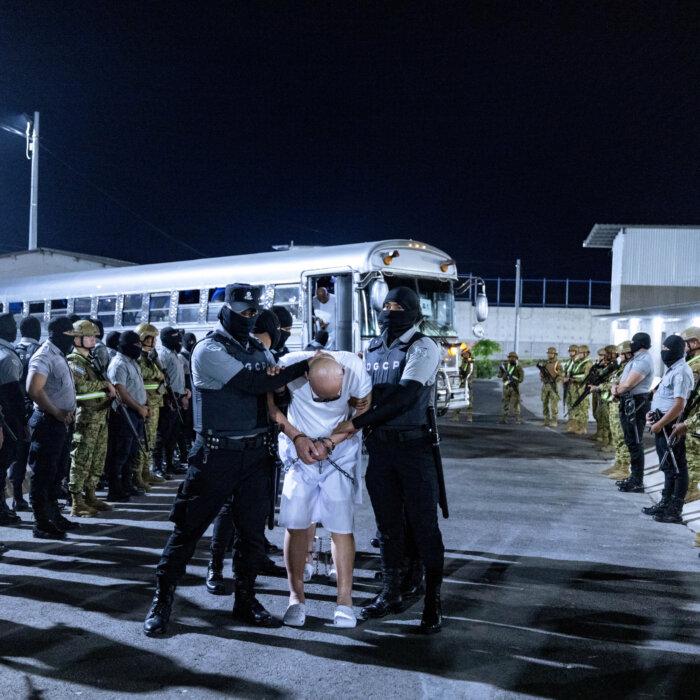
In March 2025, Trump signed Proclamation 10903, declaring that Tren de Aragua, a designated foreign terrorist organization associated with Venezuela, was “perpetrating, attempting, and threatening an invasion or predatory incursion against the territory of the United States.”
The group is using mass illegal immigration to the United States to harm U.S. citizens, undermine public safety, and support the goal of the Venezuelan socialist regime to destabilize “democratic nations in the Americas, including the United States,” the proclamation states.
Trump invoked the Alien Enemies Act to authorize the “immediate apprehension, detention, and removal” of members of the group who are Venezuelan citizens 14 years of age or older and who are not U.S. citizens or lawful permanent residents of the United States.
The act allows the president during wartime or an “invasion or predatory incursion” to detain and remove foreign nationals from an enemy country.
Three Venezuelan men detained in Texas filed a class action on April 16, 2025, challenging the president’s use of the act.
On May 16, 2025, the Supreme Court intervened in the case, making preliminary findings without ruling on the merits of the case. It issued an order vacating the Fifth Circuit’s ruling while the litigation played out and found that the circuit court erred when it found that it lacked jurisdiction to hear the case. The high court also found that detainees were entitled to more legal process than the federal government had provided.
After a series of emergency hearings, a divided Fifth Circuit panel ruled in September 2025 that the detainees were likely to succeed in their claim that the preconditions for using the act had not been met and granted a preliminary injunction. The full court later vacated the panel’s decision and ordered an en banc hearing before the full court.
Circuit Judge James Ho concurred in the judgment but wrote separately that the court should have reached the merits and affirmed the president’s actions under the Alien Enemies Act.
“Foreign governments have used illegal immigration as a weapon to invade and weaken other countries, as Administrations of both parties have warned for decades,” Ho said.
He added that judges “are supposed to defer to a President’s declaration of a state of invasion—including the ones issued on January 20, 2025.”
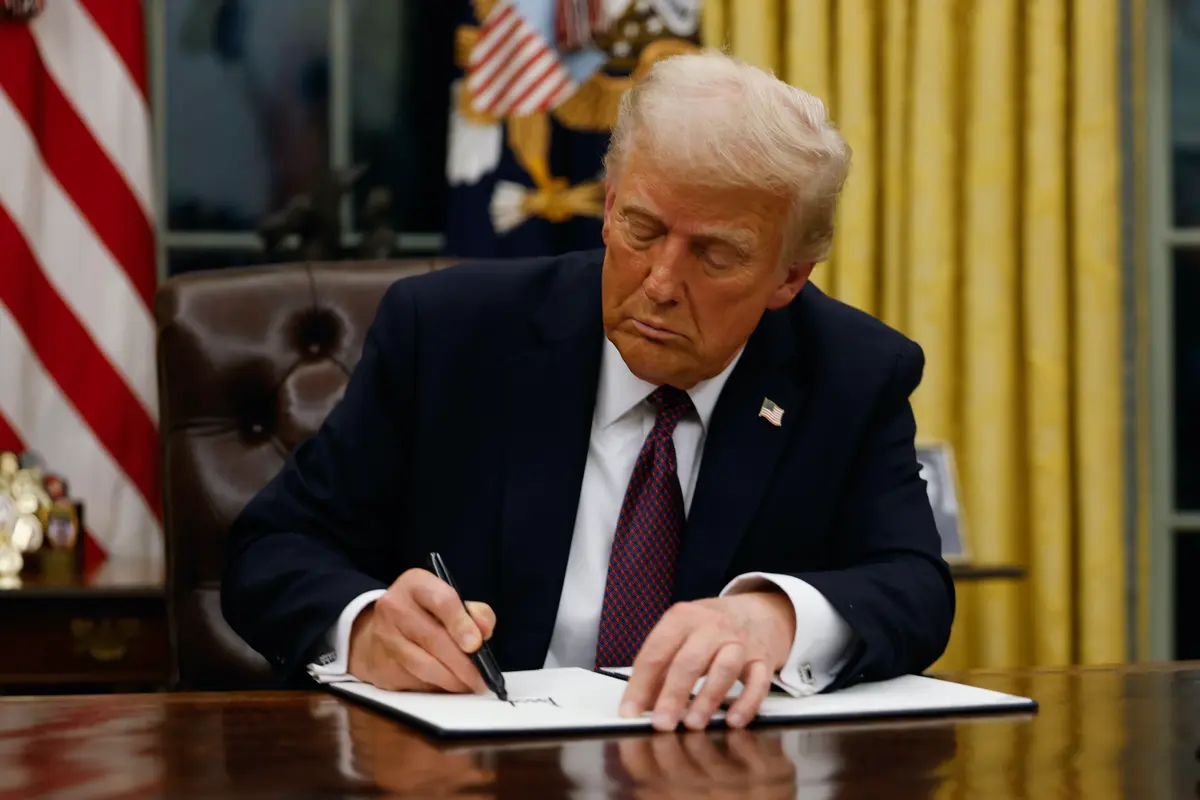
On his first day back in office last year, Trump issued Proclamation 10888 and Executive Order 14159, both declaring that the United States is under invasion at the southern border and directing federal agencies to take aggressive action to halt illegal immigration and remove all inadmissible and removable noncitizens already in the country.
Ho said if courts must defer when the president treats illegal immigration as an invasion, it logically follows they “must defer when it comes to the narrower question of an invasion by Tren de Aragua.”
The decision means the full Fifth Circuit never answered the question the Supreme Court had directed it to resolve about the lawfulness of the proclamation and the due process rights of those designated under the act.