The U.S. Court of Appeals for the Fourth Circuit ruled 2–1 on July 23 that a federal district court has authority to hear a Georgetown academic’s challenge to his detention by immigration authorities.
The ruling appears to create a split among federal courts of appeals over whether the Immigration and Nationality Act (INA) bars such challenges, making Supreme Court review likely.
J-1 visas are nonimmigrant visas for participants in designated exchange programs. Suri’s children were admitted on derivative visas dependent on his status. At the time of Suri’s arrest in March 2025, he and his family resided in Rosslyn, Virginia.
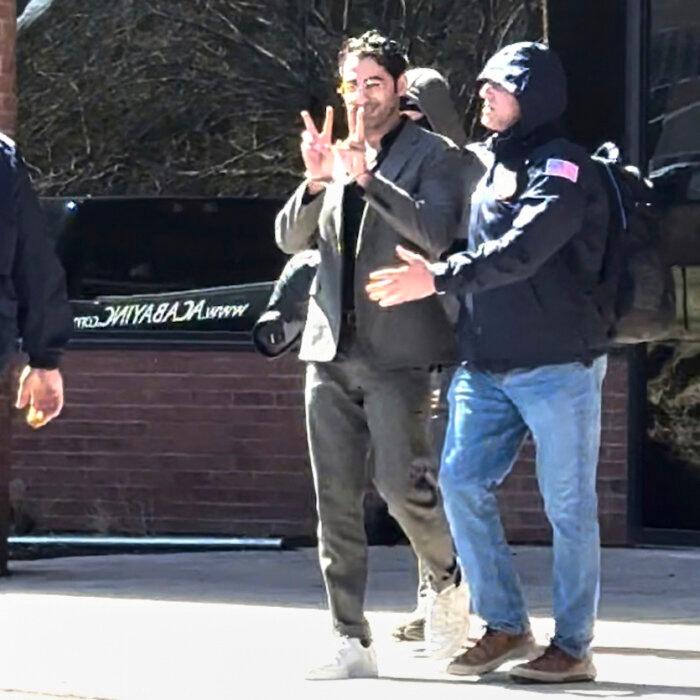
Suri criticized “U.S. support for Israel’s war in Gaza” in social media posts, which led to him being detained outside his home by masked U.S. Immigration and Customs Enforcement (ICE) officers, the opinion said.
The opinion said that even though Suri’s case is still pending in immigration court, he initiated a habeas petition in the U.S. District Court for the Eastern District of Virginia, where he resided and was first detained, and where the first three detention facilities that incarcerated him were located. A habeas corpus petition allows a detainee to challenge his detention. The Latin phrase means “you have the body.”
Suri argued in court papers that his detention was an “attempt to chill” his speech and that of others “who express support for Palestinian rights.”
The federal government moved to dismiss the habeas petition, arguing that the district court did not have jurisdiction, or authority to hear the case, because Suri was no longer detained in Virginia. The district court rejected the motion, determining that it retained jurisdiction in the case.
The government appealed, arguing that jurisdiction had not been established, and that even if it had been, provisions in the INA deprived the district court of jurisdiction.
The U.S. Department of Homeland Security (DHS) had detained Suri under INA Section 1226(a) pending a decision on removal from the country. The government argued the district court was precluded from hearing Suri’s petition by three jurisdiction-related provisions in Section 1252.
DHS had announced on X that Suri was “actively spreading Hamas propaganda and promoting antisemitism on social media.” The social media post said he was closely tied to “a known or suspected terrorist, who is a senior advisor to Hamas,” and that Secretary of State Marco Rubio determined on March 15, 2025, that “Suri’s activities and presence in the United States rendered him deportable” under the INA, the opinion said.
The Fourth Circuit disagreed with the government, affirming the district court.
“The district court had jurisdiction to hear Suri’s habeas petition, and no provision within the immigration code deprived it of subject matter jurisdiction,” Benjamin said.
Dissent and Broader Implications
Circuit Judge J. Harvie Wilkinson III filed a strongly worded dissent.
The majority “rips an irreparable hole in the INA’s jurisdiction-channeling scheme,” he said.
“Every alien who is now detained pending removal will now have a pathway into district court for a thinly veiled habeas challenge to his removability. Each suit will grind removal proceedings to a halt, invite a district court to take control of them, and require the government to prove the alien’s removability a second time.”
The INA deprives district courts of jurisdiction in “nearly all claims ‘arising from’ removal proceedings,” he said, citing Section 1252.
The kind of duplication and delay this litigation invites is “precisely what Congress intended to avoid” when it passed the INA. “Today’s holding may be a victory for Suri, but it is a loss for the immigration system Congress carefully designed,” Wilkinson said.
Noor Zafar, senior staff attorney at the American Civil Liberties Union, which is part of Suri’s legal team, hailed the majority opinion.
Zafar said in a statement that the court saw through “the government’s brazen attempts to silence pro-Palestine speech.”
“Immigration laws cannot be abused to silence dissent, and we are grateful that today, justice prevailed,” Zafar said.
The new ruling came two days after the Second Circuit went in the opposite direction in the case of Mohsen Mahdawi, a Palestinian whom DHS arrested and moved to deport last year.
Mahdawi, unlike Suri, is a lawful permanent resident of the United States. He filed a habeas petition seeking his release from federal immigration custody.
The appeals court found that federal law required the judge to allow a separate immigration court to process Mahdawi’s case.
Mahdawi enrolled at Columbia University in 2021 and became an outspoken critic on campus of Israel’s military campaign in Gaza after Hamas’s Oct. 7, 2023, attacks that killed about 1,200 Israelis.
Rubio made a finding that Mahdawi was removable under the INA because his “presence or activities in the United States would have potentially serious adverse foreign policy consequences for the United States.”
The Trump administration also alleged Mahdawi called for the destruction of Israel and engaged in threatening rhetoric and intimidation against pro-Israeli individuals during protests at Columbia University.
A DHS spokesperson hailed the Second Circuit’s decision as “a win for public safety and the rule of law.”
“When you advocate for violence, glorify and support terrorists that relish the killing of Americans, and harass Jews, that privilege should be revoked, and you should not be in this country,” the spokesperson said.
In May, the Third Circuit ruled against Mahmoud Khalil, a Palestinian graduate of Columbia University who led pro-Palestinian protests after the war in Gaza began.
The government seeks to deport Khalil under a section of the INA that allows foreign nationals to be removed from the country if they pose “serious adverse foreign policy consequences” for the United States. An immigration judge ordered the lawful permanent resident of the United States deported last year.
That appeals court ruled 6–5 that it would leave intact a ruling that stated a federal district judge lacked jurisdiction when he ordered that Khalil could be released from immigration detention last year.
Former U.S Assistant Attorney General Jeff Clark predicted the Suri ruling will reach the nation’s highest court.
“This will go up to the U.S. Supreme Court almost certainly,” Clark said in a post on X. “The Court needs to get this right and rein in habeas writ abuse.”
The Department of Justice’s Executive Office for Immigration Review (EOIR) declined to comment, Kathryn Mattingly, a spokesperson in that office, told The Epoch Times.
EOIR is a sub-agency of the U.S. Department of Justice that conducts removal proceedings in immigration courts and adjudicates appeals arising from those proceedings.