Scannell Properties, the real estate developer responsible for building the warehouse, reapplied to the Wawayanda Planning Board in August. The developer cited a town law exempting buildings from the height restriction if they have sufficient fire-negating measures and larger-than-required property buffers.
The board determined that the proposed building fit the criteria for exemption and approved it.
Slate Hill Fire Department Chief Shaun Graham testified at the public hearing on Sept. 10 and submitted a letter on Sept. 18.
Graham gave a positive review of the warehouse’s firefighting measures and said he believed that the height exception would not inhibit the local fire department’s firefighting abilities.

State-of-the-art fire suppression systems, external fire-protected stairways and roof access, and Graham’s testimony were satisfactory for the board.
The warehouse will have large buffer zones. A “buffer” as defined by Wawayanda in the “Town of Wawayanda Planning Board Special Use Permits Findings for Project Bluebird” report, published to the town website, is an area near a structure that is “either consisting of naturally existing vegetation or created by the use of trees, shrubs, fences and/or berms, designed to continuously limit the view of, and/or sound from, the site to adjacent sites or properties.”
The town set the minimum buffer at 15 to 50 yards, depending on the side, and the buffers provided by Scanell’s proposed plan range from 213 to 1,013 yards.
The board concluded that these major buffers, along with the fact that the building will be constructed in a mining pit 30 to 40 feet below nearby I-84, will lessen the visual and audio effects of the warehouse.
The 108.4-acre property on which the warehouse will be built is currently a mine and part of a mixed commercial zoning district. Construction of the building is expected to employ 300 people, and the warehouse is projected to facilitate 750 permanent jobs.
Some of the benefits the board’s report cited were that Amazon will invest $15 million in local road and energy infrastructure, design and build an ambulance facility in Wawayanda, and support local schools.
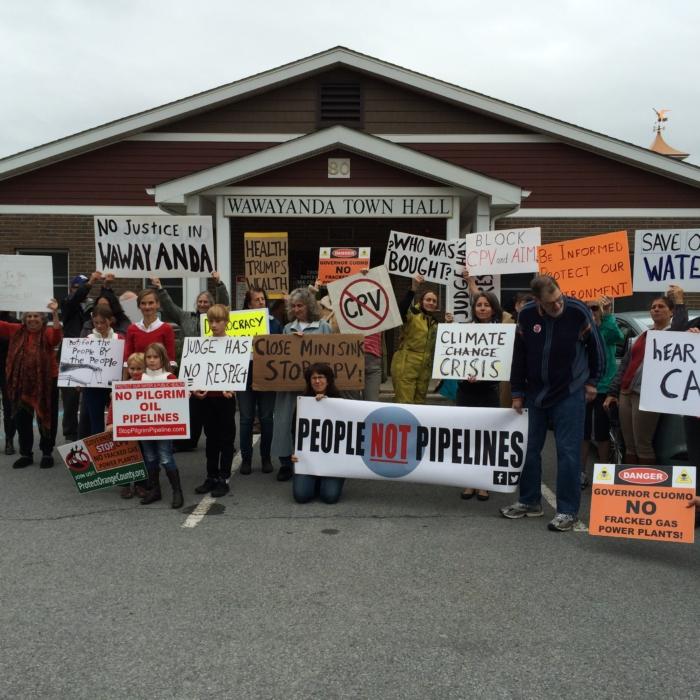
The Amazon warehouse project by Scannell has remained unpopular with some residents. Many people came forward at public hearings to air their grievances against a future Amazon warehouse in their community.
“The Planning Board is bound by law, not public opinion,“ the letter reads. ”The property is zoned for industrial use, and this project fits within the zoning. The Planning Board cannot lawfully deny a project simply because some residents dislike it. Doing so would expose the town to serious legal consequences.”
PILOTs exempt businesses and projects from a certain amount of property tax as a means of incentivizing growth and investment.