The Trump administration activated a never-before-used pathway for removing alien terrorists from the United States.
Since its creation in 1996, the Alien Terrorist Removal Court has lain dormant until it received the first-ever removal application from the Department of Justice (DOJ) on July 15 and held a debut hearing the following day for a suspected foreign terrorist, whose name is not mentioned in available court documents.
Writing in a July 16 order, Judge Joan Ericksen said the court heard attorney arguments—no sworn testimony—and reviewed information presented by the Trump administration.
The court, however, had questions about the connection between the government’s allegations against the individual facing deportation and the specific laws it cites regarding their actions, Ericksen said.
“The answers persuaded the Court that the Government could benefit from the opportunity for more thoughtful consideration,” the order said.
Ericksen ordered the DOJ to supplement its initial removal application “consistent with the matters discussed during the hearing,” in addition to any further factual or legal analysis.

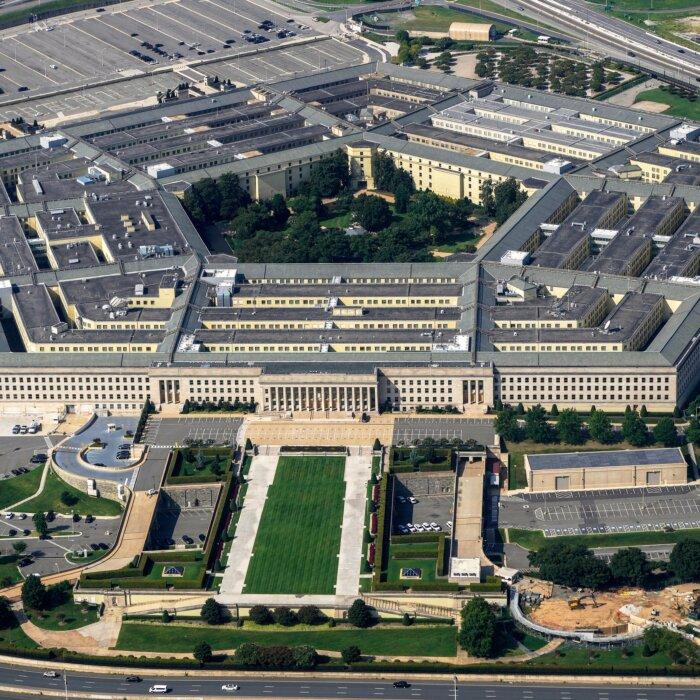
The government bears the burden of proving the accused is an alien terrorist, according to provisions in the Alien Terrorist Removal Court’s creation, which were crafted as part of the Antiterrorism and Effective Death Penalty Act passed by Congress in 1996, a broad legislative effort to battle international terrorism.
The supplemental information shall be submitted no later than July 22, according to Ericksen’s order.
In the legislation creating the court, Congress authorized the chief justice of the Supreme Court to designate five district judges, chosen from different judicial circuits and serving staggered, renewable five-year terms, to review applications for the removal of suspected alien terrorists.
Judges currently serving are presiding Judge Ericksen of the Eighth Circuit for the District of Minnesota, since 2023; Judge Timothy DeGiusti of the 10th Circuit for the Western District of Oklahoma, since 2025; Judge Kenneth Karas of the Second Circuit for the Southern District of New York, since 2022; Judge Sara Lioi of the Sixth Circuit for the Northern District of Ohio, since 2025; and Judge Karin Immergut of the Ninth Circuit for the District of Oregon, who began this year.
The U.S. attorney general is tasked with drafting and submitting sealed applications to the court.
A single judge may accept an application if they find the individual in question was properly identified as an alien terrorist whose removal under other available legal methods would pose a risk to national security.
After accepting the application, the court must hold a public removal hearing.
The suspected alien terrorist is entitled to be represented by counsel and to present arguments in their defense.
In addition to bearing the burden of proof, the federal government must also craft an unclassified summary of the accusations and evidence against the suspected terrorist, which one of the five judges must deem sufficient for the alien to prepare a defense.
If the DOJ meets its burden of proof, the court will order the alien’s removal from the United States.
The attorney general is allowed to appeal a judge’s denial of an application, and both the DOJ and suspected alien terrorist can appeal unfavorable decisions after a removal hearing, all of which would be made to the U.S. Court of Appeals for the District of Columbia Circuit.
At the time of this publication, the DOJ had not responded to requests for comment about the first suspected alien terrorist, or the accusations against them, to face the Alien Terrorist Removal Court in the 30 years since its inception.
The court also did not respond by publication time to a request for comment about taking up its first application.