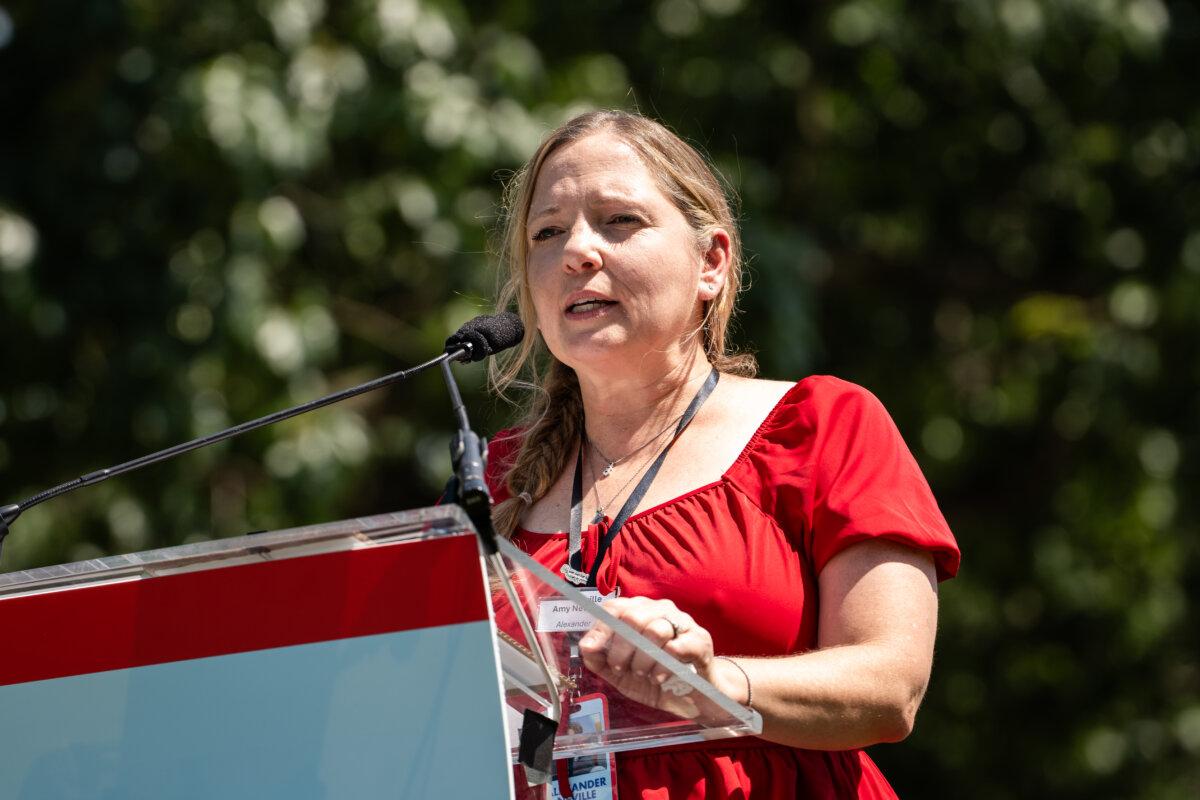
WASHINGTON—Amy Neville and Kristin Bride, once strangers, are mothers who bonded after their sons died on the same day, June 23, 2020, which is now commemorated annually as National Social Media Victims Remembrance Day. On Monday, the women marked the five-year anniversary of their sons’ deaths with a gathering on Capitol Hill and a clarion call to stave off other tragedies.
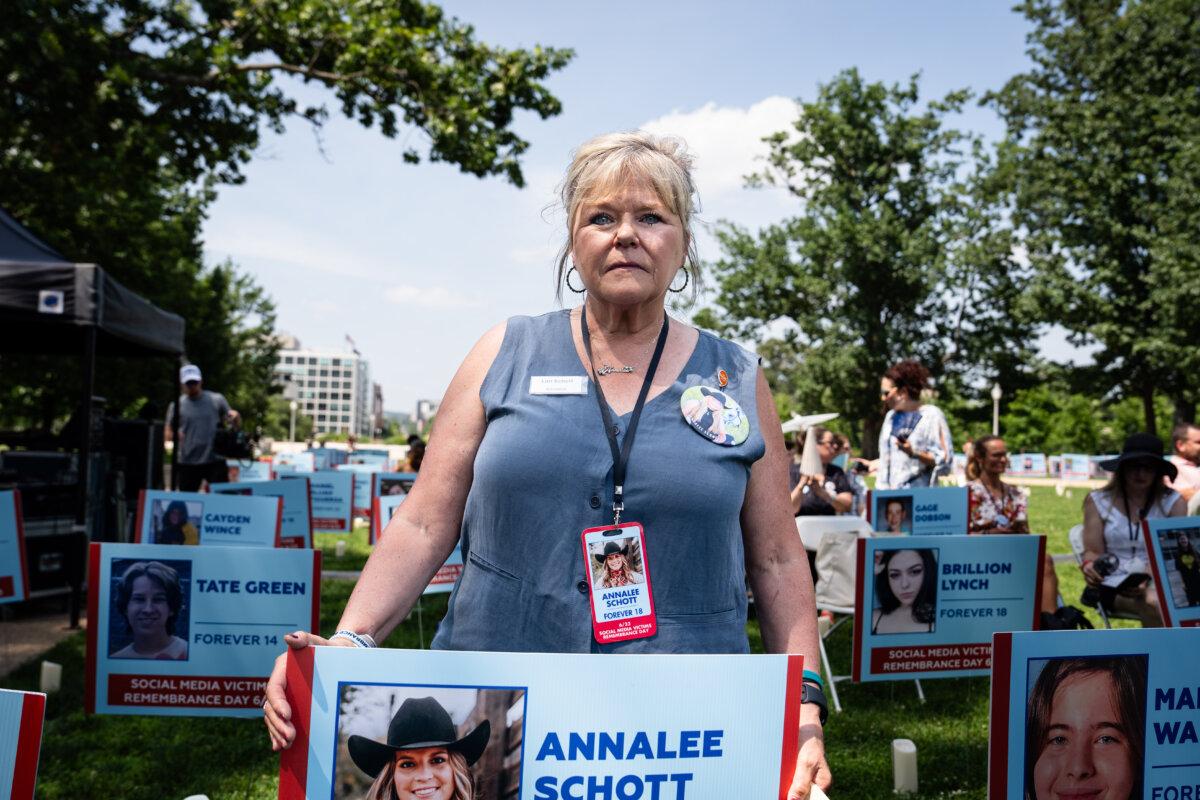
In what organizers called “the largest-ever public memorial for kids who have lost their lives to social media harms,” Neville and Bride gave remarks about their sons. They and others also urged Congress to act on a previously stalled law that aims to protect children from outcomes that their sons and so many other children have suffered.
Neville’s son, Alexander Neville, died from fentanyl poisoning at age 14 at the family’s California home. He had used Snapchat to buy a drug that, unbeknownst to him, contained fentanyl. Bride’s son, Carson Bride, took his own life at age 16 in Oregon after being bullied online.
Referencing the many rows of victims memorialized on the placards, Bride said, “Let’s remember, this represents just the tip of the iceberg, just those parents who have decided to go public with their stories so that no other family must endure a similar tragedy.” Several attendees wept before and during the program as they reflected on the lives of their deceased children.
Neville told the crowd what her family’s life has been like since her son died in 2020. “It’s been five years of grief, five years of unimaginable pain, five years of watching the world move on while we remain frozen in a moment that changed our lives forever,” Neville told the crowd, lamenting that “no meaningful change” has been achieved in policing the online community despite a mounting outcry.

In congressional testimony last year, Spiegel said “bad actors” take advantage of Snapchat’s popularity and in response, the company is “constantly improving our safety tools and investing in protecting our community from the ever-evolving threat landscape.”
During his testimony, Zuckerberg touted benefits that his platforms offer, enabling users to “feel more connected, informed, and entertained, as well as to express themselves, create things, and explore their interests.” He asserted: “We work hard to provide support and controls to reduce potential harms.”
But Neville countered that social media executives “polish their brands with promises of safety, responsibility and innovation, while behind the curtain, their platforms still feed our children content that manipulates, isolates, and endangers them.”
She and others say minors see a steady stream of content that can foment suicide, eating disorders, substance abuse, illicit drug use, and sexual exploitation.
Despite assurances from social media executives, “children are still dying; families are still being shattered,” Neville said.

That’s why Congress must step in, Neville and others said, with the Kids Online Safety Act. First proposed in 2022, the Act sought to set a “duty of care” for social media companies holding them legally responsible for taking “reasonable” steps to shield youths from harms.
The legislation passed the Senate last year 91-3 but died without a House of Representatives vote.
For minors, those include limiting other users’ ability to communicate with minors, preventing users or visitors from viewing minors’ personal data and geolocations, limiting “design features that result in compulsive usage of the platform,” and enabling minors to cut off or limit content that is “recommended” to them.
For parents, those include the ability to manage a minor’s privacy and account settings, to monitor how much time a child is spending on the platform, and a user-friendly means for reporting harms to the company.
The bill also classifies violations as “an unfair or deceptive act or practice” under enforcement of the Federal Trade Commission, which is empowered to to penalize violators.
Blackburn told the crowd that, by design, platforms try to addict users so they will engage in “the endless scroll” for more content. Some children are spending more time online than adults do at their full-time jobs, she said. “They know about the harms that they are causing,” Blackburn said, but “they do not want to change their business model.”
Klobuchar said companies have made “promise after promise” but failed to deliver a safer online experience for younger users.
She thanked online-safety advocates for their continued work to put pressure on the House of Representatives to take action on the proposed law.
“You’re showing up for kids that you’ve never met, and kids that could be victims in the future—and that is the very definition of ‘a guardian angel,’” she told the crowd.
Blumenthal said pressure from advocates persuaded senators “to stand up to Big Tech” last year. Now the bill has been reintroduced in the Senate, where it must be approved before heading to the House for a vote.
Tech companies are worth a combined total of $17 trillion, he said, adding, “That’s the size of China’s economy; that’s the size of the foe that we’re up against.”
That’s why it’s important for the advocates to fight for the bill, Blumenthal said. “It is your eloquence, the power of your voices and faces, that will make the difference,” he told attendees. “Never doubt that you are making a difference ... together, you will get us over the finish line. The Kids Online Safety Act is an idea whose time has come, and the time is now to pass this measure.”
But Blumenthal said the bill doesn’t violate the First Amendment. “It’s not censorship. It’s not blocking people from communicating with each other or coming together as a community,” he said. “It is about saving lives from that toxic content, saving kids’ lives at a moment in their lives when they are vulnerable.”