“Following the OBBB, some alien groups previously eligible for SNAP are no longer eligible,” it said.
The lawsuit focuses on lawful permanent residents or green card holders, people legally authorized to permanently live in the United States. While immigrants may not become lawful permanent residents initially, they can eventually get a green card.

The guidance claims that some immigrant categories are eligible for SNAP once they become lawful permanent residents, according to the lawsuit. This includes certain American Indians born abroad, Hmong or Highland Laotian tribe members, battered aliens, conditional entrants, and victims of severe trafficking.
Other immigrant categories are deemed “not eligible” for SNAP benefits by the guidance, such as refugees, people granted asylum, parolees, those who have had their deportation withheld, and certain Afghan and Ukrainian nationals granted paroles, the lawsuit said.
The states criticized this differentiation between immigrant groups, arguing that individuals from both groups who adjust their status to become lawful permanent residents are eligible for SNAP.

“The Guidance specifically designates many individuals as categorically ‘Not eligible’ who have clear pathways to becoming LPRs. For example, Refugees and Individuals Granted Asylum may adjust status and become LPRs after one year,” they said.
The guidance goes beyond OBBB, “arbitrarily excluding from SNAP many lawful permanent residents who remain eligible under the statutory scheme established by Congress,” the states argued.
The guidance claims that immigrants who came as refugees, asylum seekers, and other Humanitarian Immigrant Groups are subject to a five-year waiting period to start receiving SNAP benefits.
Payment Error Rate, Exclusionary Period
Another issue cited in the complaint concerns the State Quality Control Incentive provision of the OBBB, under which states have to pay a percentage of the SNAP program if their payment error rate goes above a threshold, according to the complaint.Before the OBBB, the federal government used to pay the entirety of SNAP benefits. Under the new provision, if a state’s payment error rate is deemed to be between 6 and 8 percent, it must fund 5 percent of the benefits. This scales up as error rates go higher. So, states with error rates at 10 percent or higher will have to fund 15 percent of the benefits.
According to the lawsuit, federal regulations provide a 120-day exclusionary period once a new regulation is introduced. Errors made during this period do not count toward the payment error rate calculation.
The USDA’s Oct. 31 guidance sent to states said that the 120-day exclusionary period ended on Nov. 1, calculated from the date the OBBB went into effect, according to the complaint.
States challenged this application of the exclusionary period.
Preventing Illegals From Accessing Benefits
The USDA told states in an April 24 memo to take steps to ensure that illegal immigrants do not receive SNAP benefits.States were asked to verify the identity of SNAP applicants, collect their social security numbers, compare these numbers to the federal government’s social security death data, and check whether the applicants are listed in the Department of Homeland Security database as being present in the United States illegally.
The memo cited Trump’s Feb. 19 executive order directing the USDA to “enhance eligibility verification systems, to the maximum extent possible, to ensure that taxpayer-funded benefits exclude any ineligible alien who entered the United States illegally or is otherwise unlawfully present in the United States.”
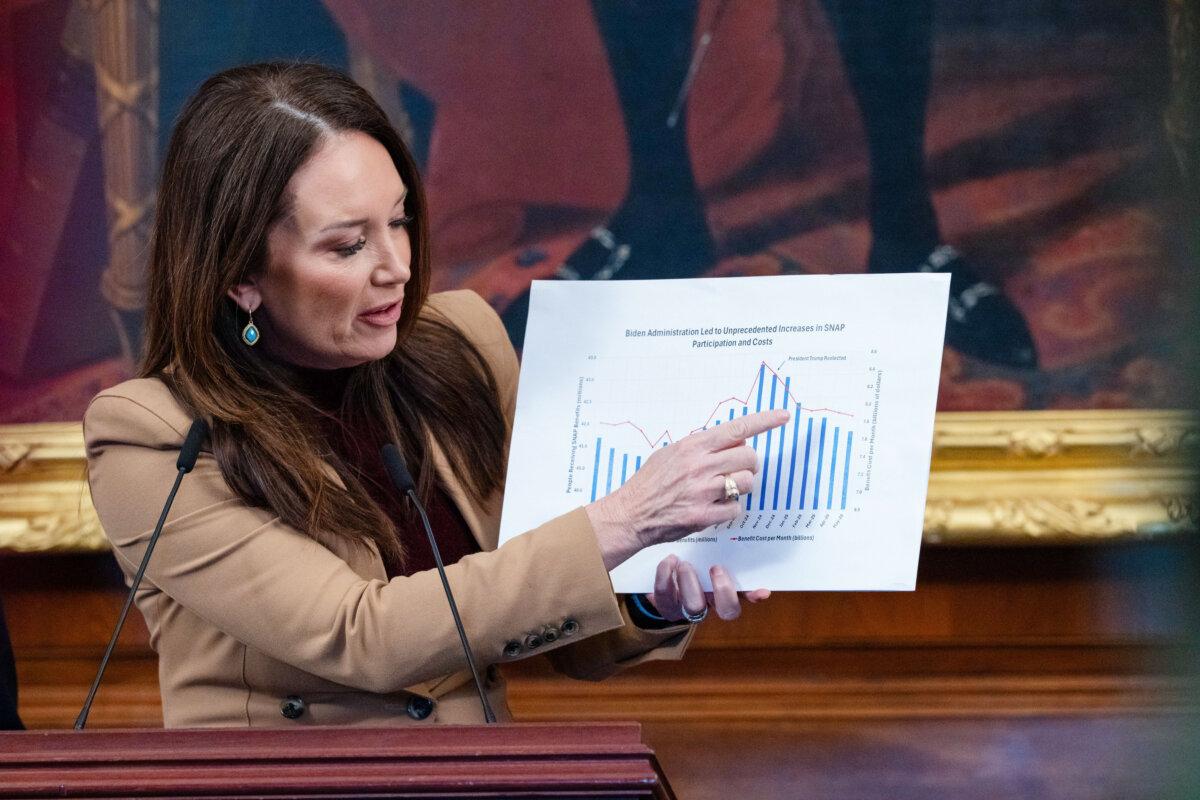
Roughly 42 million Americans use the SNAP program, receiving $177 per individual per month on average, according to USDA data.
The Epoch Times reached out to the USDA for comment but did not receive a response by publication time.