Two members of the U.S. military died when a U.S. Army Apache helicopter crashed in Bell County, Texas, on Wednesday.
The aircraft was based out of Fort Hood, near Killeen, and came down in Salado, about 20 miles away.
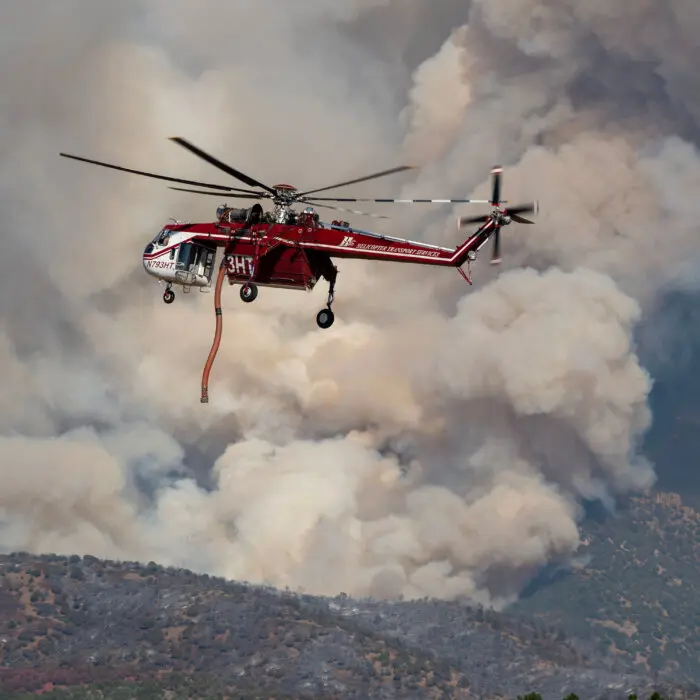
Fort Hood said the names of the two soldiers who died in the crash would be withheld “until 24 hours after notification of next of kin.” The crash also started a wildfire that required containment.
The wildfire forced several residents of Salado to evacuate their homes, though no building damage has been reported.
Emergency services, military responders, and law enforcement rushed to the scene.
“Our immediate priority is securing the site and supporting the initial response efforts,” said Brig. Gen. Ethan Diven, acting commanding general of the 1st Cavalry Division at Fort Hood, in a statement. “Our thoughts are with the crew and their families.”
Several Texas elected representatives offered condolences as well on their social media accounts, including Gov. Greg Abbott, Lt. Gov. Dan Patrick, and Sen. John Cornyn.
Abbott filled followers in on what had happened and asked them to join his wife “Cecilia and me in prayer for their families and the entire Fort Hood community,” adding that “Texas is forever indebted to those who serve our state and nation.”
According to manufacturer Boeing, the Apache AH-64 is “the world’s most advanced, proven attack helicopter” that is used by “19 countries and counting.”
An Apache is typically crewed by two people, has a length and height of 48.2 feet and 15.5 feet, respectively, and weighs a little over 15,000 lbs. when outfitted for most missions. There are currently more than 1,300 of these helicopters in service around the world, and a collective 1.3 million flight hours of combat have been recorded.
Boeing and the U.S. military have worked to improve the helicopter’s nitrogen inerting units and other systems to cut down on the damage an Apache will inflict on impact. Unless stored munitions go off, they usually do not explode.
However, downed aircraft do sometimes start fires. That is especially true on terrain that is primed for it. Salado was dry, with a daily high temperature of 101 degrees Fahrenheit.
The Apache was on a routine training flight when it went down Wednesday. No cause has yet been identified for the crash. The Central Texas Field Office of the Army Criminal Investigation Division is leading the investigation.