Two economies still in turmoil belong to Greece and Ireland. And yet, despite being side-by-side in economic despair, reactions to the situation in the two countries has been quite different.
Ireland before the crash, was a European rags-to-riches success story, enjoying a comfortable budget surplus as recently as 2007. But last year, that surplus had plummeted to a 14.3 percent deficit, and most analysts predict that it hasn’t hit bottom yet
Like much of Europe, the government has had to impose harsh belt-tightening budgets, but the economy is not showing improvement. And yet, the Irish citizenry hasn’t retaliated en masse against its government. The streets have been relatively calm for almost a year.
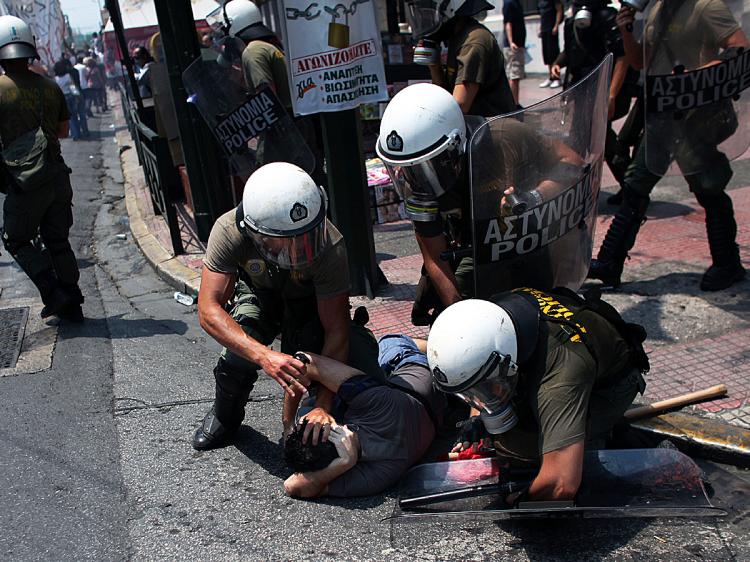
In Greece, meanwhile, protests have been violent, deadly, and unrelenting with weekly strikes planned into the unforeseeable future.
And after the issue of whether or not to bail out Greece divided European Union members, measures meant to solve the problem are having little impact. The retail market is still in a tailspin, tax revenues are likewise hurting, and unemployment is as high as 70 percent in some regions.
Why the different reactions? According to local opinion, the difference lies in government management and national temperament.
War-Like Words Pacify the Irish
By Alan McDonnell/Epoch Times Staff
Leadership is an art. Blogs, books, and “Tao-of-Management” seminars abound—guides to the Holy Grail of a leadership-by-numbers system, guaranteeing success, and the recognition of our superiors. But what do you do when there are no numbers—no precedents to guide you in painting your leadership master plan? Or when the economic well-being of an entire nation rests largely on your decisions as leader? Can recent U.S. history hold some clues for Ireland?
After an unprecedented 15-year boom—with full employment, a real-estate bubble, and perceived economic invincibility—the economy of Ireland bombed in 2009. Unemployment now sits at 14 percent, and plummeting real-estate values have left many of the previously free-spending “Celtic Tiger Cubs,” if they still have a job at all, like your average American—angry and worried about their future.
However, unlike in Greece, Irish citizens have accepted a raft of austerity and belt-tightening measures not only without riots or civil unrest, but with acceptance and, amazingly, an expected willingness to suffer even more economic pain in the near future. Why?
How have the Irish prime minister and finance minister remained in peaceful power despite inflicting bone-deep cuts on their taxpayers? Recent U.S. history may hold some answers.
The Bush and Blair administrations entered the Iraq war following an entire year of carefully warning their citizens of the “reality” of Iraqi weapons of mass destruction capability, while expressing their regret for putting U.S. and British soldiers “in harm’s way.” Bush may have further secured re-election by challenging U.S. voters to change horses in “mid-war.”
The Irish government, similarly, gave their citizens ample warning of the pain to come, outlining that the ‘weapons of mass destruction’ against the economy would have been to not impose austerity measures, and to continue government spending and not rescue the banks.
Greek Anger Boils Over
By Neli Magdalini Sfigopoulou/Epoch Times Staff
In the beginning of 2010, Europe woke up to discover that Greece had a huge, uncontrolled debt. No one knows, even now, the exact size of the yawning debt, because every time the government tried to define it, another fissure opened up.
To gain control of Greece’s dept, the European Union imposed restrictions and advised the government what steps to take to tame it. But the steps have been painful for Greek citizens—taxes were raised, salaries cut for workers, and pensions slashed for the elderly strongly upsetting the citizenry, sending them into the streets, angry and wanting to destroy.
The problem for the government is that Greeks don’t identify themselves with the mountainous debt because they say the government created it, bit-by-bit, through its corrupt mentality of seeking perpetual gain.
A sense of injustice will always make Greeks angry, and the anger covers their ears and eyes such that they can't control their actions. The smell of tear gas and Molotov cocktails filled the air during violent strikes in May. Buildings were set on fire, especially banks.
Destroying banks or any wealthy buildings means the rioters don't like those who have money; destroying cars and garbage cans means that they just want to destroy. Anarchists—highly developed and organized gangs of undetermined backing—came and spread chaos in only a few hours. The strikers mainly followed the flow, joining in throwing homemade bombs at policemen.
The corruption is not recent, it started many years back; and it’s not restricted to just government, citizens share the same attitude. After many years of selfish gains on both sides—the government stealing money from the country, and citizens stealing money from the government through cheating on taxes in simple to highly complicated ways—the time has come for all Greeks to face what they have been accruing, even though they thought they wouldn't have to pay for it.
The unions have vowed to continue with weekly strikes. Most common are ferry strikes, designed to hit Greece’s biggest industry, tourism. Transportation strikes, affecting buses and the subway, are frequent, usually lasting 24 or 48 hours, or sometimes just 6-8 hours. In August, however, there were no strikes. August is the traditional month of holidays in Greece so even the protesters and anarchists took time off.
Next, gas transport trucks and taxis have promised to strike, protesting the government’s plan, based on EU instructions, to “open” their jobs that were previously closed. This means that the transport truck license that previously cost 300,000 euros (over US$380,000) would be waved. And what happens to the truckers who still owe huge licensing debts to the bank? They don’t know, but they’d rather strike in the hopes of not having to find out.