The US and China are increasingly portrayed as equals, at opposite ends of the pole, but they are not, argues Australian academic Dr. John Lee, and it does not help other countries in the Asia Pacific region to position them that way.
A two-hour meeting between US President, Barack Obama and Chinese Premier Wen Jiabo on the sidelines of the UN General Assembly last week, rightly gained much international attention.
China is a growing economic power and it has an annual trade surplus with the US alone of over $200 billion.
There was much to discuss, most particularly the Chinese leadership’s insistence on “undervaluing” the yuan, but also regional issues like Korea and the South China Sea.
China specialists and observers alike note the rise of China in the Asian region, some with caution, others with quiet resignation and still others with adulation.
Australian defence and policy analyst, Professor Hugh White argued recently in the publication the Quarterly Essay, that China is already in the same league as the US. “A Chinese challenge to American power in Asia is no longer a future possibility but a current reality,” he wrote.
Countries in the region, including Australia and the US, should acknowledge China’s equal status and make way for the inevitable. In order for peace and stability to be maintained, countries in the region should be “prepared to make the concessions that are needed to make that kind of sharing of power possible,” Prof. White told ABC’s Lateline.
Dr. Lee, a foreign policy analyst with Sydney’s Centre of Independent Studies and a visiting fellow at Washington’s Hudson Institute, argues, however, that this view is a dangerous one for peace and stability in the region.
While acknowledging that China is growing in economic might in the Asia Pacific region, Dr. Lee says China has benefited greatly from the present order in the region and has gained legitimacy only by lying low within the present US lead status quo.
“It has largely existed as a free rider within the American led regional’s system,” he told The Epoch Times, adding that China “is not a constructive contributor, much less a constructive partner” in the region.
Dr. Lee points to China’s own system of governance saying that all the evidence indicates that China, under the present leadership, is not interested in persevering with elements of the existing democratic order in the Asia Pacific, elements that give the region its peace and stability, and include open free trade, global access to sea lanes effectively in regional global commons, freedom of the press and rule of law.
“Obviously a democratic community is not something that China subscribes to,” Dr. Lee said.
Other Asian Countries
Dr. Lee says many academics now think of Asia as China and believes it is dangerous to have a bipolar view of the world, with Asia (China) at one end of the spectrum and the US at the other.
For one, it elevates China and undermines the role of other significant countries in the region like India and Japan, and other formidable powers like, South Korea, Vietnam and Indonesia, he says.
While these countries are obviously embracing the economic benefits of China’s growth, they have distinct distrust of China under the present system and, as evidenced in its continuing stoush with Japan and other countries in the South China Sea, the communist country’s increasing assertiveness in the region.
“All of these major countries … simply do not want China to be the pre-eminent power”, said Dr. Lee, citing the erosion of democratic principles as their primary concern.
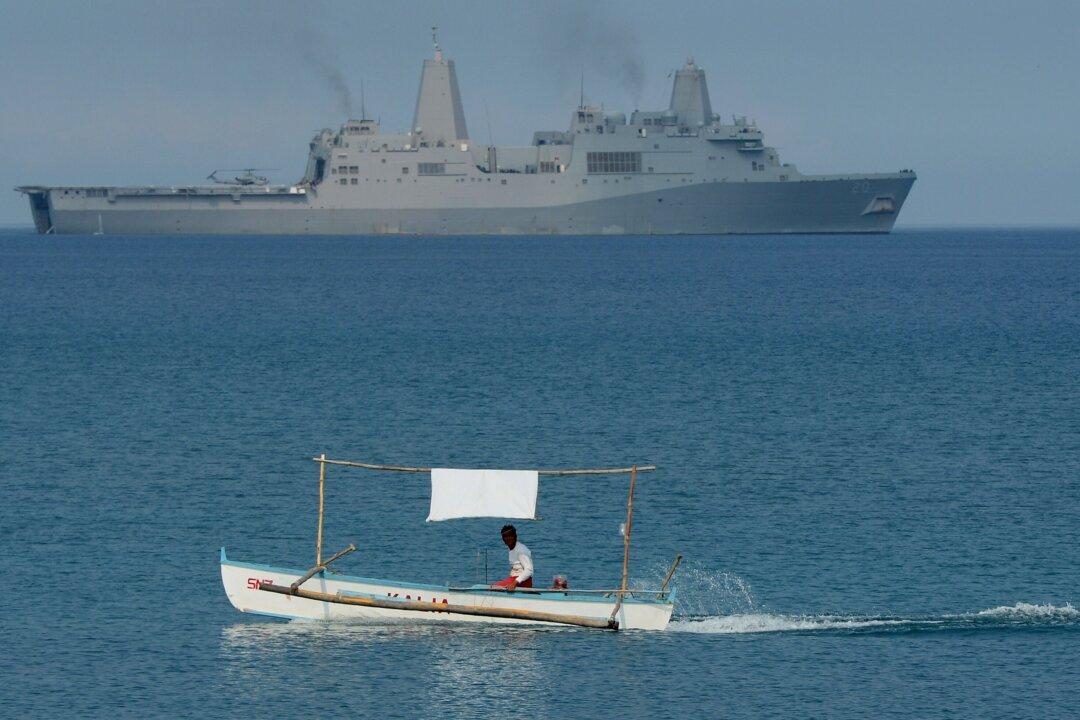
Evidence of their concern can be seen in the increasing effort Asian countries have put into engaging the US in the region.
“If these countries were not so wary of China, they would tend to bandwagon with the rising power but what we are seeing is that they are balancing against China by getting closer to America,” he said. “It’s no secret, it is quite an obvious explicit strategic doctrine in the region.”
As examples, Dr. Lee cites the strengthening of US military relations with existing strategic partners like Japan, Korea and Singapore, “especially naval cooperation in the region.”
New relations have also been forged with India and Vietnam, while full military operations have resumed with Indonesia, not seen since they were suspended in 1990.
“So if you actually watch what the countries are doing strategically and militarily, there are very clear moves to side closer to Washington, not move away from it,” Dr. Lee said.