


Tens of thousands of red-shirt protesters flooded the streets of Bangkok again yesterday, on motorcycles, in cars and pickup trucks, rallying in support of ousted, now fugitive Prime Minister Thaksin Shinawatra and calling for new elections.
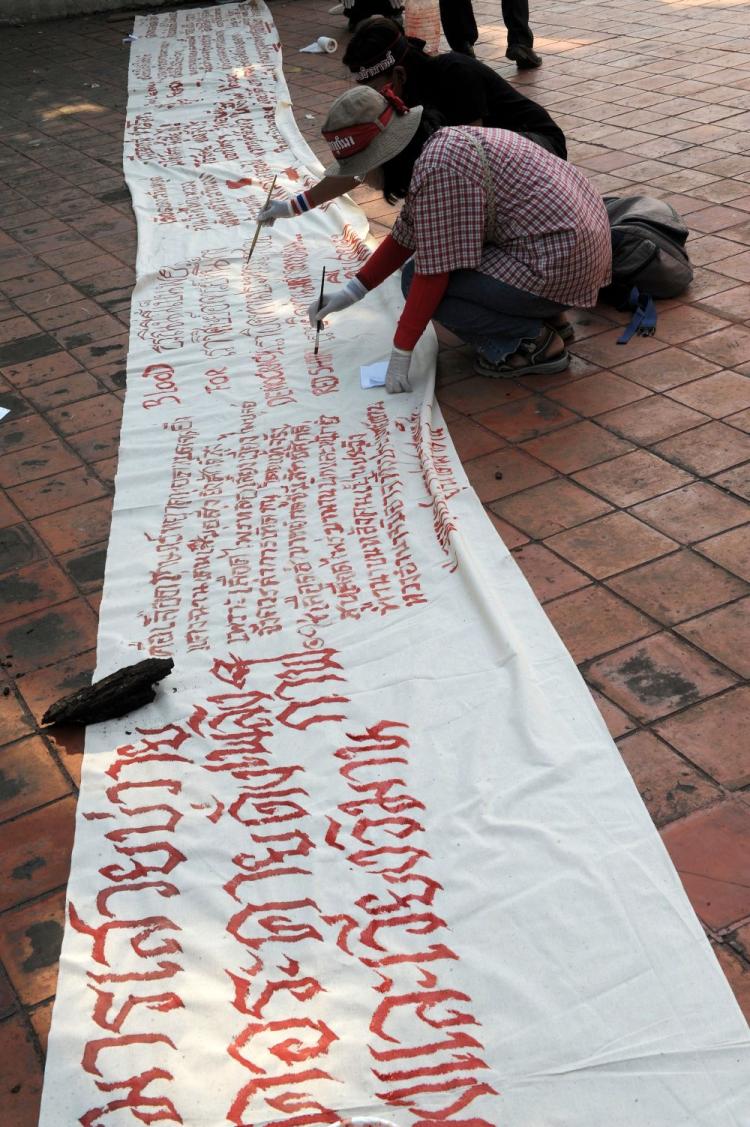
After last week’s spilling of buckets of blood collected from protesters on government buildings, on Sunday the crowds stepped up the pressure again later in the day, raising a banner in the heart of the city painted in blood calling for change in Thailand.
United Front for Democracy against Dictatorship (UDD) leaders said Sunday that they refuse to engage in peace talks with anyone but current Thai Prime Minister Abhisit Vejjajiva, and insist that government dissolution needs to be part of the talks.
Abhisit said in a television address that he is willing to discuss the proper time for elections, which will be held before the end of 2011, but he plans to stay his full term in office, according to the Wall Street Journal. He said that the agreement among coalition parties is that immediate dissolution of the government is impractical. Abhisit had assigned Education Minister Chinnaworn Boonyakiat to speak with UDD leaders but they refused.
Thaksin has meanwhile, been keeping a close hand on the UDD protests. On Sunday, he again addressed the crowds via videolink from Dubai as he had last weekend. “This week will be very important for us. I ask all of you to join the rally more and more. Red shirts in provinces should stage rallies at provincial offices from tomorrow [Monday] night,” he said according to the Bangkok Post.
Thaksin claimed as well that the government would be arresting UDD leadership and called on supporters to protect them.
Sunday was the 8th day of rallies that have been relatively peaceful. The only incidents of violence were the two soldiers wounded in a grenade attack on the Defence Ministry compound, and another grenade attack on the headquarters of the National Anti-Corruption Commission. The red shirts say they are not responsible for the attacks.
UDD leaders say they plan to continue rallies for another two weeks and plan to make the prime minister’s job difficult by following his every move closely over the next two days.
After last week’s spilling of buckets of blood collected from protesters on government buildings, on Sunday the crowds stepped up the pressure again later in the day, raising a banner in the heart of the city painted in blood calling for change in Thailand.
United Front for Democracy against Dictatorship (UDD) leaders said Sunday that they refuse to engage in peace talks with anyone but current Thai Prime Minister Abhisit Vejjajiva, and insist that government dissolution needs to be part of the talks.
Abhisit said in a television address that he is willing to discuss the proper time for elections, which will be held before the end of 2011, but he plans to stay his full term in office, according to the Wall Street Journal. He said that the agreement among coalition parties is that immediate dissolution of the government is impractical. Abhisit had assigned Education Minister Chinnaworn Boonyakiat to speak with UDD leaders but they refused.
Thaksin has meanwhile, been keeping a close hand on the UDD protests. On Sunday, he again addressed the crowds via videolink from Dubai as he had last weekend. “This week will be very important for us. I ask all of you to join the rally more and more. Red shirts in provinces should stage rallies at provincial offices from tomorrow [Monday] night,” he said according to the Bangkok Post.
Thaksin claimed as well that the government would be arresting UDD leadership and called on supporters to protect them.
Sunday was the 8th day of rallies that have been relatively peaceful. The only incidents of violence were the two soldiers wounded in a grenade attack on the Defence Ministry compound, and another grenade attack on the headquarters of the National Anti-Corruption Commission. The red shirts say they are not responsible for the attacks.
UDD leaders say they plan to continue rallies for another two weeks and plan to make the prime minister’s job difficult by following his every move closely over the next two days.