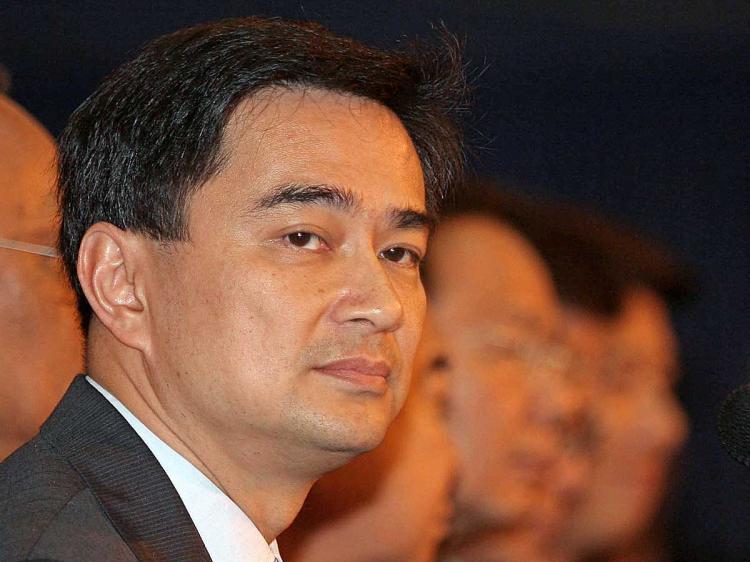
BANGKOK, Thailand—After a bloody military action against anti-government protesters in Bangkok on Saturday, the Thai prime minister has lost the moral high ground, says a leading analyst based in Thailand.
“[Prime Minister Abhisit Vejjajiva] said he was not going to use force and they did,” said Christopher Bruton, director of Dataconsult Ltd., a Bangkok based economic advisory network.
Earlier last week, the Thai government said that they would maintain a peaceful approach in dealing with thousands of red shirt anti-government protesters who have been rallying in Bangkok for a month to pressure the government to dissolve Parliament and call fresh elections.
However, Prime Minister Abhisit on Wednesday declared that the red shirts—many who are supporters of former Prime Minister Thaksin Shinawatra—could no longer be considered peaceful after they stormed the nation’s Parliament forcing members and ministers to flee.
Prime Minister Abhisit declared a state of emergency and the troops were sent in on Saturday to clear the protesters from one of two bases in the Thai capital. The subsequent clash in Bangkok’s historic quarters left 21 people dead and at least 858 injured.
“Now it wasn’t the force that caused the deaths and injuries, apparently it was troublemakers in the crowd who did that, but still it doesn’t help,” said Bruton who has lived in Thailand since 1970.
“But the fact is there was an attempt to break up the demonstrations and that effect did result in death and injuries through the subsequent chain of reaction,” he said.
“[Prime Minister Abhisit Vejjajiva] has lost credibility for one thing and he has lost a kind of respect that he might have had before for trying to move against corruption, trying to do good governance even knowing he was not successful in either,” said Bruton.
The Thai prime minister is now being looked at as quite ineffective and unable to influence the situation said Bruton, adding that he thought the Democrats will try to hold power till October so they could appoint people to key military and civil positions.
“[At] the end of September are the military and civil servants retirements and promotions and the present government will be very anxious to keep their own hand in appointing people, first and foremost the commander in chief of the military and then also the senior people—they will want their nominees as opposed to somebody else’s,” he said.
On Monday, Prime Minister Abhisit’s position suffered two heavy blows. The first being the Thai army chief saying the solution to the crisis is to dissolve Parliament and the second was the nation’s Election Commission recommending the prime minister’s Democrat Party be dissolved for receiving of a large illegal campaign donation five years ago.
Bruton said while the Democrat Party had been promoting itself as being anti-corrupt, it has proved not to be the case.
“The Democrats have painted themselves into a corner on this one—they are corrupt, just like any other [Thai] party,” he said.
Along with the illegal donation, Bruton said there was a well-publicized corruption incident in the Democrat’s health ministry portfolio and corruption issues have plagued the Democrat’s coalition partners in the Ministry of Transport.
Bruton said that he did not think that the parties of controversial former Prime Minister Thaksin Shinawatra ever emphasized being honest.
“I think everyone knows they are very corrupt and they wouldn’t try to pretend otherwise,” said Bruton. “Thaksin never really made a big play for being anti-corruption or not corrupt as everyone knows he is very corrupt.”
While being out of the country to avoid jail time for corruption charges, Thaksin remains a key player in the current crisis through funding red shirt efforts and addressing the protesters by video link on a regular basis. Thaksin is a billionaire businessman whose government was ousted by a military coup in 2006.
“[Prime Minister Abhisit Vejjajiva] said he was not going to use force and they did,” said Christopher Bruton, director of Dataconsult Ltd., a Bangkok based economic advisory network.
Earlier last week, the Thai government said that they would maintain a peaceful approach in dealing with thousands of red shirt anti-government protesters who have been rallying in Bangkok for a month to pressure the government to dissolve Parliament and call fresh elections.
However, Prime Minister Abhisit on Wednesday declared that the red shirts—many who are supporters of former Prime Minister Thaksin Shinawatra—could no longer be considered peaceful after they stormed the nation’s Parliament forcing members and ministers to flee.
Prime Minister Abhisit declared a state of emergency and the troops were sent in on Saturday to clear the protesters from one of two bases in the Thai capital. The subsequent clash in Bangkok’s historic quarters left 21 people dead and at least 858 injured.
“Now it wasn’t the force that caused the deaths and injuries, apparently it was troublemakers in the crowd who did that, but still it doesn’t help,” said Bruton who has lived in Thailand since 1970.
“But the fact is there was an attempt to break up the demonstrations and that effect did result in death and injuries through the subsequent chain of reaction,” he said.
“[Prime Minister Abhisit Vejjajiva] has lost credibility for one thing and he has lost a kind of respect that he might have had before for trying to move against corruption, trying to do good governance even knowing he was not successful in either,” said Bruton.
The Thai prime minister is now being looked at as quite ineffective and unable to influence the situation said Bruton, adding that he thought the Democrats will try to hold power till October so they could appoint people to key military and civil positions.
“[At] the end of September are the military and civil servants retirements and promotions and the present government will be very anxious to keep their own hand in appointing people, first and foremost the commander in chief of the military and then also the senior people—they will want their nominees as opposed to somebody else’s,” he said.
On Monday, Prime Minister Abhisit’s position suffered two heavy blows. The first being the Thai army chief saying the solution to the crisis is to dissolve Parliament and the second was the nation’s Election Commission recommending the prime minister’s Democrat Party be dissolved for receiving of a large illegal campaign donation five years ago.
Bruton said while the Democrat Party had been promoting itself as being anti-corrupt, it has proved not to be the case.
“The Democrats have painted themselves into a corner on this one—they are corrupt, just like any other [Thai] party,” he said.
Along with the illegal donation, Bruton said there was a well-publicized corruption incident in the Democrat’s health ministry portfolio and corruption issues have plagued the Democrat’s coalition partners in the Ministry of Transport.
Bruton said that he did not think that the parties of controversial former Prime Minister Thaksin Shinawatra ever emphasized being honest.
“I think everyone knows they are very corrupt and they wouldn’t try to pretend otherwise,” said Bruton. “Thaksin never really made a big play for being anti-corruption or not corrupt as everyone knows he is very corrupt.”
While being out of the country to avoid jail time for corruption charges, Thaksin remains a key player in the current crisis through funding red shirt efforts and addressing the protesters by video link on a regular basis. Thaksin is a billionaire businessman whose government was ousted by a military coup in 2006.