
In June 2025, police in Europe shut down a darknet marketplace for drugs called Archetyp Market, which had more than 600,000 users, and the following month the FBI announced that Operation Grayskull had led to the sentencing of 18 offenders to a total of 300 years for offenses relating to child sexual abuse material on the darknet.
“You would be amazed how much personal data is drifting around on the darknet just from breach notifications,” Bob Erdman, associate vice president of research and development at cybersecurity company Fortra, based in Eden Prairie, Minnesota, told The Epoch Times.
Darknet Generation Gap
“When I speak with older Americans, many are shocked by the types of data on the darknet and how often it’s exposed or traded,” Chris Nyhuis, CEO at Vigilant, an Ohio-based cybersecurity firm and a human trafficking investigator, told The Epoch Times in an email.“For younger more technical generations there is ... often a sense of resignation,” Nyhuis said. “They’ve grown up with breaches, so data exposure feels almost inevitable to them.”


“Data released on the darknet is not a darknet problem, it just makes distributing data easier,” Nyhuis said.
He said he believes that companies are still not protecting data well enough.
Erdman said criminals were always trying to get access to logins and passwords, bitcoin addresses, and other data, which they would sell in darknet marketplaces that trade in stolen identities and compromised databases.
So how does the darknet work?
Nyhuis said the darknet is almost a “mirror image” of the internet most of us know, and that it even has its own search engines.
But it can only be accessed through the Tor browser, which provides secrecy and anonymity by passing messages through a network of connected Tor relays, which are specially configured computers.
Nyhuis said a simple way of understanding the darknet is imagining each Tor node as a house with numerous doors opening off of it, which are not visible.
Silk Road Showed the Way
In the early days of the darknet, sites such as Silk Road began to operate and enable illicit marketplaces for narcotics and other illegal products and services.Silk Road operated between January 2011 and October 2013. In May 2015, its 31-year-old founder, Ross Ulbricht, aka “Dread Pirate Roberts,” was jailed for life and ordered to forfeit $183 million.
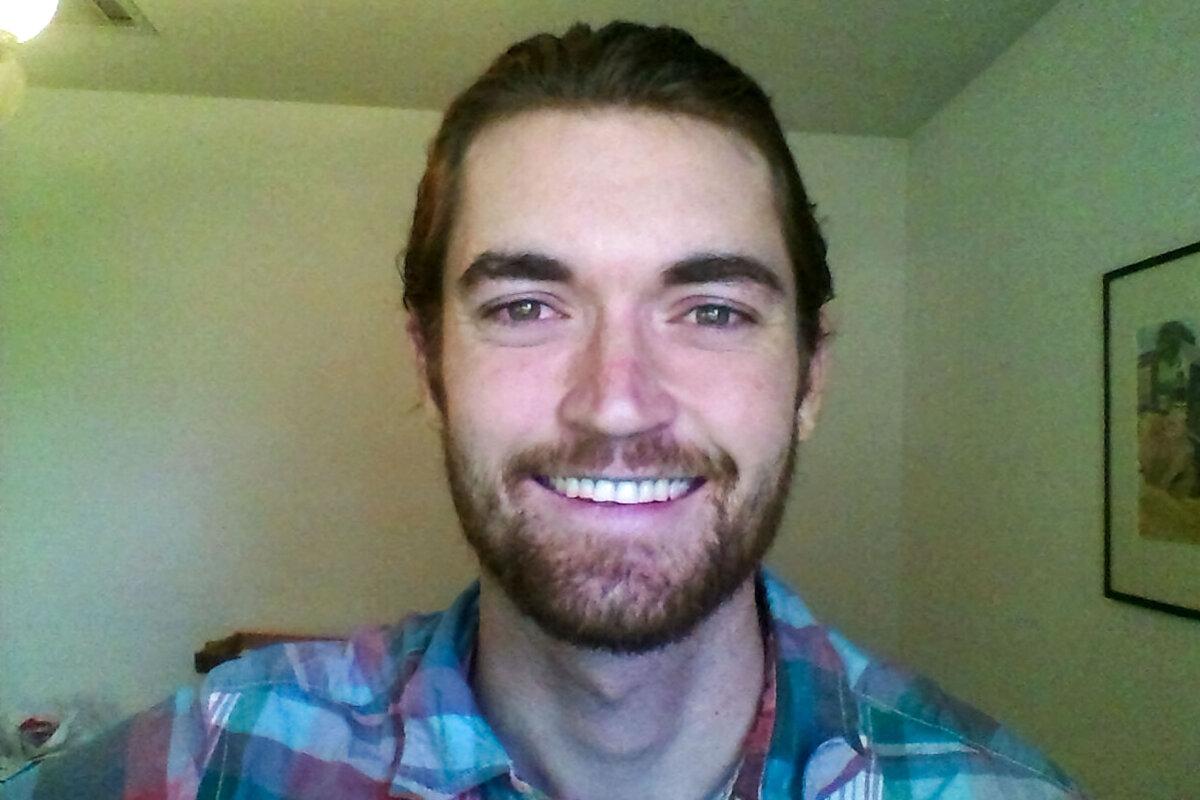
Ulbricht created the blueprint that made such darknet marketplaces so successful, Brian Townsend, a retired Drug Enforcement Administration special agent who runs courses on the darknet, told The Epoch Times by email.
There is a myth that the darknet is hard to use, according to Missouri-based Townsend.
“In reality, the learning curve is very low, and it is quite easy to get on the dark web,” Townsend said. “With relative ease, people can buy and sell drugs, stolen credit cards, fake identities, child pornography, or pretty much anything else you can think of.”
In September 2022, Reed Churchill, 27, from Fayetteville, Arkansas, became a victim of the darknet when he took pills containing fentanyl that he had bought from a darknet website, thinking that they were oxycodone.
Since then, Churchill’s father, David Churchill, has been attempting to warn others.
“These are not good people you’re talking to on the darknet, whether it’s about drugs or pornography or whatever is on there,” he told the FBI. “Nobody on that side of the computer has any good intentions for you.”
In October 2024. Rajiv Srinivasan, 37, from Houston was jailed for 19 years and Michael Ta, 25, from Westminster, California, was jailed for 21 years for supplying the counterfeit M30 oxycodone pills containing fentanyl that killed Reed on a darknet website called Dark0de.
Nyhuis said there are people using the darknet for good reasons such as investigative journalism or the exposure of human rights abuses in totalitarian states.
‘Fighting Evil, or Doing Evil’
“The majority [of] uses of it are either fighting evil, or doing evil,” said Nyhuis, who said more darknet users have bad motives than have good ones.Nyhuis said he has a theory that a lot of people who had time on their hands during the COVID-19 pandemic learned a lot about the darknet.
“Now people are setting up nodes left and right, and you have a much more anonymous environment,” he said.
According to him, it is now possible to use ChatGPT to create a Tor node.
“It will walk you through the exact steps to do that, even give you the code that you need to copy and paste, and you can turn up a Tor node,” Nyhuis said.
There are an estimated 1.3 billion websites in the world. Delaware-based cybersecurity company DeepStrike estimates that only 0.01 percent of those are on the darknet but that Tor traffic rose to 3 million users per day in 2025.
So why can we not just ban Tor browsers and switch off the darknet?
“China has tried blocking known Tor nodes to try to throttle traffic,” Nyhuis said. “But it’s really a cat-and-mouse game. There’s no main kill switch.”

So rather than try to kill off the darknet—which appears to be impossible—intelligence services and law enforcement are learning to live with it and deal with the threats within it.
“I can assure you that law enforcement is active on these [darknet] marketplaces,” Townsend said. “We aren’t just watching from the sidelines.”
“Investigators are embedded in these communities, often operating undercover to identify the players behind the screen,” he said.
“The international law enforcement community also works incredibly well together, sharing intelligence across borders to combat these global criminal networks,” Townsend said. “Because the darknet doesn’t recognize national boundaries, our response has to be just as seamless.”
But even when law enforcement learns about these darknet websites, closing them down is not necessarily the solution.
“Shutting down one darknet communication channel rarely solves the problem because hackers can quickly bring another one online, either from backups or [by] simply moving to another platform,” Nyhuis said.
“The darknet is just a tool and even if a specific site is taken offline criminals can spin up another one quickly.”
Erdman said he does not see the darknet going away as long as there is a market for drugs, stolen data, and child sexual abuse images.
“Even if Tor was ripped down tomorrow, something would be built back up in its place,” he said.
“It’s a lot of work for governments to crack down,” Erdman said. “You can try and limit it, you can try and block the traffic ... but users will find a way to get around it.”