This copy is for your personal, non-commercial use only. Distribution and use of this material are governed by our Subscriber Agreement and by copyright law. For non-personal use or to order multiple copies, please contact The Epoch Times Reprints.
Two senior Democratic senators have accused the Trump administration of failing to address concerns about export controls quickly enough, warning that advanced American AI chips may have reached Chinese companies through overseas subsidiaries.
Sens. Elizabeth Warren (D-Mass.) and Andy Kim (D-N.J.) issued the statement on Monday, the day after the Department of Commerce released guidance on the issue.
According to the Senate Banking Committee website, the two senators said delays in clarifying regulations over the past 18 months created uncertainty over whether certain overseas subsidiaries of Chinese-headquartered firms required export licenses.
The guidance issued by the Commerce Department’s Bureau of Industry and Security (BIS) stated that existing license requirements for advanced AI chips apply to subsidiaries of Chinese-headquartered companies, even when those subsidiaries are located outside China.
BIS said the guidance clarifies existing requirements rather than creating a new restriction. Warren and Kim’s primary complaint focused on the timing and perceived delays rather than the substance of the guidance itself.
The senators said the administration should have acted sooner to remove any ambiguity.
In a joint statement, they said: “On Sunday afternoon, the Trump Administration revealed that its failure to update export control regulations over the last year and a half may have inadvertently allowed America’s most advanced AI chips to flow to companies headquartered in China, potentially fueling China’s military capabilities.”
Warren and Kim suggested that the BIS guidance, which publicly acknowledged questions about how existing rules applied to overseas subsidiaries, highlighted a potential loophole that may have existed previously.
Warren, ranking member of the Senate Banking Committee, and Kim, who has a senior role on its national security subcommittee, called on Commerce Secretary Howard Lutnick to appear before Congress.
They described the department’s approach as “reckless mismanagement” of export controls.
The Epoch Times requested comment from the Department of Commerce and BIS. Neither had responded by the time of publication.
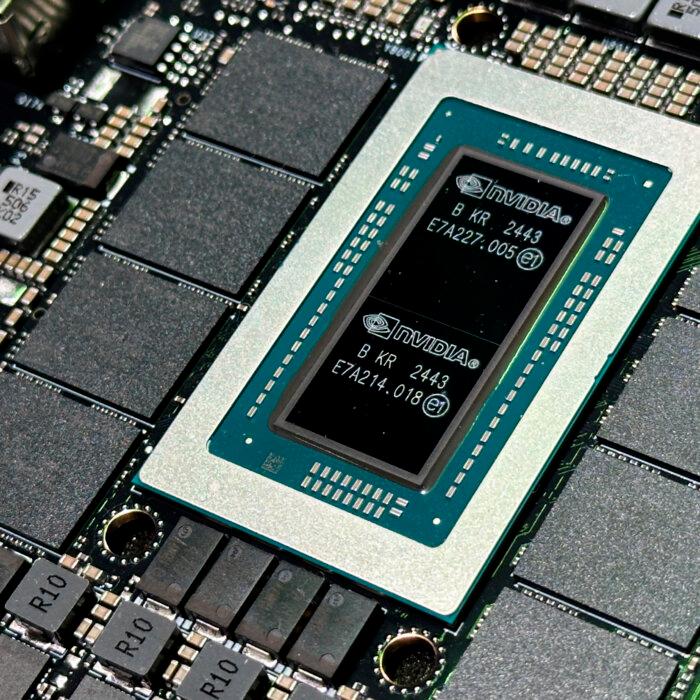
A spokesperson for chipmaker Nvidia said the guidance does not change its current business practices. The company said licenses are already required for controlled products sold to Chinese-headquartered firms.
The rules target high-performance semiconductors used in artificial intelligence, which can support both commercial and military applications.
National security experts and policymakers have long warned that these advanced AI chips could enhance China’s military and intelligence capabilities if diverted.
Export controls on advanced chips to China began in October 2022, when BIS introduced new restrictions on certain processors and semiconductor manufacturing equipment.
Those measures were expanded in 2023 to cover additional products and destinations, including Macau. Further restrictions were introduced in subsequent years, including measures affecting some foreign-made chips that rely on U.S. technology.
In early 2025, the Trump administration withdrew a proposal from the last administration known as the AI Diffusion Framework, which would have imposed broader global licensing requirements on advanced AI chips. Administration officials said the proposal would have imposed unnecessary burdens on U.S. allies.
The May 2026 guidance followed questions about how existing export controls applied to overseas subsidiaries of Chinese-headquartered companies. BIS said the guidance reaffirmed that license requirements apply based on company ownership and control, not solely on the location of a subsidiary.
Warren and Kim have previously raised concerns about AI chip export policy. In 2025, they joined other Democrats in criticizing decisions they said could weaken restrictions on advanced AI chip sales to China.
The current dispute highlights ongoing tensions between national security concerns and commercial interests. American companies such as Nvidia remain dominant suppliers of the most advanced AI processors.
The scale of any shipments that may have occurred through overseas subsidiaries remains unclear. While some industry sources have suggested that substantial numbers of chips may have been exported under interpretations that differed from the latest guidance, the U.S. government has not released official figures.
The issue remains under congressional scrutiny. Whether Lutnick will testify before the Senate Banking Committee has not yet been confirmed.
The controls form part of a broader U.S. effort to maintain leadership in artificial intelligence while limiting the transfer of advanced technology to strategic competitors.