


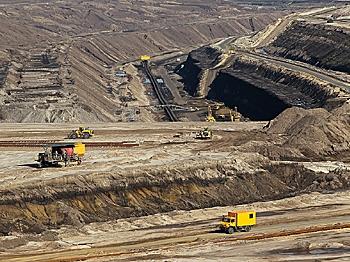
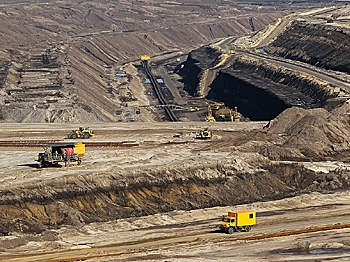
A proposed open-pit gold and copper mine in Canada could be given the go-ahead as early as Friday, despite opposition from native tribes and findings by a federal review panel that it would pose a significant threat to the environment.
The Taseko Mines Prosperity project, slated for the Nemiah Valley, is about 100 miles southwest of Williams Lake in British Columbia and would span 22 miles and include an access road, a mill, and 77-mile-long power transmission line.
The $800 million project would drain pristine Fish Lake—renowned for its rainbow trout—and use Little Fish Lake and Fish Creek as tailings ponds, and contaminate other nearby bodies of water. Tailings ponds are used to store waste such as oil residues and heavy metals from oil sands processing. Canada is one of a few countries that allow using natural bodies of water as tailings ponds. Since the government approved the destruction of two Newfoundland lakes in 2006, mining companies have applied to use 13 lakes as dump sites.
The project has already passed a provincial environmental assessment and now hinges on the federal government’s decision.
Many politicians, businesses, and laid off mill workers in the Williams Lake area support the project, which would bring hundreds of much-needed jobs to a region impacted by the fallout from a pine beetle infestation that caused widespread damage to forests in the region.
But Chief Joe Alphonse of the Tsilhqot’in First Nation says the mine, which would be “right in our back yard,” is unacceptable to the Tsilhqot’in.
Alphonse says the band has multiple concerns around the project, in particular the destruction of Fish Lake and potential harm to the Chilcotin Lake sockeye salmon run, on which the band depends.
Besides being an abundant source of trout and one of the top 10 fishing lakes in British Columbia, he says Fish Lake has for centuries been of profound cultural and spiritual significance to the Tsilhqot’in.
“It would be huge loss to our people, our way of life.”
The Taseko Mines Prosperity project, slated for the Nemiah Valley, is about 100 miles southwest of Williams Lake in British Columbia and would span 22 miles and include an access road, a mill, and 77-mile-long power transmission line.
The $800 million project would drain pristine Fish Lake—renowned for its rainbow trout—and use Little Fish Lake and Fish Creek as tailings ponds, and contaminate other nearby bodies of water. Tailings ponds are used to store waste such as oil residues and heavy metals from oil sands processing. Canada is one of a few countries that allow using natural bodies of water as tailings ponds. Since the government approved the destruction of two Newfoundland lakes in 2006, mining companies have applied to use 13 lakes as dump sites.
The project has already passed a provincial environmental assessment and now hinges on the federal government’s decision.
Many politicians, businesses, and laid off mill workers in the Williams Lake area support the project, which would bring hundreds of much-needed jobs to a region impacted by the fallout from a pine beetle infestation that caused widespread damage to forests in the region.
But Chief Joe Alphonse of the Tsilhqot’in First Nation says the mine, which would be “right in our back yard,” is unacceptable to the Tsilhqot’in.
Alphonse says the band has multiple concerns around the project, in particular the destruction of Fish Lake and potential harm to the Chilcotin Lake sockeye salmon run, on which the band depends.
Besides being an abundant source of trout and one of the top 10 fishing lakes in British Columbia, he says Fish Lake has for centuries been of profound cultural and spiritual significance to the Tsilhqot’in.
“It would be huge loss to our people, our way of life.”


