

Results were announced after market close yesterday and showed that despite the recent bailouts by the Bush and Obama administrations, ten of the nation’s 19 biggest lenders need a combined $75 billion in capital cushion should economic conditions deteriorate.
The gap of $75 billion is still more optimistic than some analysts had feared.
Individual results had been trickling in for days, buoying the stock market as investors digested the news as positive. None of the major banks are in dire shape unless the economy takes a severe nose dive, and latest economic figures from housing sales to new unemployment benefits suggest that the economy may be stabilizing.
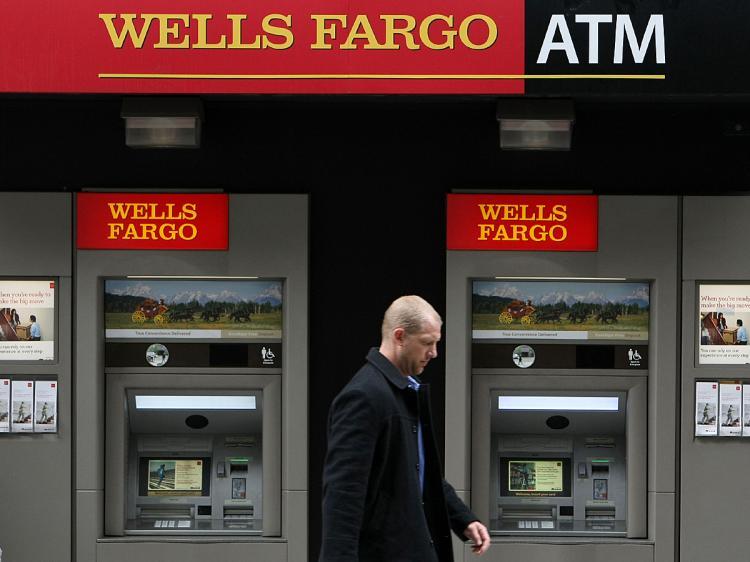
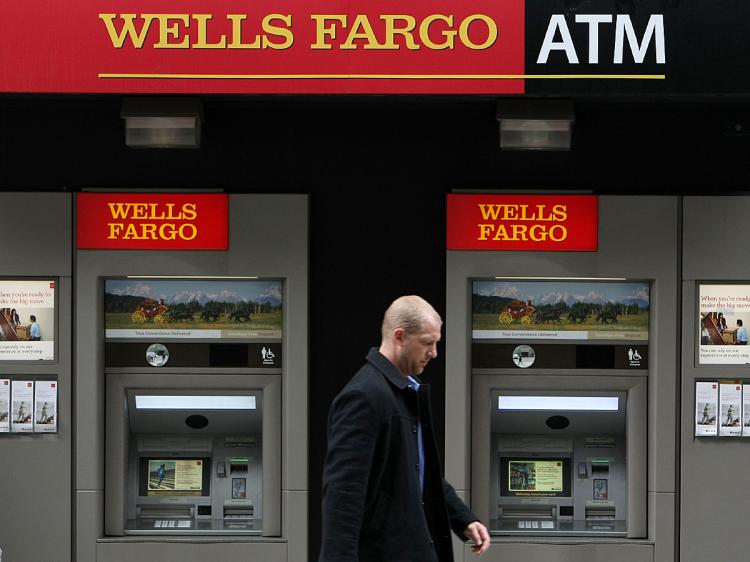
The Fed said that mega-lenders Bank of America Corp., Wells Fargo & Co., and GMAC LLC need the most capital, with Bank of America topping the list at $34 billion. Wells needs $13.7 billion, and GMAC needs $11.5 billion.
Several others, such as Citigroup Inc., Morgan Stanley, and Fifth Third Bancorp, have small shortfalls.
JPMorgan Chase & Co., Bank of New York Mellon Corp., and Goldman Sachs Group Inc., headline a group of banks in better shape—the Fed said no additional capital are needed for these banks.
Who’s Healthy, Who’s Not
The stress test is a way for the Fed to monitor the health of the nation’s banks under a variety of simulated stress factors—a sort of physical checkup. Officials investigated banks’ securities and loans holdings, lending practices, capital sources, and current business strategies.
The tests attempt to quantify the impact on U.S. banks’ balance sheets and their abilities to lend if unemployment rates rise to greater than 10 percent, if home value declines continue, or if consumer loan and credit card defaults balloon.
More importantly, the results are a signal to the Fed exactly how much more money it—and U.S. taxpayers—must commit to the ailing banking sector.
“We chose a strategy to lift the fog of uncertainty over bank balance sheets and to help ensure that the major banks, individually and collectively, had the capital to continue lending even in a worse than expected recession,” Geithner wrote in an editorial for the New York Times.
The Federal Reserve said on Thursday that banks identified as needing additional capital have 30 days to present a plan to raise funds, and another six months to carry it out.
Regulators have also suggested that more management changes could be ahead for some firms, which could paint a target squarely on the doors of Bank of America, whose CEO Kenneth Lewis recently lost his position as Chairman in a recent shareholders meeting.
Stressing Out About Capital
Fed officials said that to address the capital shortfalls, banks could convert preferred shares into common equity—which would make the government a major shareholder—or seek help from private investors in the form of an asset sale, loan, or stock offering.
Citigroup has already announced plans to convert a share of its government loan into common shares—making the Fed a 36 percent shareholder in the bank.
Wells Fargo on Thursday announced that it would sell $6 billion of common stock to the public to address its capital shortfall. Morgan Stanley is preparing a similar sale, in additional to a debt offering.
Banks are reluctant to convert government preferred shares into common stock for fear of increased control and diluting common shareholders. But for banks that have no other ways of raising money, the U.S. government acts as a last resort.
Fed Too Optimistic?
Some experts argue that the Fed may be painting too rosy of a picture.
In an analysis titled “We Can’t Subsidize the Banks Forever,” NYU professors Matthew Richardson and Nouriel Roubini said that the stress test finding “would be good news if it were credible.”
“The International Monetary Fund has just released a study of estimated losses on U.S. loans and securities. It was very bleak—$2.7 trillion, double the estimated losses of six months ago,” he wrote.
“Our estimates at RGE Monitor (Nouriel Roubini’s Global EconoMonitor) are even higher, at $3.6 trillion, implying that the financial system is currently near insolvency in the aggregate,” they claimed. “With the U.S. banks and broker-dealers accounting for more than half these losses, there is a huge disconnect between these estimated losses and the regulators’ conclusions.”
Other analysts say that the tests are using the wrong assumptions and can’t be indicative of financial health at major banks.
“The stress tests are, at best, a waste of time,” Mike Holland, Chairman of Holland & Co., said in a MSNBC interview. “At worst, they’re misleading and testing the wrong things. The idea of using some level of unemployment to say whether Citigroup is not as strong as JP Morgan to me is laughable.”


