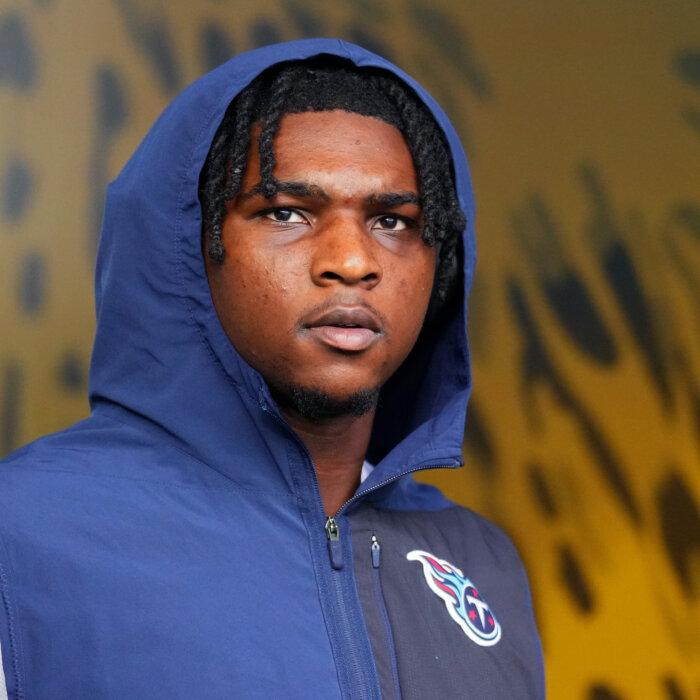
The Tennessee Titans have a clear plan for wide receiver Carnell Tate. The Titans surprised the league by drafting Ohio State wide receiver Tate with the fourth overall pick in the 2026 NFL Draft. Assistant general manager Dave Ziegler said at a post-draft press conference on April 27 that Tate is a complete receiver and was a no-brainer decision for them come draft night.
“What you’re looking for almost anytime you’re making a pick is, you want to have a consensus as an organization on what the vision for the player is and how they fit, whether it be into your offense, or into your defense, and what that looks like,” Ziegler said.
“And at the end of the day with Carnell, we just had a very good—I think there was a consensus vision on what he’s going to do, where he’s going to play, how he’s going to fit in, and what he’s going to bring to this team. So, the fact that we were comfortable with that, I think led us to Carnell.”
On draft night, they traded back into the first round to take toolsy edge prospect Keldric Faulk out of Auburn with the 31st overall pick, and took inside linebacker Anthony Hill Jr. out of Texas in the second round.
Tate is a weapon for second-year quarterback Cam Ward, and fills a weakness the Titans’ receiver room suffered from: as a team, the Titans were tied for the 11th-most drops in the league in 2025. The wide receivers specifically had a case of the dropsies all season: Elic Ayomanor had 5, Calvin Ridley had 4, Chimere Dike had 2. In his final season at Ohio State, Tate had zero drops on 53 targets, according to Pro Football Focus.
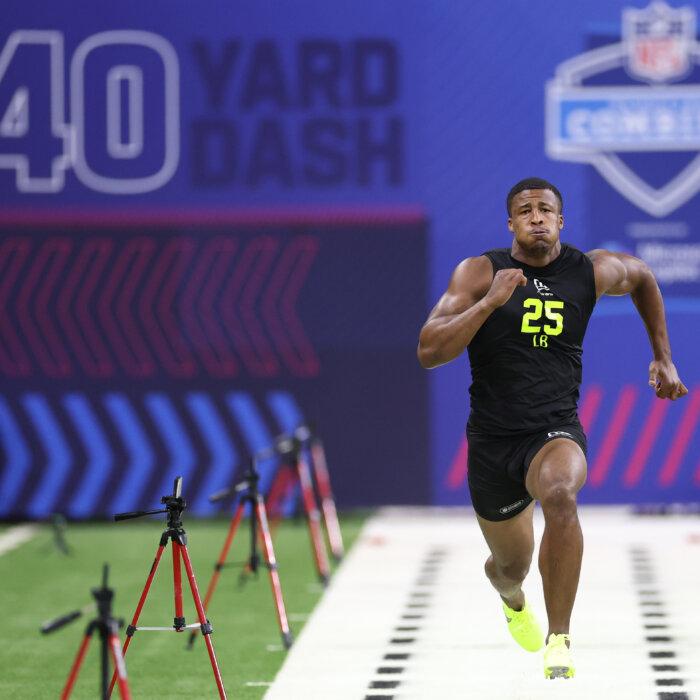
Tate also brings size to the position at 6-foot-2 and 192 pounds with a 6-foot-6 wingspan. Ziegler said he has a completeness to his game that most receivers of his size lack.
“He’s a receiver that can win at all three levels of the defense. You see him stretch the field. I think the unique thing about Carnell, too, is for a guy that’s 6'2, he’s a guy that can separate in a short area. He can run the majority of the route tree. And so what that means is you get a player that can also be productive on third down. But then you have this catch radius, and the size, and big hands, where you see him show up in the red zone ... a lot of times you get the bigger, taller, linear receivers, I call them first and second down guys. They’re not productive on third down because they don’t have the route tree to do that,” Ziegler said.
“Or you have a bigger guy that doesn’t consistently play big at the catch point. Carnell checked a lot of those boxes in that way, where we’re feeling [we’re] really getting a complete three-down player that can contribute on these critical downs and these critical situations—third down, in the red zone. And so for us having that vision, seeing that consensus, he was a clear guy for us to take, and we were excited about it.”
Tate played three years at Ohio State. He appeared in 13 games as a freshman, though he did not start. He had 18 catches for 264 yards and a touchdown. He became a starter in his sophomore season and won a national championship with the Buckeyes; in 15 games, he caught 52 passes for 733 yards and 4 touchdowns. In his junior year, he started 11 games and caught 51 passes for 875 yards and 9 scores.