In “fútbol” folklore, the world’s best players honed their skills playing in the backstreets, the barrios, or the dirt lots with nothing more than a ball and a dream.
In reality, most professional soccer players around the globe, at every level, let alone top-flight European leagues and national teams, spent much of their youth in a structured soccer academy program.
This includes the legendary Pelé, who led Brazil to its first World Cup title in 1958 at the age of 17, and Argentina’s Lionel Messi, hailed as the greatest player ever.
It’s also a key reason why only a handful of countries from Europe and three from South America have claimed soccer’s top honor, while nations across Asia, North America, and Africa try to emulate the player-pyramid system that underpins a multi-billion-dollar industry and the globe’s most popular sport.
“It’s a big part of the ecosystem in top-level football,” Gerard Akindes, a Qatar-based global sports development consultant and professor, told The Epoch Times. “Pay-to-play doesn’t exist in that system.”
Europe and South America
The roots of soccer are traced back to late 19th-century England. The game was entrenched with physical fitness instruction and extracurricular activities at boys’ schools; the education component played a key role in youth soccer development.
In France, all elementary school-age children have access to free recreation-level soccer that’s funded by local municipalities. Trained coaches provide age-appropriate instruction, said Akindes, a Benin native who studied youth soccer development in France and Africa.
By middle school, it becomes more than a game.
The strongest players from these programs are identified and invited to try out for a youth soccer academy program fully funded and run by a professional team such as Paris Saint-Germain.
The richest clubs own boarding schools, although many professional teams throughout Europe have arrangements with public schools and then pay host families for accommodations.
“We’re talking about only the best young players at these boarding schools,” Akindes said. “You quickly learn that every player has a different development plan.”
At the “pre-professional” level, which begins at about age 16, academies cut student-athletes who are not meeting expectations while continuing to recruit new players across all age groups, often from other countries, Akindes said.
The exiled players can look for another club with a better chance of latching on in the lower divisions of professional soccer, Akindes said.
Professional teams in Latin America, mainly Brazil, Argentina, Uruguay, Chile, Colombia, and Mexico, have a similar system, although less elaborate and largely a pipeline to European soccer.
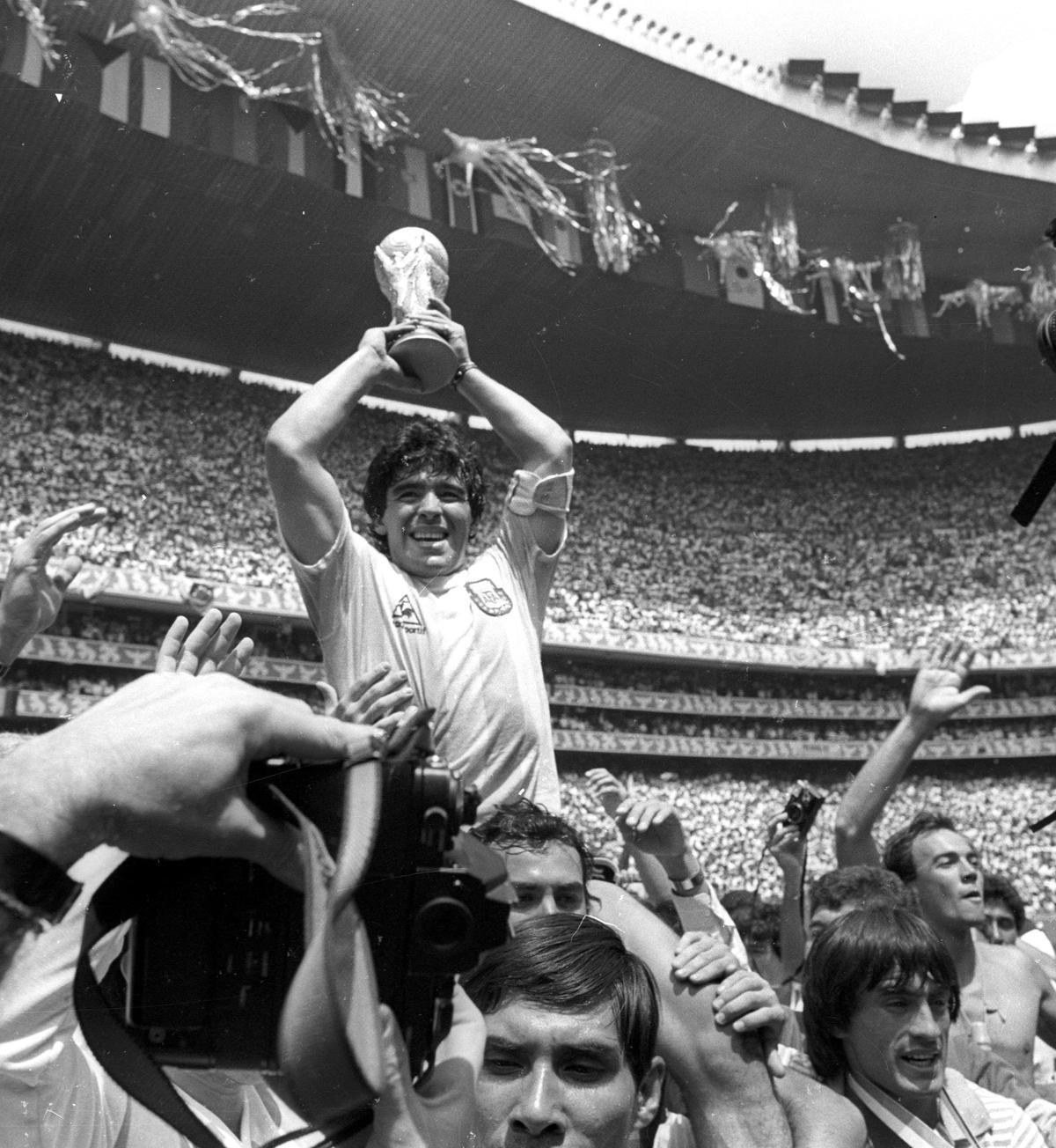
Legendary Argentine striker Diego Maradona came up through the Argentinos Juniors academy before he was transferred to the nation’s top team, Boca Juniors, and later to the far wealthier FC Barcelona in Spain.
Messi was at Newell’s Old Boys Academy in Argentina before he was recruited by Barcelona at age 13.
Pelé joined the Santos FC program at 15 and was called up to the club’s senior team quickly. The Brazilian government declared him a national treasure, prohibiting him from joining a European team.
As the young academy players improve, so does their value to the club. Professional teams “sell” young prospects and seasoned players to other teams around the world, often commanding multi-million-dollar transfer fees. It’s up to the individual players to negotiate wages with their new clubs.
United States
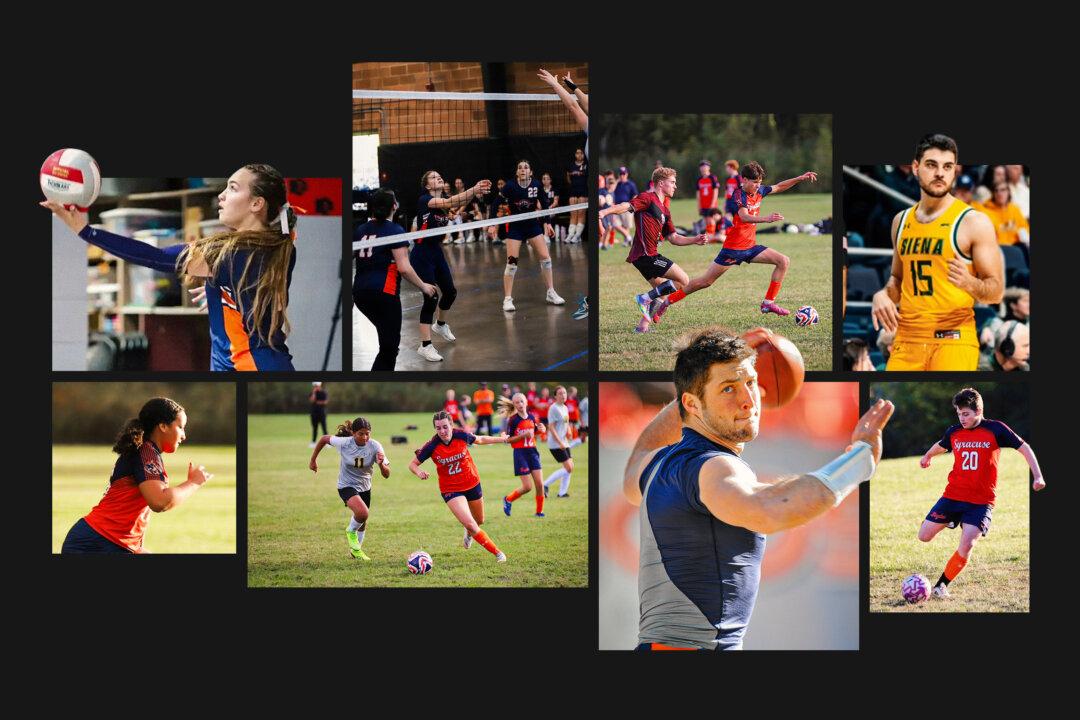
America is still mainly a pay-to-play system, although Major League Soccer’s free academy system for elite players is gaining ground.
Recreational soccer, run by volunteer organizations or municipalities, is free or inexpensive nationwide. Travel soccer programs, many of them owned by private equity firms, cost families hundreds or thousands of dollars.
Many travel clubs have “academy” in their name but have no academic component. Many advertise an affiliation with European clubs, such as the former Global Premier Soccer’s partnership with Bayern Munich of Germany, where players may be invited to a week-long training camp overseas or domestically—if they can pay their own way—and possibly meet academy or team recruiters.
This is how U.S. star Christian Pulisic broke through when playing for a travel team in Lancaster, Pennsylvania, before moving to Germany at age 16.
For kids 15 and up, high-level travel soccer is centered on college recruitment and showcase tournaments attended by NCAA and NAIA coaches, most of whom cannot offer scholarships.
Recruiting organizations acknowledge that college soccer is the secondary pathway to the professional ranks, behind the 30 Major League Soccer (MLS) academies in the United States and Canada.
There are more than 100 pay-to-play “MLS Next” clubs that require extensive time, travel, and financial commitments and do not allow players to participate on their high school teams.
Peter Rogenthien, a goalkeeper and student at Trinity Western University in British Columbia, Canada, has played with or against players from MLS and European academies and MLS Next programs during his career so far in college and summer soccer with a lower-level USL team in his native Texas, where players can maintain their college eligibility.
His roommate, who is also his business partner in a youth soccer training and consulting company called Keeper Lab, never paid a dime, even after coming up through the Queens Park Rangers Academy in London.
“In Europe, they’re trying to get the best out of you to eventually benefit themselves,” he told The Epoch Times.
“Here, it’s the opposite. They’re taking money from the families to benefit themselves up front. Even with the MLS academy, a kid who gets cut after a year or two then gives his parents a $5,000 bill to keep playing at a high level.”
China
Lyle Martin did not expect the quality of play to be so high and the fanfare so intense when he became the first American to play in the Chinese Super League in 2010.
Martin considered himself a late bloomer, utilizing his speed and work rate to keep up with the more technical players he encountered in Division I NCAA soccer and then in the MLS.
He’s an increasingly rare success story of the kid who got cut from the first club team he tried out for and played multiple sports before specializing in soccer at age 14.
“Their thinking process was so far ahead of mine,” he recalled of his collegiate experience. “I had to read their body language to stay with them. So yeah, multiply that by a few times over, and that’s what it was like staying with the pros.”
“The training was intense in China,” he told The Epoch Times. “We would just dial down for two hours on how to touch the ball. Where to touch the ball. I wish I had known that when I was younger.”
Chinese soccer was at its peak, riding the momentum of its first and only World Cup appearance in 2002 and pouring billions of dollars into a league largely inspired by the U.S. infatuation with the National Football League.
The games still drew well in many cities, but the league and its development academies never lived up to their potential, said Akindes, who also conducts sports management training in China.

Many children dropped out of the academies during their last two years of high school because they were pushed too hard and wanted to pursue a different vocation while they still had time.
This was a top-down approach: Most resources were dedicated to recruiting retired European players past their prime and established coaches and technical directors, with far less attention on building a youth development system from the bottom up, Akindes said.
“They wanted to develop a glamorous, expensive league, but it collapsed,” he said.
Africa
Youth development academies have been sporadic in Africa, whether run by top clubs domestically or European teams for recruitment purposes, but the lack of money and organization is to blame for the system’s shortfalls, Akindes said.
Morocco is “quite visible” right now because of its success since the 2022 World Cup and its designation as a co-host in 2030. The professional leagues and youth system, Akindes said, cannot claim too much credit.
Most of the players who helped the country make deep runs in international competitions hail from European nations but have Moroccan heritage.
By contrast, Egypt made a strong run with many players from its domestic league thanks to substantial support from the national government and its loyal fans, Akindes said.
All told, he said, most of the great players from Africa got discovered by European scouts by playing on the best youth teams possible, traveling across the continent to play in youth tournaments, and “relying on word of mouth.”
College Soccer
The 2025 men’s soccer roster for Genesee Community College in rural Upstate New York lists 19 players from the UK, a handful from other European countries, and just three from the United States, a makeup similar to those of most of the teams it plays across the state and in other states for post-season play. The school competes at the lowest level of NCAA athletics and cannot provide athletic scholarships.
Most of these players likely washed out of a European academy program before contacting American colleges and hope to transfer to a Division I school.
Division I men’s teams in the top conferences’ rosters are a balanced mix of American and foreign-born players.
Princeton, which was ranked No. 1 in the nation for much of the 2025 season, had only one international player. A look at the past several years of the MLS SuperDraft, which mainly involves Division I schools, shows that most players drafted do not last long in that top-flight league and spend more time in its development league or in second- and third-tier USL leagues.
Rogenthien, who chose a Canadian university over several U.S. Division II schools, said players he’s met from Europe and Africa told him that the facilities for collegiate North American soccer are superior to those of the lower professional leagues back home.
There are also far more academic majors and vocations to choose from in higher education here, and the social experience is a plus.
The United States leads the world in women’s soccer, largely because of collegiate play, said Martin, who coaches at Taft College in California.
He said he does not think European nations will dethrone the United States by retrofitting their academy system for girls, even if the richest clubs in the world subsidize the effort.
“There’s a winning culture here that we own, and it pushed the game more,” he said. “The mindset, confidence, resiliency—more hunger, more fight. Watch the World Cups. The women wanted it more than the men wanted it.”