When the MLB regular season begins later this month, watch for players tapping their batting helmets or catchers’ helmets, as the Automatic Ball-Strike (ABS) Challenge System powered by T-Mobile debuts. MLB history will be made on March 25 when the San Francisco Giants host the New York Yankees in the season opener broadcast on Netflix.
Change is inevitable. It was more than 5o years ago, in 1973, when the designated hitter rule made its way into the American League. Pitchers no longer would bat, and one hitter in the lineup wouldn’t play the field. On April 6, 1973, at Boston’s Fenway Park, with pitcher Luis Tiant on the mound facing the New York Yankees’ Ron Bloomberg in the batter’s box, MLB history was made. The DH rule was adopted by the National League in 2022.
When the 2018 season rolled in, MLB saw fit to limit the number of mound visits coaches and managers could make during a game. Without making a pitching change, each club is afforded six visits per nine-inning game. By 2024, the visit limit was reduced to four. One additional visit is permitted for every extra inning of play.
In 2023, with hopes of improving the pace of the game, both leagues began using the pitch clock.
With the 2026 MLB season three weeks away, the game is welcoming yet another initiative with the goal of getting home plate umpires’ calls irrefutably correct. The ABS Challenge System, sometimes called a “robot umpire system,” is being made permanent. Among MLB clubs, the ABS Challenge System has been used during the past two years during spring training games, plus at last July’s 95th MLB All-Star Classic in Atlanta. In September, MLB’s competition committee approved the use of the ABS system beginning this season.
Having been tested first in the eight-team Atlantic League of Professional Baseball in 2019, followed by the minor leagues and Arizona Fall League in 2021, the ABS system was incorporated into select Triple-A ballparks by 2022. By the 2023 MiLB season, all Triple-A stadiums were using the system.
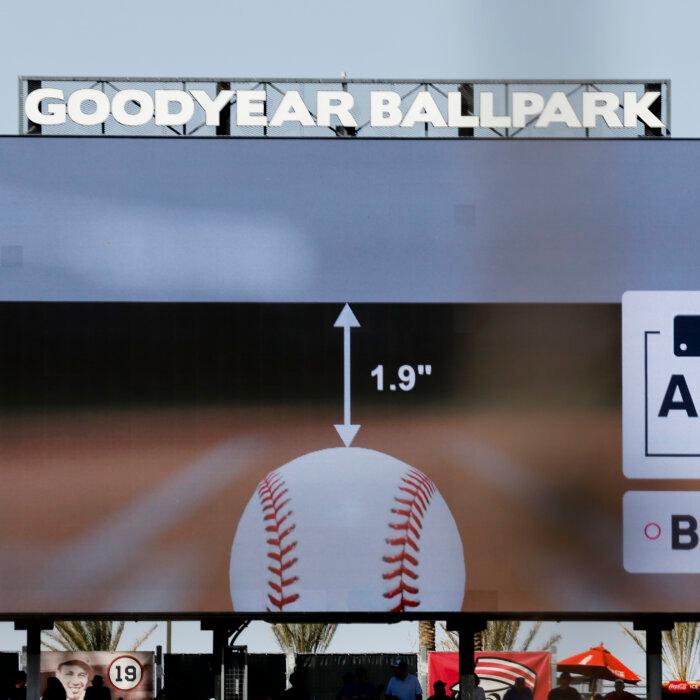

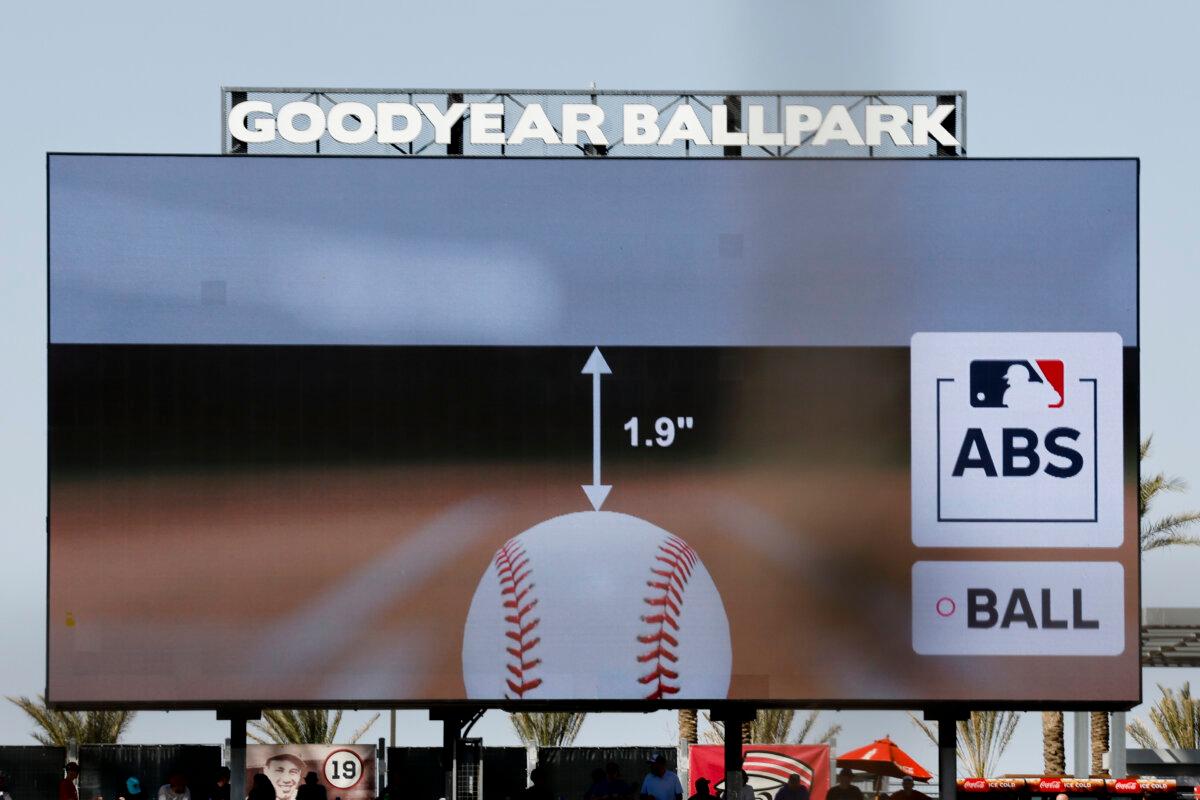
The ABS system tracks the location of all pitches. When a batter, catcher, or pitcher feels the umpire made an incorrect call, the player can request a challenge. The challenge must be made with a tap of the helmet or cap immediately following the pitch. Following the challenge, a graphic will quickly appear—on the scoreboard and viewing devices—displaying the exact location of the ball as it crosses home plate. This is supposed to keep the interruption of the game to a minimum.
With limited exposure to the ABS system so far, players are mixed on how it will affect the game.
“It’s just another tool that we are going to have,” Rafael Flores Jr, one of a handful of catchers in camp for the Pittsburgh Pirates, told The Epoch Times on Monday in Bradenton, Florida. “It’s going to be crucial for the pitching staff to be in the zone. Now hitters can challenge a pitch. I think it is good for baseball. I like it. It’s just going to be up to us, and be confident in our ability to know where the zone is.”
Teams in spring training are ramping up their familiarity with the system. They know that each team starts with two challenges per nine innings. If a player’s challenge is incorrect, his team is penalized one challenge. If it is correct, the team retains the challenge. If a game goes into extra innings, and a team has zero challenges left, that team will be afforded one additional challenge for each additional inning played.
Jake Mangum, a speedy outfielder with the Pirates, isn’t sold on MLB incorporating the ABS system. When speaking to The Epoch Times in Pittsburgh’s clubhouse at LECOM Park in Bradenton on Monday, Mangum pointed out that the ABS system doesn’t affect his game.
“I’m not for it. I like the human element of baseball. As far as the pace of the game, it slows the game down, no doubt. If you have 20 challenges a game, it’s going to slow down the game.”
“Try it, you'll like it” is a motto MLB officials are hoping all involved participants of the game will adhere to. Time, patience, and a willingness to understand that change is inevitable are what could move this newest innovation in baseball to global acceptance sooner rather than later.