When Jeff Kent was traded to the New York Mets in 1992, teammate Howard Johnson didn’t figure him to be a future Hall of Famer.
But the slugging second baseman was elected Dec. 7 in Orlando as the 352nd member of the National Baseball Hall of Fame by the 16-member Contemporary Baseball Era Committee.
Kent, the Toronto Blue Jays’ 20th-round draft pick in 1989, said he had spent Sunday in Texas doting over his grandchildren.
“I gave no thought to it,” Kent added. “I’m wearing holey jeans and dirty boots, and just having a good time out here with my grandkids.”
Kent retired after the 2008 season, his fourth with the Los Angeles Dodgers, and from 2014 through 2023 failed to gain more than 46.5 percent of votes from the Baseball Writers’ Association of America, falling well short of the 75 percent needed.
His path to Cooperstown would be provided by his peers on the committee made up of Hall of Famers, executives, writers, and historians. Kent collected 14 of 16 votes, or 87.5 percent.
When word spread of Kent’s good fortune, Johnson was among those both proud and surprised.
“I don’t think anyone at the time of the trade thought we were getting a guy who would become a Hall of Famer,” Johnson, a teammate of Kent’s during the 1992 and 1993 seasons, told The Epoch Times earlier this week by phone.
“ Yeah, I was surprised,” Johnson said. “David Cone was having a good year for us. At the time, the Mets were going through a transition. After the 1988 season, the club was declining, a little at a time.”
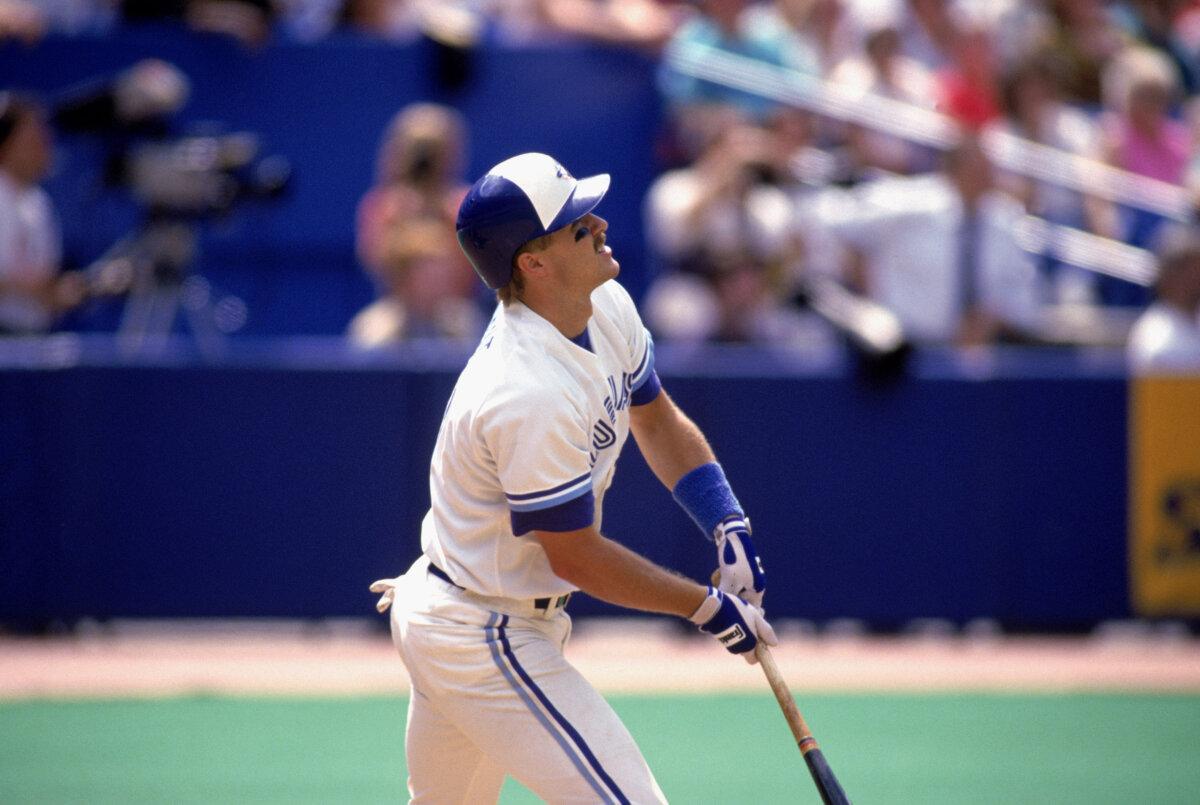
Toronto would go on to win two consecutive World Series championships. Kent would spend the next four seasons building his baseball resume in Queens, New York.
“When Jeff came to our team, I had never heard of him before. He was playing in the other league (American League), just coming up,” Johnson said, recalling the days before interleague play began in 1997. “When he arrived in our locker room, Jeff was a little quiet. That was a place where you would want to be part of the group. Jeff wasn’t really like that. That wasn’t his personality.”
Johnson always appreciated Kent’s effort on the field, and he understood the trade was made as the Mets were trying to set up a rebuild at Shea Stadium, but losing a front-line starting pitcher for an unproven infielder and unproven outfielder in Ryan Thompson was difficult to swallow.
Kent blossomed into one of the most productive hitters in baseball. The half dozen seasons spent with the San Francisco Giants (1997–2002) were his best.
Kent and future MLB home run king Barry Bonds formed a one-two punch not seen in the Bay Area since the days of Willie Mays and Willie McCovey back in the 1960s and 1970s.
The Giants won the 2002 National League pennant, and Kent, a five-time MLB All-Star and 2000 National League MVP, cemented career statistics worthy of Hall of Fame consideration. His career .290 batting average, 377 home runs (351 coming as a second baseman, most all-time for the position), and 1,518 RBIs punched Kent’s ticket to Cooperstown.
Johnson, who left the Mets after the 1993 season as a free agent and signed with the Colorado Rockies, remembered Kent as a teammate who was at times “too much business,” but he never had an issue with the future Hall of Famer. Remembering Kent as a “nice player” with the Mets but not of Hall of Fame caliber, Johnson is happy about the Hall of Fame vote.
The Contemporary Baseball Era Committee included Hall of Famers Juan Marichal, Ferguson Jenkins, and Alan Trammell, Milwaukee Brewers owner Mark Attanasio, Los Angeles Angels owner Arte Moreno, plus media members Jayson Stark and Tyler Kepner.
The National Baseball Hall of Fame Class of 2026 is scheduled for induction on July 26 on the grounds of the Clark Sports Center in Cooperstown.