The media can certainly amplify the voice of the public, but basketball writers, reporters, talking heads, and pundits have probably misfired on a number of shots in recent weeks when it comes to the superstar conversation.
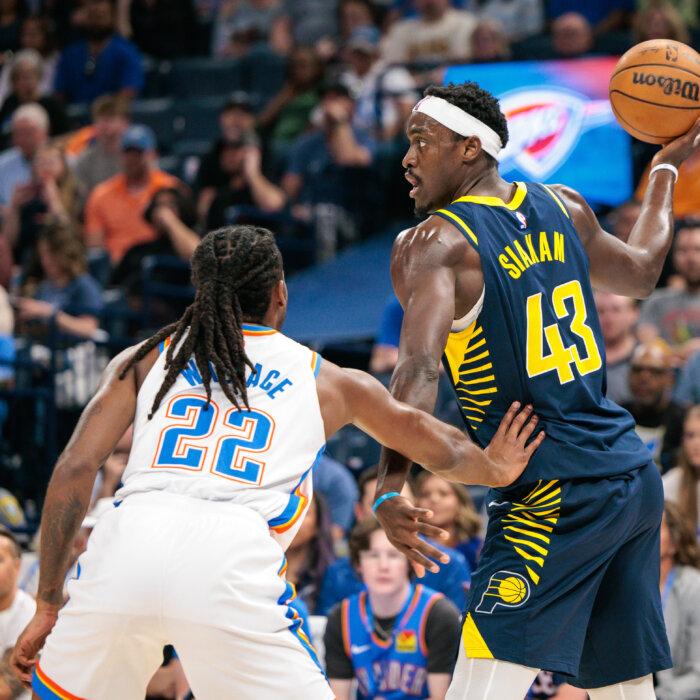
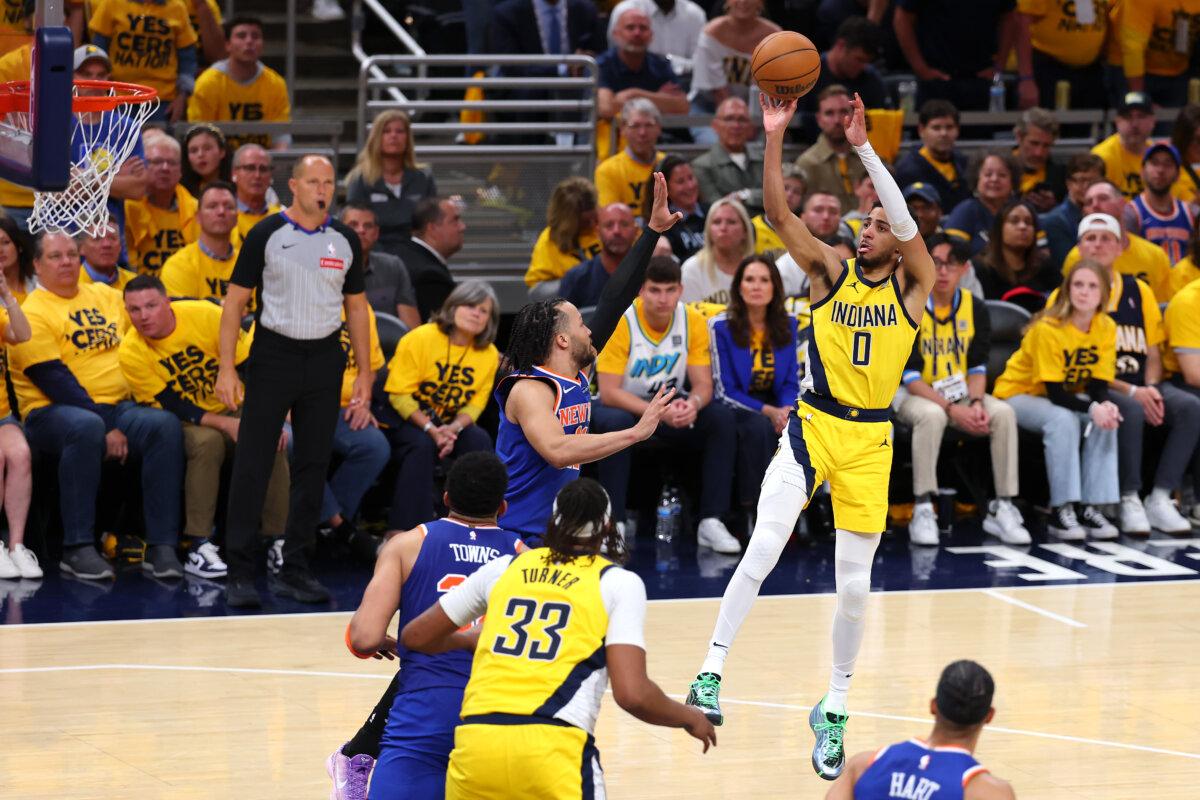
Indiana guard Tyrese Haliburton, who has been bumping his Q-rating up with each dribble this postseason, is the team’s frontman as it powered into the NBA Finals for just the second time in club history, the first in 25 years. And he did it by becoming a household name and a playoff star.
Haliburton, who has led the Pacers to the Eastern Conference finals the past two seasons, on Saturday helped finish off the New York Knicks 125–108 in Game 6 to seal a spot in the big showdown against the Oklahoma City Thunder.
But Haliburton, who has been clutch in the postseason, drew attention during the regular season because of a poll among his National Basketball Association peers that disparaged the player’s performance in a league of high-flying dunkers and showtime-style fastbreaks.
The all-around player, who didn’t get much time on the court with the gold medal-winning men’s U.S. basketball team at the Paris Olympic Games last year, decided to embrace the label, telling The Athletic’s Jared Weiss that he developed an “immunity to rejection.”
However, the feeling of acceptance seemed to have changed after he helped carry Indiana past Cleveland in Game 2 against the Cavaliers in the second round of these playoffs. Sniped Haliburton during a press conference: “Overrate that” at the end of a snarky shot at fans and anyone who considered him to be all dribble and no shot.
The Pacers clearly have superstar feelings toward Haliburton.
“When it comes to being a superstar, you’ve got to take everything that comes with it—the highs and the lows, the good and the bad,” Indiana center Myles Turner said in Saturday’s postgame press conference.
“And from how this season started to how he was getting trashed—everybody was basically trying to turn their heads to him—and he just kept his head down and kept working, man.
“Even going into these playoffs, the whole overrated thing—obviously we know that’s dead now, there’s not much you can say now—but I’m just proud of the way he’s handled everything. It’s a lot of pressure, being that main guy.
“People don’t think about the off-the-court stuff that you have to handle as well, being the man. And I think he’s done a great job,” said Turner, who added, “he’s the head of the snake.”
The murky criteria for superstar status, though, aren’t just what members of the media think or say. While not everything can be measured, the aggregate of information regarding players is the 3-pointer of branding.
So what gets the superstar label? Are they players who lead their teams to at least one championship?
Charles Barkley, perhaps now sports TV royalty after his highly popular and lengthy stint at TNT, is among many superstars who weren’t able to accomplish that.
Was Michael Jordan a superstar before he won a single NBA title? Probably a huge yes, because youths worldwide were—at least trying to—emulating his every move long before his first championship.
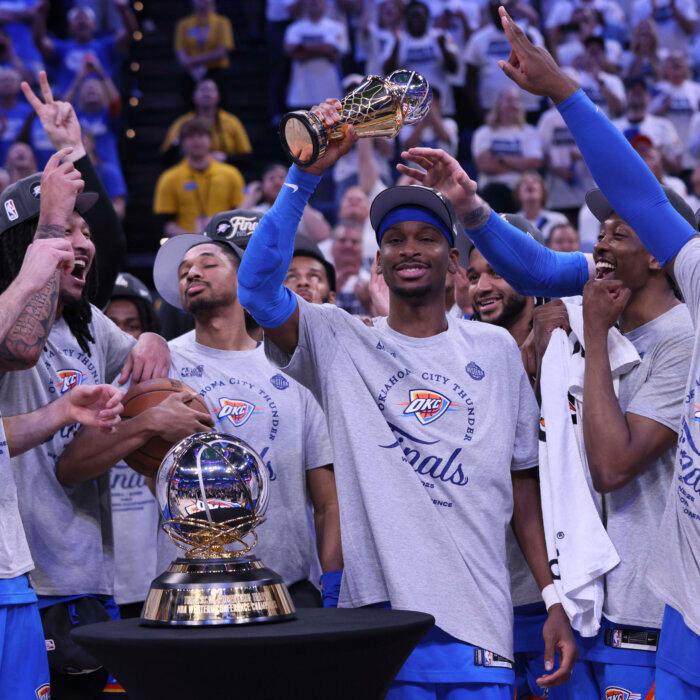
Might it be some standard, such as jersey sales? That’s a tricky one since six of the top 10 leaders in jersey sales have yet to win a championship. The Thunder’s Shai Gilgeous-Alexander is in the Finals and can end that dry run. But Gilgeous-Alexander is already considered a superstar, earning his first Most Valuable Player honor earlier this postseason.
And OKC’s leading man somehow—mostly because of his smooth shooting touch and seemingly unstoppable scoring prowess—has already gained superstar status ahead of Haliburton. The two team leaders are difficult to compare, but media members obviously love Gilgeous-Alexander’s ability to make defenders look like props.
And it can’t just be consistent play that gains a player superstar status, because Haliburton has performed at a near-Reggie Miller level since the organization traded for the 25-year-old, who spent his first two seasons with the Sacramento Kings.
Click counting is also probably not the best way to set the brightness gauge for superstardom, but we all know it plays a major role in setting narratives and generating speed for the phrases that fly out of the mouths of TV and radio personalities.
What can’t be measured is how many children fall in love with a star’s play. And that likely means the media can’t tell fans who to support with their cheers, whose games to watch, who to like, or who’s a superstar. It’s the other way around.