The College Football Playoff will look different for the 2025 season.
Months after the first-ever 12-team playoff, the College Football Playoff management committee on Thursday announced it modified the seedings and byes for next season’s playoff.
The new modifications allow the top-five conference champions to make the playoffs but not be guaranteed a bye, meaning they won’t automatically advance to the next round without playing a game. The four first-round byes will go to the highest-ranked teams by the CFP Selection Committee. In addition, the lowest-ranked conference champions could drop as low as the No. 11 and No. 12 seeds if their records aren’t better than the other top-12 teams.
In the first-ever bracket, the byes went to four conference champions: Oregon (Big Ten), Georgia (SEC), Boise State (Mountain West), and Arizona State (Big 12). That led Notre Dame, an independent, to lose a bye despite an 11–1 and end up with the No. 7 seed.
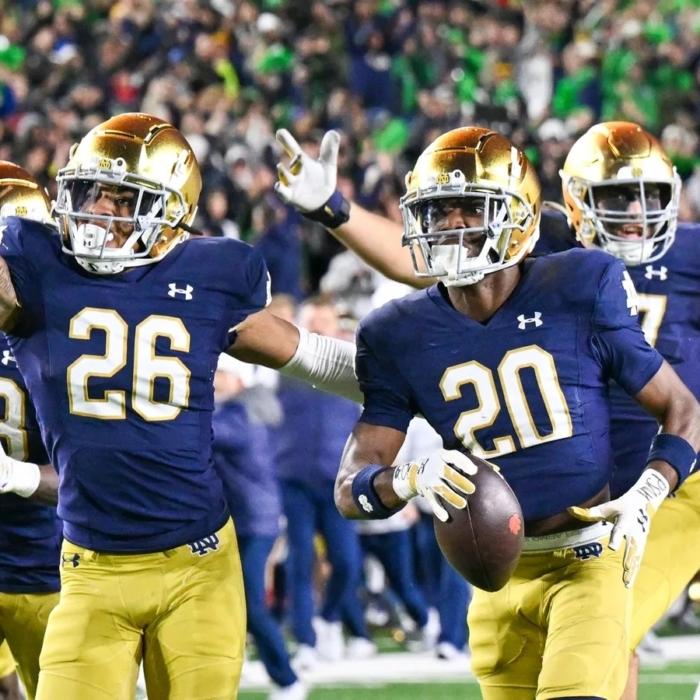
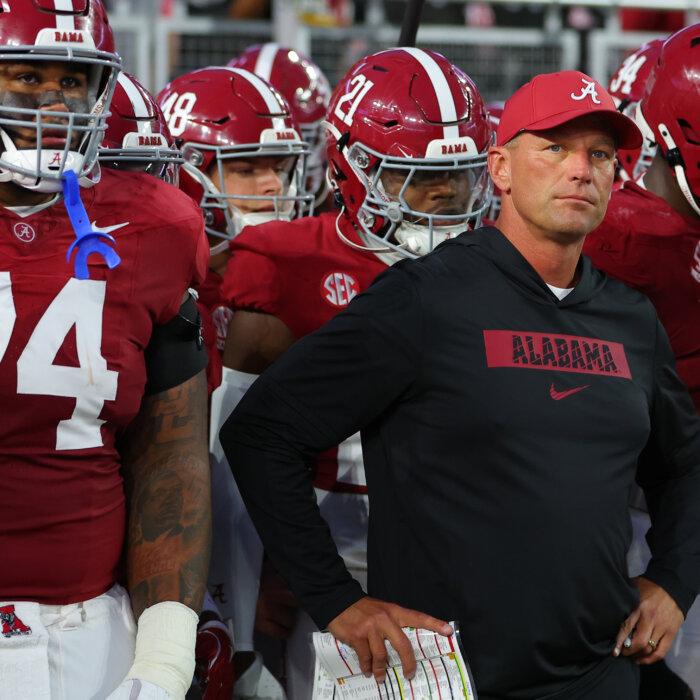
Texas, Penn State, and Notre Dame all made the semifinals, and the Fighting Irish made the national championship game. Ohio State, ranked No. 6 at 10–2 in the final pre-playoff rankings, won it all as the No. 8 seed, and the Buckeyes notably bulldozed No. 1 seed Oregon 41–21 in the second round.
All four conference champions with byes notably lost their games, which also raised questions about how the teams were seeded. How the CFP management committee modified things could change that for 2025.
The top seed will get “preferential placement based on geography for the Playoff Semifinal site” per the press release. All four of the top-ranked teams will get bowl games for the quarterfinals again, and those will be ordered by ranking and “consideration of current contract bowl relationships.”
As for the bottom eight seeds, the higher seeds will host an on-campus playoff game or “other sites designated by the higher-seeded institution.” All four first-round hosts played on campus last season.
How New Seeding Rules Could Have Altered the 2024 Playoff
Seeding rules matter, and while the 2024 playoff games can’t be replayed, it’s clear the new seeding rules could have altered how the playoff unfolded.The top four seeds would have gone to No. 1 Oregon, No. 2 Georgia, No. 3 Texas, and No. 4 Penn State. Oregon and Georgia would still have had the same quarterfinal bowl games and semifinal bowl game destinations. Texas would have been the home team for the Peach Bowl, and Penn State would have been the home team for the Fiesta Bowl.
First-round matchups would have looked much different based on the new CFP seeding. Fifth-seeded Notre Dame would have hosted No. 12 Clemson, sixth-seeded Ohio State would have hosted No. 11 Arizona State, No. 7 Tennessee would have faced No. 10 SMU, and No. 8 Indiana would have hosted No. 9 Boise State.
Despite the evenness of their rivalry, it seems likely Notre Dame would have beat Clemson in South Bend and then beat Penn State in the quarterfinals. Ohio State, which dominated the CFP, would have beaten ASU and then beat Texas in the quarterfinals.
Tennessee likely would have beaten SMU but likely would have fallen short against Georgia since the Bulldogs beat the Volunteers comfortably in the regular season. Indiana and Boise State would have been a toss-up game, but neither team would have upset Oregon quarterfinals.
That would have set Oregon and Notre Dame for a semifinal showdown in the Cotton Bowl, and it’s debatable which team would have won. Oregon had the high-octane offense, but Notre Dame had an elite defense. Ohio State and Georgia would have tangled for the Orange Bowl, and it’s hard to argue that the Bulldogs would have had an answer for the Buckeyes without quarterback Carson Beck.
Given how Ohio State dominated Oregon and won convincingly over Notre Dame, it’s unlikely the national championship game would pan out differently in either scenario. That said, Oregon coming off of two playoff wins instead of a bye may have given the Buckeyes a different opponent. In addition, Notre Dame may have benefited from facing a physical Penn State team earlier, followed by Oregon.
Either way, the committee’s seeding adjustments a year earlier could have reshaped the first two rounds of the playoff and could have impacted the dynamics of the late-round matchups.