In the 1930 World Cup semi-final against Argentina, U.S. players barely made it off the field following the 6–1 loss.
A defender’s leg was broken just 10 minutes in. The American goalkeeper sustained a serious knee injury and relied on a defender with two functioning legs to help cover the goal. Another player had four teeth knocked out.
Goal scorer Jim Brown had mud thrown in his face and was spat on by an Argentine defender, but otherwise exited the pitch unscathed, said his grandson, James Brown.
It was a tough adjustment for the Americans, who, contrary to the rules of the international soccer rule-making body at the time, were allowed to substitute in their domestic league.
“You had to play with the 11 who were on the field when the game started,” Brown, a soccer historian, told The Epoch Times.
It took FIFA 40 years to put forth a substitution rule. In 1970, two substitutes were allowed. That was expanded to three in the 1990s and five after the COVID-19 pandemic.
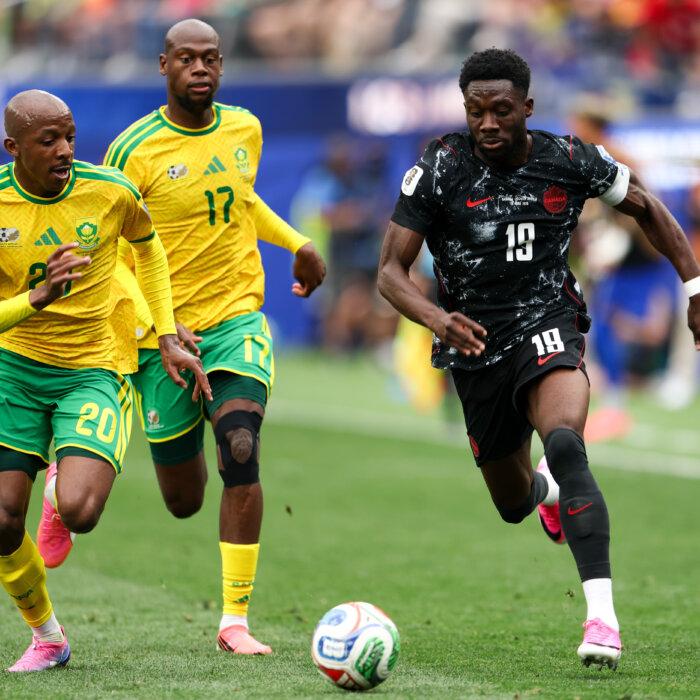
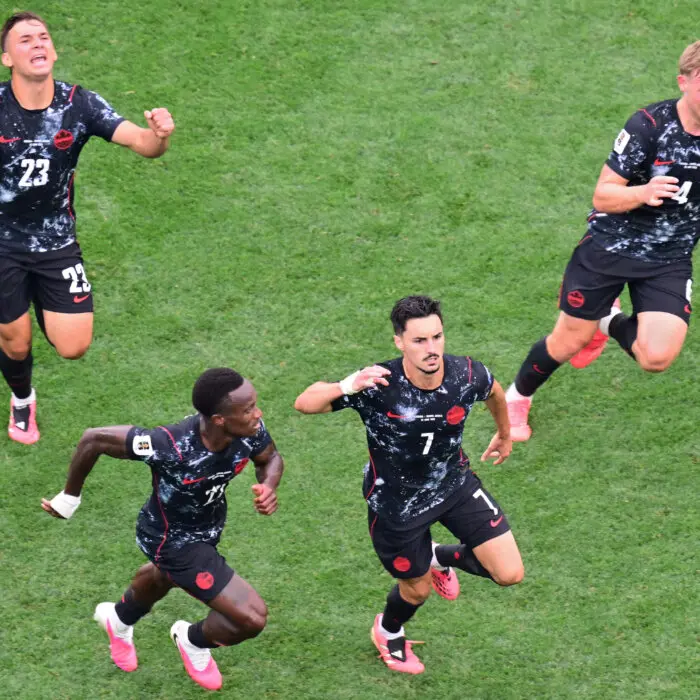
The United States played at least a minor role in creating other rules that made the world’s most popular sport fairer, more civil, and more entertaining for the masses.
Here’s a look at some of the “laws of the game” often misunderstood by casual fans and how they evolved.
VAR Review
In the 2006 World Cup final against Italy, France’s legendary midfielder Zinedine Zidane headbutted defender Marco Materazzi in the chest after his rival made derogatory comments about his sister.
The referee didn’t see it, but the attack was displayed for all to see on the stadium’s big screen. The referee consulted with his linesmen; the evidence was irrefutable, and Zidane was sent off.
This episode is said to be the genesis for the video assistant referee (VAR), which was assessed in the top-flight Dutch league in the 2010s before it became commonplace, Brown explained.
A VAR team instantly reviews major developments in a match, including goals, penalties, free kicks, and advises the on-field referee of its findings.
Referees have the final say but have come to rely on this technology, especially in determining whether a scoring player was offside or whether a foul or handball was committed inside the penalty box.
The game ball has a chip in it that triggers a beep in the referee’s headset if it crosses the goal line; scrums inside scoring areas can be difficult to track, and the ball can pop out of the goal after having crossed the line without touching the net or landing behind the goalkeeper.
VAR team members can narrow in on an image right down to a player’s body part to determine offsides.
“The technology is astounding,” said Brown, who is based in France and serves as the vice president for the Society of American Soccer History. “It does put defenders in doubt and opens up scoring as well.”
Offside
A player is offside if they are behind the furthest back defender [not the goalkeeper] when they receive the ball.
A player can only be offside in the opposing team’s half of the field.
There are additional rules, which are much more complicated, governing whether a player involved in a goal-scoring sequence who didn’t take the shot was a factor in the play, such as obstructing the goalkeeper’s movement.
Way before VAR, the Americans invented a way to police offside: goal-line assistant referees, Brown said.
“Pleasing the crowd was very important here,” he said, adding that these goal-line assistants worked domestic league matches in the 1910s and 1920s before FIFA set the current system with the two linesmen on opposite sides and ends of the field.
“These referees were literally peeking around the goal posts. They looked like they were going out for a day of golf.”
Today, the delayed offside calls by the linesmen, which sometimes last as long as 15 seconds, can be frustrating for players and coaches, but make for a great fan experience, temporarily, before a goal is ruled offside.
The justification for these delayed calls is to allow action to continue in case the defending team wins the ball back quickly.
Added Time
This law of the game, where the referee had the authority to stop his watch for fouls, injuries, or reset after a goal without sharing it with the fans, dates back more than a century.
The brutally physical English Premier League, with so many pauses due to fouls and injuries, led to reforms for communicating better with coaches and fans.
Referees began sharing their “stoppage” time in the 1990s.
Teams factor in stoppage time now, deciding whether to waste time with ball possession in the corners, pack the middle with a defensive shell, or send the ball long for attacks.
At the prior World Cup, in Qatar in 2022, 10 minutes of stoppage time was common throughout the tournament, Brown said.
“Maybe they wanted to keep the suspense going longer.”
Overtime
Draws are only allowed in the first round [group play]. After that, if teams are tied at the end of regulation time, they play two 15-minute halves.
There is no longer a “golden goal” that ends the game in overtime, as seen in professional ice hockey.
If the teams are still tied after the overtime halves, the match is decided in a penalty kick contest.
Brown said FIFA eliminated the golden goal rule more than 20 years ago because teams seemed to “fear it” and play too tentatively to avoid mistakes.
But instead of encouraging more attacking play, the current overtime rule has discouraged it and, far too often, teams seem content with penalty kicks.
Newer Rules
In the 2014 World Cup, played in Brazil, referees exercised discretion to stop play for hydration breaks based on air temperature and humidity.
Player safety was a concern, not just keeping body temperatures below 105 degrees, but also curbing hot tempers and subsequent reckless play.
In the current World Cup, hydration breaks around the halfway point of each half are automatic, regardless of mild temperatures in some American and Canadian venues.
This has also served as a television timeout where advertisers profit, coaches and players can adjust, and a new dramatic element for viewers emerges.
This has been a game changer for some teams so far, but FIFA doesn’t like it, Brown said.
“They say it disrupts the flow of the game.”
Diving—known as flopping in basketball and embellishment in hockey—has long been a part of soccer.
FIFA referees began issuing yellow card cautions for that type of unsportsmanlike play in the 1990s.
VAR is now used to determine if a penalty kick decision should be awarded or reversed, based on a lack of contact or simulation from a player.
The referee can also award the opposing team the free kick with a quick restart if they determine the player who went down “dived.”
VAR is now also used to determine if a player says something particularly egregious to an opponent.
If a player covers his mouth with his hand or jersey to stop the technology’s ability to read lips, the referee can still issue an automatic red card because the intent is obvious, Brown said.
To avoid time-wasting, teams must now make substitutions [players on and off the field] within 10 seconds or wait a full minute to try again after that window passes.
Restarts on throw-ins and goal kicks are only five seconds; violations result in possession to the other team.
What Might Be Ahead?
Brown, who published a book about his family’s history in soccer and rugby, “Mud, Blood, and Studs,” and is currently writing a book about the French artist who sculpted the World Cup in 1930 [to be released on its 100th anniversary], is used to writing about the past, but he has an ear on the conversations affecting the future of the “Beautiful Game.”
There’s talk of a “blue card” rule where offending players must go off the field for several minutes, similar to hockey, where the other team gets a temporary player advantage, or power play.
This is something that could cut down on exaggerations, including diving, by players attempting to deceive the referee into issuing a penalty kick or red card, Brown said.
As with everything in life right now, artificial intelligence also hangs in the balance. Brown wonders if FIFA will follow the Wimbledon tennis tournament and replace linesmen with technology or even replace head referees someday.
“It’s already evolving almost to the point where the referee has no say in the matter anyhow,” he said with a laugh.
“Personally, I like the goal line referees. The U.S. was really experimental back then.”