Lenny Wilkens, one of the greatest players and coaches in NBA history, died on Sunday. Wilkens, who was inducted into the Pro Basketball Hall of Fame three different times, was 88 years old.
League commissioner, Adam Silver, issued a statement on Wilkens’ passing highlighting his numerous contributions to the game of basketball and his impact both on and off the court.
“But even more impressive than Lenny’s basketball accomplishments, which included two Olympic gold medals and an NBA championship, was his commitment to service—especially in his beloved community of Seattle where a statue stands in his honor.
“He influenced the lives of countless young people as well as generations of players and coaches who considered Lenny not only a great teammate or coach but also an extraordinary mentor who led with integrity and true class,” Silver wrote.
As Silver mentioned, Wilkens is the only person selected as both one of the 75 greatest players in league history and as one of the 15 greatest coaches in NBA history. Those honors were bestowed during the league’s 75th anniversary season in 2021–2022.
As a player, Wilkens was a nine-time All-Star for four teams during a career that spanned from 1960–1975. He happened to be in the same draft class as icons Oscar Robertson and Jerry West, so Wilkens was often overlooked during his career. But few were better at manning the point guard position than him. When he retired after the 1974–1975 season, Wilkens’ 7,211 assists were second-most in league history, trailing only Robertson.
For his career, the Brooklyn-born Wilkens averaged 16.5 points, 6.7 assists, and 4.7 rebounds. Fifty years after his final game, Wilkens remains just one of 20 players, ever, with at least 17,000 points, 7,000 assists, and 5,000 rebounds for a career.
Wilkens was also one of the last player-coaches as he began his career on the sideline in 1969 with the Seattle SuperSonics. He managed to be even more prolific as a coach than as a player as he won his first NBA championship as head coach of Seattle in 1979, was the NBA Coach of the Year with the Atlanta Hawks in 1994, and was four times selected to be a head coach in the NBA All-Star Game.
Wilkens manned the sideline for six different teams during a coaching career that spanned from 1969–2005. His tenure concluded with his hometown New York Knicks but not before Wilkens etched his name in the coaching record books. During the 1994–1995 season while with Atlanta, Wilkens set the record for most wins by a head coach in NBA history.
When he retired a decade later, he had 1,332 wins, and that mark currently ranks third in league history, trailing only Gregg Popovich (1,390) and Don Nelson (1,335). Wilkens’ 2,487 total games coached remains the most all-time, as do his 1,155 losses as a head coach.
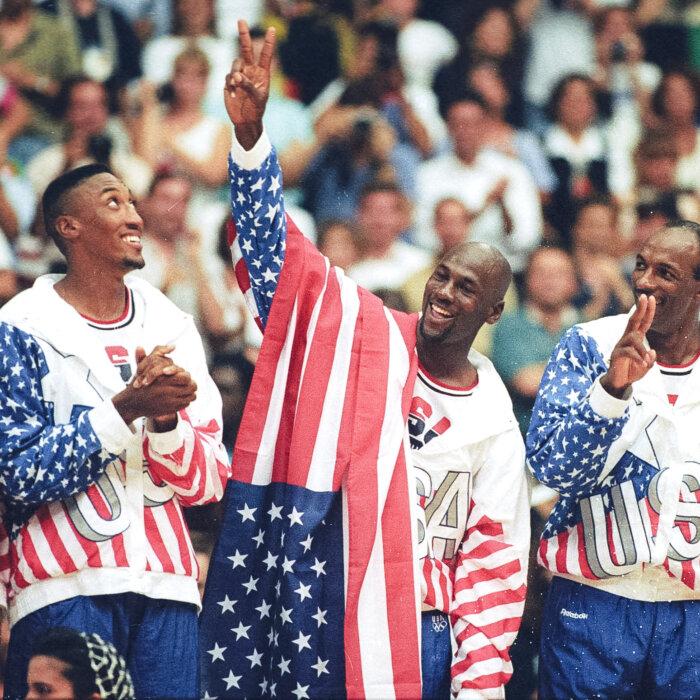
With his proven ability to get the best out of the players he coached, Wilkens was selected to be an assistant on the coaching staff of the 1992 United States Olympic Team, also known as “The Dream Team.” He collected his first gold medal with that team, and then four years later, Wilkens was tabbed as the head coach of the 1996 U.S. Olympic Team. He'd go on to win his second gold medal with that squad to add to his basketball resume.
With his exploits as a player, Wilkens was inducted into the Hall of Fame in 1989, and then nine years later he was again enshrined as a coach. Then in 2010, The Dream Team was inducted into the Hall of Fame, including Wilkens as an assistant, making him a three-time Hall of Fame inductee. Wilkens, who played college ball at Providence, where he was an All-American, as well as the 1960 NIT MVP, also had the honor of being one of the inaugural inductees into the College Basketball Hall of Fame.
One of Wilkens’ final public appearances came in June 2025 in his adopted hometown of Seattle, where he spent four years as a player, including three as a player-coach, as well as another eight years solely as a head coach. He was honored with a 700-pound bronze statue outside of Climate Pledge Arena, formerly known as KeyArena and home to the SuperSonics.