South Korea Fires, North Korea Responds With Silence (Video)

December 21, 2010 Updated: October 1, 2015

[ South Korea Reopens Kaesong Park to South Korean Workers ]

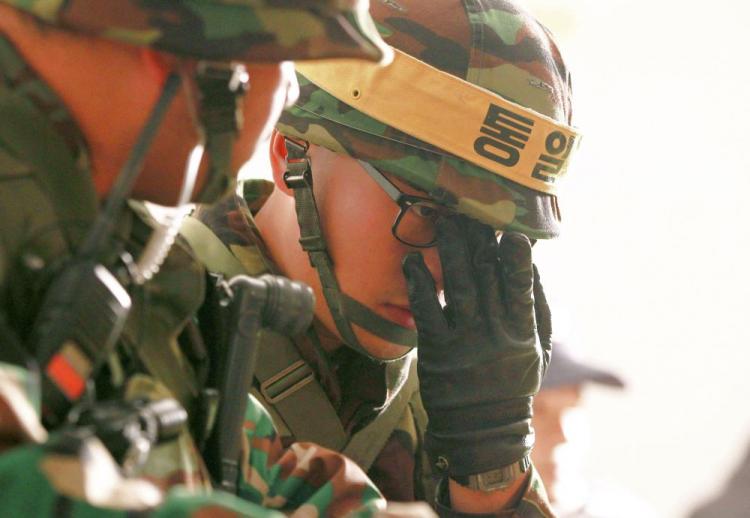
South Korean soldiers take shelter in a bunker during a live-fire exercise on Yeonpyeong island near the disputed waters of the Yellow Sea on Dec. 20. South Korea held a live-fire military drill on a border island and scrambled fighter jets despite North Korean threats of deadly retaliation, as U.N. diplomacy on the crisis broke down.  (Korea Pool/AFP/Getty Images)
South Korean soldiers take shelter in a bunker during a live-fire exercise on Yeonpyeong island near the disputed waters of the Yellow Sea on Dec. 20. South Korea held a live-fire military drill on a border island and scrambled fighter jets despite North Korean threats of deadly retaliation, as U.N. diplomacy on the crisis broke down. (Korea Pool/AFP/Getty Images)
For 94 minutes on Monday afternoon, K-9 howitzers, 81-mm mortars, and 105-mm and Vulcan Gatling artillery guns exploded through the Korean sky—and war did not break out.

South Korea finally staged a live-fire drill on Yeonpyeong Island, the site of the North’s recent unprovoked bombing. The drill had been postponed twice already due to fog, and was conducted under threat of fierce retaliation from the North. The retaliation never came.

Though the South has legal control of the island, it lies in partially disputed waters, at least according to the North; the demarcation disputes add to the political tensions around military drills being conducted there.

South Korean President Lee Myung-bak has stressed that South Korea has the right to hold these exercises, and according to geopolitical intelligence company Stratfor, “such exercises typically are routine”—but the timing brings contention.

Russia had previously urged South Korea to hold back on the drill, while in the past China has repeatedly blamed U.S.-South Korean military exercises for heightening risks of conflict. The anticipation of a counterattack was such that, according to English-language Korean newspaper Yonhap, everyone on the island not involved with the exercises took refuge in air-raid shelters.

The 1,000-plus artillery rounds were fired away from North Korea, to an area southwest of Yeonpyeong, a military source said to Yonhap; representatives from the Military Armistice Commission and the U.S.-led headquarters of the United Nations Forces Korea looked on.

If North Korea had considered avenging the affront, the South was prepared to respond: F-15K fighter jets and about 10 naval ships were on standby.

Contradicting the many warnings and threats previously uttered, North Korea decided not to act. This is not surprising to Statfor, “North Korea’s entire method is unpredictability and is meant to create the impression that it is irrational and destructive,” they wrote.

The previous attacks on the South Korean vessel Cheonan in March, which was sunk and 46 of its sailors drowned, and Yeonpyeong Island in November, where two civilians and two soldiers were killed, showed the North’s preference to go about things with an element of surprise. They were the first instances of naked aggression since the truce in 1953, which ended the three-year-long Korean War.

The U.N. Security Council met at a Russian-initiated emergency meeting over the weekend, ostensibly to address the tensions in the Korean Peninsula. A statement condemning North Korea’s attack on Yeonpyeong was vetoed by Russia and China.