September 11 Attacks Bring Trauma, Inspire Altruism

September 7, 2011 Updated: October 1, 2015

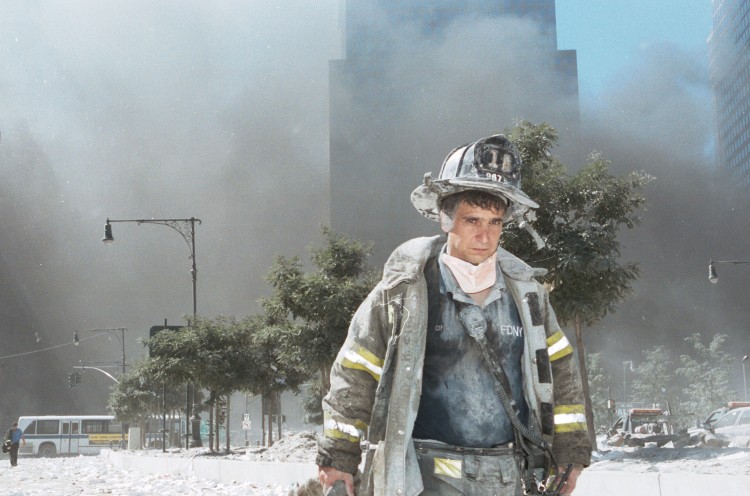
An unidentified New York City firefighter walks away from Ground Zero after the collapse of the Twin Towers September 11, 2001 in New York City. As the 10-year anniversary arrives, the best way to remember the events may be with service to the larger community. (Anthony Correia/Getty Images)
The biggest events leave indelible memories. The World War II generation remembered where they were when Pearl Harbor was attacked, decades later. President Kennedy’s assassination had the same weight. The Sept. 11 attacks rank with those watersheds.

As the 10-year anniversary arrives, the best way to remember the events may be with service to the larger community, according to experts.

“I love the idea of there being a national day of service," said grief and trauma counselor Courtney Armstrong, in a phone interview. For survivors, helping others—and reframing the story of their losses—is a strong way to approach the anniversary, Armstrong said.

Foundations to help survivors, to promote reconciliation between groups, and other related nonprofits, have sprung up across the country in a positive response to the trauma.

American-born and immigrant South Asians, Arabs, Muslims, and Sikhs have faced hostility and violence since 9/11.

“The Sikh community over 10 years has experienced a surge in hate crimes, in job discrimination, in post 9/11 backlash,” said Rajdeep Singh, in a phone interview. Singh, a director of law and policy for the Sikh Coalition, said the media often showed images of men with beards and turbans and connected them with extremists and Osama bin Laden, and the image hardened into a stereotype.

According to his organization’s website, Singh "focuses on developing and promoting policy solutions for civil rights issues through an interdisciplinary combination of government affairs, media relations, and interfaith coalition building."

“There are many organizations … united in overcoming bigotry, and promoting the highest ideals of our American Constitution and Bill of Rights,” he said. “All of the work we’re doing … has a beneficial effect on the rights of all Americans. It turns a challenge into a positive.”

Singh says it is ironic that the Sikh turban inspires hostility in some, because his group’s values “foreshadowed the highest ideals of America. We believe in freedom of religion, equality, and justice for all.” The turban symbolizes commitment to those values.

Largest Attack on America

Rescue workers survey damage to the World Trade Center 11 September, 2001 in New York in this file photo.  (Doug Kanter/AFP/Getty Images)
Rescue workers survey damage to the World Trade Center 11 September, 2001 in New York in this file photo. (Doug Kanter/AFP/Getty Images)
Planes were flown into World Trade Center towers in New York, one into the Pentagon in Washington, and one into a field in Shanksville, Pa. The last plane was headed to Washington, but crew and passengers resisted the hijackers, and in the course of their struggle, the plane crashed. More people died on Sept. 11 than in the Pearl Harbor attack of 1941. Many first responders who performed search and rescue in New York died or were disabled after inhaling toxic materials at the site.

“This immeasurable pain was inflicted by 19 young Arabs acting at the behest of Islamist extremists headquartered in distant Afghanistan,” according to the 9/11 Commission Report. The report called the attack a shock but not a surprise, because it was the largest of a long string of attacks and attempted attacks. It blamed authorities for ignoring multiple warnings.

No such deadly terrorist attack has happened in America since. Laws have changed, civil liberties have changed, and two wars have demanded immense sacrifices from members of the all-volunteer military.

Coping with the Tragedy

Psychiatrist Anand Pandya, M.D., worked with first responders and families in New York after the attacks. He said in a phone interview that he recommends that survivors limit their exposure to media during the anniversary. “Don’t turn on TV, don’t buy newspapers.”

Pandya co-authored a study published Sept. 7 in Disaster Medicine and Public Health Preparedness, which found that those who were within one block of the towers were far more likely to develop Post Traumatic Stress Disorder (PTSD) than people even slightly farther away.

Pandya, acting director of the Department of Psychiatry and Behavioral Neurosciences at Cedars-Sinai, said in a press release, "By following the people who were most directly affected over the long haul, we have data that challenges many of our early assumptions about the impact of this event."

"The effect on the whole country and culture was profound," said Pandya.

Trauma counselor Armstrong said those who lost loved ones in the attacks should consider that the relationship with the loved one shaped who they are forever, and nothing can take that away.

Author of "Transforming Traumatic Grief," Armstrong said people have different needs during the anniversary. Grief usually comes in waves, and a bombardment of news stories and events to do with 9/11 can trigger waves of grief even 10 years later.

“Some people need privacy, and some need to get out there and be active,” Armstrong said, adding that family members should respect each other’s different needs.