United Nations Secretary-General Ban Ki-moon said he supports inviting more permanent members to the U.N. Security Council to better reflect contemporary global realities and challenges of the 21st century. Ban made the remarks in an exclusive interview with Radio Free Europe on Nov. 30. Despite the positive tenor of his remarks, however, genuine progress toward reform seems as elusive as ever.
Security Council (SC) reform and enlargement has been debated by the U.N. General Assembly for almost two decades with no significant progress. The main argument for reform being that the Council’s working methods and composition belong to a bygone era.
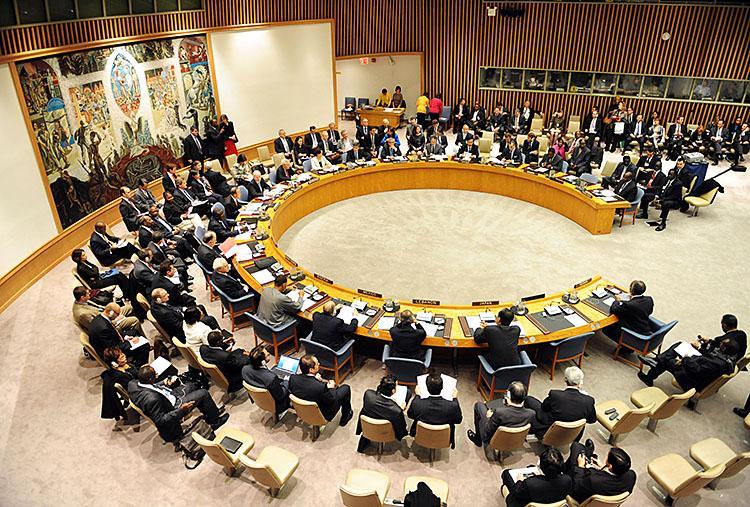
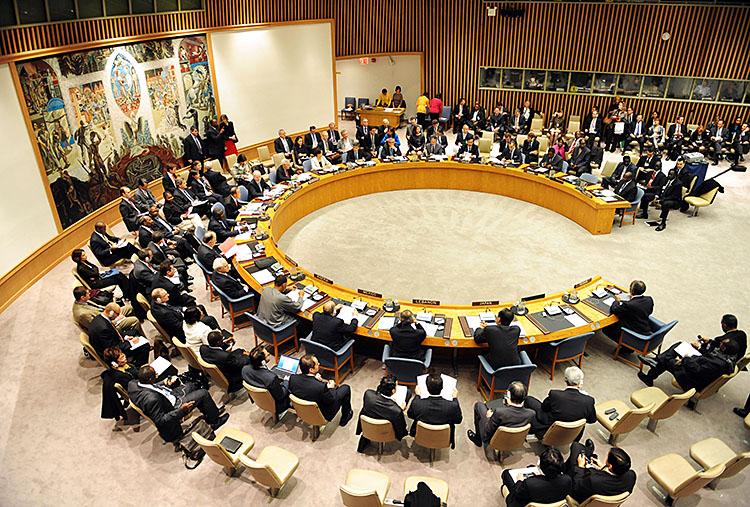
The SC has five permanent members—the United States, France, England, Russia, and China—each of which wields veto power over any council decisions. In addition, there are 10 rotating members elected for two-year terms.
The U.N. was founded in 1945 at the end of World War II and since then has expanded from 51 original members to the 192 member countries.
Reforms are needed, it is argued, because global realities have changed dramatically, while the council’s workings and highly powerful permanent membership has not changed since the body’s first meeting in 1946.
“I would say that there are almost unanimous views that the Security Council should be reformed,” Ban said in the radio interview.
“However, how to reform, what is [the] size of the expansion of reform, who should be represented in the Security Council—that is something which needs to be determined by the member states through negotiations,” he added.
While there may be near universal agreement that the institution needs to be reformed, the problem has always been getting its members to agree on the nature and even process for that reform.
The permanent members, with veto power over such reform, make the process especially complicated because of the disagreements among the permanent members over new aspirants.
Germany, Japan, Brazil, India, and the African Union (an organization of 53 African states) are among those that have long sought permanent member status.
China opposes India’s membership, which President Barack Obama expressed support for on his trip there in early November.
“In the years ahead, I look forward to a reformed United Nations Security Council that includes India as a permanent member,” said Obama, according to a speech transcript on the White House’s website.
Obama’s remark in India made headlines because until then, Washington had only backed Japan’s bid as a permanent member of the council.
Continued on Page 2...
[xtypo_dropcap]C[/xtypo_dropcap]hina also opposes Japan’s accession accusing it of not “repaying” for Word War II.
World leaders and SC members have from time to time stressed an urgent need of reforms, but none has provided any strategy for bringing the changes about. Obama’s recent gesture toward India came amidst unspecified and intangible reforms.
Analysts say that none of the permanent members can approve any country’s bid because once enlargement is a real possibility, the door will be wide open to agreements from all other member countries opposing and proposing a variety of bids.
For example, the African group is widely criticized because it includes authoritarian, human rights-abusing countries like Somalia, Nigeria, and Sudan.
Pakistan also opposes India’s bid to become a permanent member, and Argentina opposes Brazil’s bid, and so on.
Another argument against the council’s expansion is that it will actually not resolve its current issues of lack of effectiveness and decisiveness that arise from an already diverse set of political interests.
“It would further undermine the council’s ability to act decisively as timely action would fall victim to political impasse, conflicting interests, or debate among nations that have little to contribute to the council’s ultimate responsibility—enforcement of international peace and security,” said Brett Schaefer, expert with the U.S.-based Heritage Foundation, on his blog.
For example, the imposition of the last round of sanctions against Iran’s nuclear program last summer caused controversy in the council because Russia and China tried watering down the measures, although finally agreed.
“Inviting more members may be a nice diplomatic gesture or a quick political win, it is also likely to stoke tensions, [and] provoke heightened rivalries,” wrote David Ucko on his blog, a research fellow and program coordinator at the Department of War Studies, King’s College London. “If the reform does one day come to pass, result in an even more dysfunctional and paralytic Security Council,” he added.
Security Council (SC) reform and enlargement has been debated by the U.N. General Assembly for almost two decades with no significant progress. The main argument for reform being that the Council’s working methods and composition belong to a bygone era.
The SC has five permanent members—the United States, France, England, Russia, and China—each of which wields veto power over any council decisions. In addition, there are 10 rotating members elected for two-year terms.
The U.N. was founded in 1945 at the end of World War II and since then has expanded from 51 original members to the 192 member countries.
Reforms are needed, it is argued, because global realities have changed dramatically, while the council’s workings and highly powerful permanent membership has not changed since the body’s first meeting in 1946.
“I would say that there are almost unanimous views that the Security Council should be reformed,” Ban said in the radio interview.
“However, how to reform, what is [the] size of the expansion of reform, who should be represented in the Security Council—that is something which needs to be determined by the member states through negotiations,” he added.
Sticking points
While there may be near universal agreement that the institution needs to be reformed, the problem has always been getting its members to agree on the nature and even process for that reform.
The permanent members, with veto power over such reform, make the process especially complicated because of the disagreements among the permanent members over new aspirants.
Germany, Japan, Brazil, India, and the African Union (an organization of 53 African states) are among those that have long sought permanent member status.
China opposes India’s membership, which President Barack Obama expressed support for on his trip there in early November.
“In the years ahead, I look forward to a reformed United Nations Security Council that includes India as a permanent member,” said Obama, according to a speech transcript on the White House’s website.
Obama’s remark in India made headlines because until then, Washington had only backed Japan’s bid as a permanent member of the council.
Continued on Page 2...
[xtypo_dropcap]C[/xtypo_dropcap]hina also opposes Japan’s accession accusing it of not “repaying” for Word War II.
World leaders and SC members have from time to time stressed an urgent need of reforms, but none has provided any strategy for bringing the changes about. Obama’s recent gesture toward India came amidst unspecified and intangible reforms.
Analysts say that none of the permanent members can approve any country’s bid because once enlargement is a real possibility, the door will be wide open to agreements from all other member countries opposing and proposing a variety of bids.
For example, the African group is widely criticized because it includes authoritarian, human rights-abusing countries like Somalia, Nigeria, and Sudan.
Pakistan also opposes India’s bid to become a permanent member, and Argentina opposes Brazil’s bid, and so on.
Reform May Not Be Improvement
Another argument against the council’s expansion is that it will actually not resolve its current issues of lack of effectiveness and decisiveness that arise from an already diverse set of political interests.
“It would further undermine the council’s ability to act decisively as timely action would fall victim to political impasse, conflicting interests, or debate among nations that have little to contribute to the council’s ultimate responsibility—enforcement of international peace and security,” said Brett Schaefer, expert with the U.S.-based Heritage Foundation, on his blog.
For example, the imposition of the last round of sanctions against Iran’s nuclear program last summer caused controversy in the council because Russia and China tried watering down the measures, although finally agreed.
“Inviting more members may be a nice diplomatic gesture or a quick political win, it is also likely to stoke tensions, [and] provoke heightened rivalries,” wrote David Ucko on his blog, a research fellow and program coordinator at the Department of War Studies, King’s College London. “If the reform does one day come to pass, result in an even more dysfunctional and paralytic Security Council,” he added.