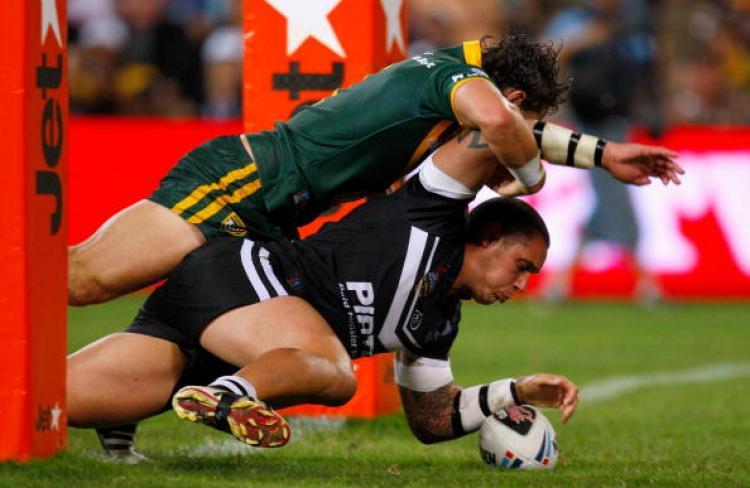
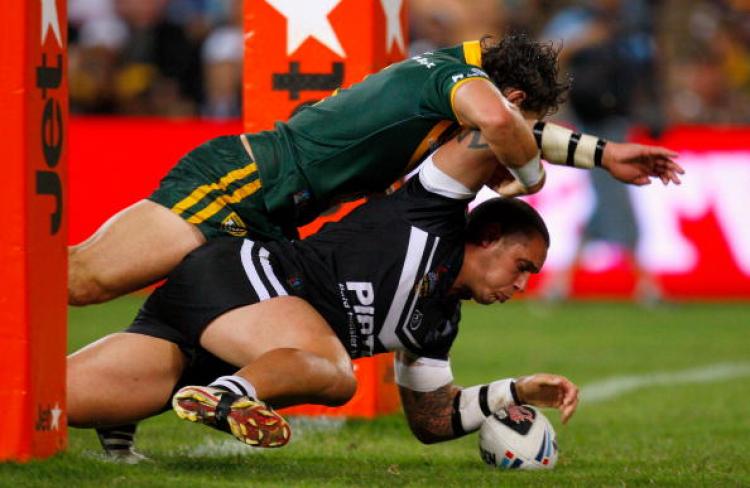
New Zealand staged a miraculous upset to win the 13th Rugby League World Cup, defeating Australia 34–20 in the Final at Brisbane’s Suncorp Stadium on November 22 to finish a hugely successful tournament hosted by Australia.
The underdog Kiwis’ victory delighted tournament organisers just days after announcing that the competition, which began in France in 1954, has left the Rugby League International Federation sitting on a $5 million profit.
New Zealand defied the odds, outplaying and out-enthusing the Kangaroos to claim the world cup for the first time. The remarkable victory comes after Australia had reached 50 points in three of their four previous matches.
The incredible form of the Australians has been the talking point of the past month, with questions asked about the hugely disappointing English. Up to 10,000 Lions supporters travelled Down Under to see their team, who promised so much after pre-tournament thrashings of France and Wales, to follow a 3-0 series defeat of New Zealand in 2007.
But while Australia and New Zealand revelled under local refereeing interpretations, Australia’s semi-finalist opponents England seemed a different side when faced with a vastly slowed match speed.
Different Rule Interpretations
England’s capitulation provided ammunition to critics who argue that rule interpretations in the European Super League (ESL) differ so strongly from the Australian-based National Rugby League as to give an unfair advantage to the southern hemisphere sides playing under local referees.
The Australians in particular made the most of stricter ruck interpretations to slow the speed of the match and limit the opposition’s creativity. The Kangaroos also used their expertise to draw crucial penalties as the English failed to adjust to a different style of play.
France was the other major disappointment. After being tipped by most to qualify easily from their pool, a heavy defeat to Fiji saw Gallic dreams shattered. A loss to Samoa in the last-place ranking match sealed coach John Monie’s fate, sacked soon after. Tri-colours players who just weeks before had starred in the ESL finals series suddenly appeared below international standard, with the brief exception of 80 minutes of their usual flashy football against the Scots.
Thankfully, European pride was unexpectedly saved by the lowly ranked Scots and Irish. Despite a large contingent of players qualifying via the heritage rule, national passion was at a premium for both sides. With many players plying their trade in the lower leagues, both sets of players performed well above expectation. After five previous attempts, Scotland won their first-ever world cup match, defeating eventual semi-finalists Fiji.
Irish eyes were smiling as they topped their group to unbelievably make the quarter-finals. Despite a loss, the Wolfhounds bravely pushed Fiji all the way for a chance to play Australia in the Sydney semi-final.
The other success stories of the world cup were Papua New Guinea and Fiji. The pacific islanders provided thrilling moments for supporters from around the world.
PNG made the most of their position in the “Super Pool” with Australia, New Zealand and England, establishing themselves as sentimental favourites. Their finest moment came in the opening match of the cup when they pushed a rusty England all the way, even leading at half time.
Fiji had systematically prepared for the tournament after securing qualification in 2006. Their efforts paid off with a quarter-final victory against Ireland securing a semi-final spot against then-reigning world champions Australia. Despite a heavy defeat against a quality Australian side, the Fijians were rightly proud of their efforts and will look forward to the Pacific Cup in 2009.
Samoa and Tonga lived up to their enigma reputations, occasionally showing the quality to win the cup, but mostly reverting to old habits, making simple errors and losing games they had been expected to win with ease.
While the Samoans and Tongans supplied the passionate, free-flowing football we have come to expect from them, New Zealand and Australia were the standouts in what was arguably the most successful Rugby League World Cup ever.
US Tomahawks
After narrowly missing out on RLWC08, America will begin planning for the next version in 2013.
The Tomahawks’ chances of qualifying in 2012 will be increased with news the RLIF will add two more qualifiers to the 2013 tournament, which England are likely to host.
The success of the “minnow” nations in 2008 will give America hope of replicating their 2004 heroics against Australia, when they went within minutes of beating the Kangaroos.
Meanwhile, America will play host to the World Club Champions Leeds Rhinos, when they take on the ambitious Salford Reds on Saturday January 17 at the University of North Florida in Jacksonville. Tickets are available at www.jaxaxe.com.