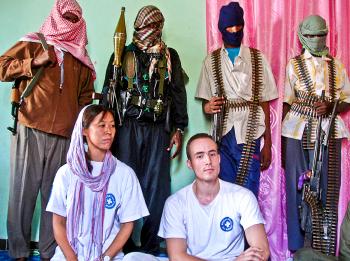
Humanitarian work is risky business—and increasingly so—not only because relief workers are parachuted into some of the world’s most strife-ridden and disaster afflicted regions, but because aid work itself can become a target of aggression. Westerners, or organizations perceived as representing Western values, are often dragged into political conflict making the job of offering relief to the afflicted an even greater challenge.
Compared to 10 years ago, the number of humanitarian workers killed has increased threefold, and the number of kidnapped aid workers is five times higher. Last year, according to United Nations records, nearly 300 aid workers encountered some form of attack or violence; 102 of them were killed, and 92 were abducted. A decade ago, 65 aid workers were involved in similar situations.
“All these aid workers who are out there doing their fundamental work to save lives, sometimes are caught in situations beyond their control,” wrote Stephanie Bunker, spokesperson for the United Nations Office for the Coordination of Humanitarian Affairs (OCHA), in a telephone interview.
“Humanitarian work doesn’t have a political or ideological agenda—it is about reaching the people in need,” says Bunker.
“I think it is important for people to remember that the need for humanitarian aid has increased over the years. The bottom line is that you cannot help people in need if it is too dangerous to reach them and if you are risking to be killed,” added Bunker.
Pakistan, suffering its worst humanitarian crisis in history with 17 million people now affected by severe flooding, has been an unsecure environment for aid workers for some time, says Bunker.
Last October, a suicide bomber attacked the Pakistan office of the U.N.’s World Food Program killing five staff members. Months before, an attack on a luxury hotel killed two U.N. officials and another U.N. staff member was killed in a camp in the same region. In an effort to protect its staff from further violence, the U.N. decided last December to reduce its staff in Pakistan by 40 percent.
In Somalia, 12 aid workers have been killed and 10 others abducted, in the last 18 months. The kidnapped workers are still missing.
In early August, six American, two European and two Afghan medical aid workers were killed returning from a medical mission in northern Afghanistan.
“So dangers are very real and we try our best to minimize the risk for aid workers but in many countries it is there,” admits Bunker.
The International Red Cross also reports increasing danger with its activities, especially in conflict zones.
Compared to 10 years ago, the number of humanitarian workers killed has increased threefold, and the number of kidnapped aid workers is five times higher. Last year, according to United Nations records, nearly 300 aid workers encountered some form of attack or violence; 102 of them were killed, and 92 were abducted. A decade ago, 65 aid workers were involved in similar situations.
“All these aid workers who are out there doing their fundamental work to save lives, sometimes are caught in situations beyond their control,” wrote Stephanie Bunker, spokesperson for the United Nations Office for the Coordination of Humanitarian Affairs (OCHA), in a telephone interview.
“Humanitarian work doesn’t have a political or ideological agenda—it is about reaching the people in need,” says Bunker.
“I think it is important for people to remember that the need for humanitarian aid has increased over the years. The bottom line is that you cannot help people in need if it is too dangerous to reach them and if you are risking to be killed,” added Bunker.
Pakistan, suffering its worst humanitarian crisis in history with 17 million people now affected by severe flooding, has been an unsecure environment for aid workers for some time, says Bunker.
Last October, a suicide bomber attacked the Pakistan office of the U.N.’s World Food Program killing five staff members. Months before, an attack on a luxury hotel killed two U.N. officials and another U.N. staff member was killed in a camp in the same region. In an effort to protect its staff from further violence, the U.N. decided last December to reduce its staff in Pakistan by 40 percent.
In Somalia, 12 aid workers have been killed and 10 others abducted, in the last 18 months. The kidnapped workers are still missing.
In early August, six American, two European and two Afghan medical aid workers were killed returning from a medical mission in northern Afghanistan.
“So dangers are very real and we try our best to minimize the risk for aid workers but in many countries it is there,” admits Bunker.
The International Red Cross also reports increasing danger with its activities, especially in conflict zones.