


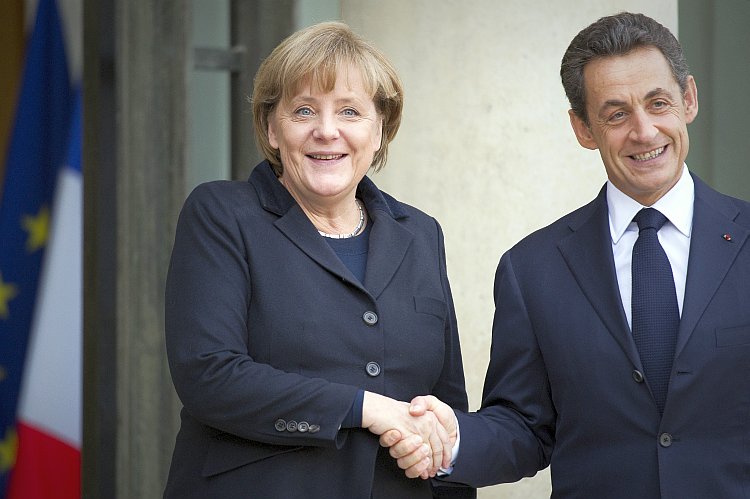
European leaders are working feverishly to create what German Chancellor Angela Merkel is calling a “fiscal union” to restore private investor confidence in Europe and rekindle growth. Unfortunately, what she advocates will thrust Europe into a deeper economic crisis and leave European leaders without the fiscal and monetary policy tools necessary to combat recessions.
The reforms Chancellor Merkel is pushing—hard caps on national government deficits—would ensure the ultimate demise of the euro, years of economic stagnation or worse. For many governments, those caps will be one-half or even one-quarter of recent annual deficits; to comply, they will drastically raise taxes, cut spending, and curtail pensions and other social benefits.
Already, the Mediterranean economies are contracting rapidly, and Germany and other more prosperous states are near zero growth. Harsh austerity in France, Italy, and elsewhere will be negative stimulus and thrust most if not all of the continent into a deep and prolonged recession.
Rising unemployment will feed on itself, national tax bases will shrink, and sovereign debt will become less manageable. Private investors, though perhaps initially comforted after Merkel’s reforms are adopted, again will become skeptical that Italy and the others will pay their debts and will flee government bonds.
European governments will be impotent to address the recession because Merkel’s enforceable caps on national budget deficits will not create a fiscal union. The euro zone as a whole and the larger European Union will continue to lack the fiscal and monetary policy tools the United States and Japanese governments have to manage recessions.
The U.S. federal government has broad taxing, spending, and borrowing authority, and jointly with the states finances Social Security and pensions, health care, and other essential public services. Although the 50 states face significant limits on how much they can borrow during a recession, Washington can increase its deficit to further assist states, and it can cut taxes, and spend more directly on new projects to stimulate the private sector.
The Great Recession would have been longer and deeper without those fiscal powers—powers the European Union now lacks and would still lack after Merkel’s reforms.


