Manufacturing in Australia is undergoing a “perfect storm”, but while some of the stresses in the industry are external, much of it is self-inflicted, says a specialist in global manufacturing.
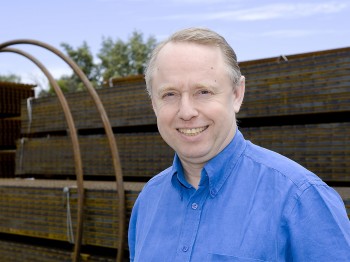
Chairman of VTT International (the global outreach of Finland’s Technical Research Centre), Professor Goran Roos is in Australia as part of the Adelaide Thinkers in Residence programme. He says there is enormous potential for the local manufacturing industry, but much more needs to be done in terms of attitudinal and structural changes.
“Readiness and the capability to address these changes has not been as high or not as high as it should be in all the industry here,” he told The Epoch Times.
Manufacturing in Australia, as in the UK and the US, has been in decline for decades, slipping from over a quarter of Australia’s gross domestic product (GDP) in the ‘60s to little more than a seventh in the mid ’90s, to around 9.4 per cent of GDP in 2010, according to the Australian Bureau of Statistics(ABS).
“Around three-quarters of the economy now involves the production of services rather than goods and the financial sector has replaced manufacturing as the largest single industry in the economy,” RBA Deputy Governor Ric Battellino told a regional council meeting in Redcliffe, Queensland, in August last year.
Industry Complacency
More recently, Australian industries have been hit hard in what Prof Roos calls “a perfect storm”, with competition from China and other Asian countries accentuated by the high Australian dollar.
“Manufacturing today is in its worst crisis since the Great Depression,” Paul Howes, National Secretary of the Australian Workers Union (AWU), told ABC’s Lateline recently. “It is worse than the GFC. Every CEO that I’ve spoken to in the last two weeks is telling me that.”
With regular layoffs and factory closures occurring across industry, including in steel, food, textile and clothing, the AWU has recently formed an alliance with the Australian Manufacturing Workers Union (AMWU) aimed at expanding Australian manufacturing and best practice.
The two unions have had their differences in the past, but the alliance represents a change in attitude which is what is needed if manufacturing is to adapt, grow and transform in Australia, says Prof Roos.
Many manufacturing industries in Australia have relied too much on resources, languishing too long in “low values commodities-based processing.”
“That of course is something that is easy if you have price advantage, but very difficult if the price advantage goes away, as for example the increase in the exchange base,” he said.
As a result, there has been much complacency in industry, with little investment in “intangibles” like research and development, or training.
“You have firms that are very good, but have lost the grip. [They] became lazy, they didn’t invest,” he said, citing the Australian wine industry as an example. “You became world leaders in that, but somehow you have allowed it to slip,” he said.
Importance of Manufacturing
Professor Roos, the founder of the think tank Intellectual Capital Services Ltd and a recognised expert in innovation management and strategy, believes manufacturing industries are critical to modern economies, saying: “Without them, we don’t have social cohesion and we will get riots on the streets.”
Unlike mining, which is capital intensive, manufacturing is labour intensive, not only creating well-paid jobs, but providing anywhere between two and five jobs in surrounding service industries.[