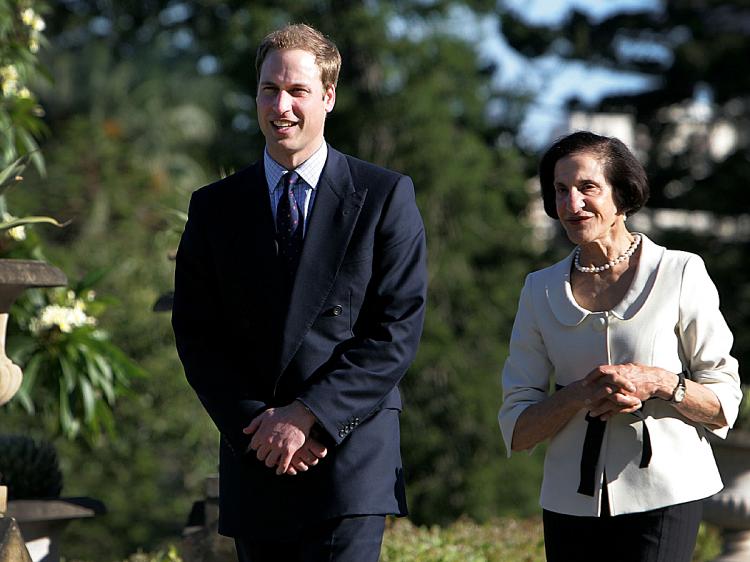
SYDNEY, Australia—Newly elected New South Wales premier, Kristina Keneally admitted finding Prince William charming during their brief meeting on his arrival in Australia for three days, but was clear that his charm had not dented her republican views.
“I am a republican, but I do believe that Prince William is a young man of great character,” Keneally said. ”He is a passionate campaigner for many causes, and particularly has used his position to highlight the needs of disadvantaged young people. It’s very lovely to have him in our city.”
Others, it appears, are not as committed to Australian independence from the British monarchy.
A survey of 1,203 Australians, conducted by Newspoll for British television station ITV, found that the prospect of having Prince William as official head of state influenced respondents views about whether they would like to remain tied to the British royals.
When asked whether the queen should remain Australia’s head of state, 45 percent were in favor, with 43 percent saying no.
But when questioned further about whether they thought the British monarch should be Australia’’s head of state if Prince William succeeded the queen rather than Prince Charles, those in favor rose to 51 percent, with 35 percent disagreeing.
Prince William, second in line to the British throne, is in Australia on his first tour here since visiting with his parents as a baby in 1983. Princess Diana had broken with royal protocol refusing to leave her nine-month-old baby behind with royal minders.
During two days in Sydney and one in Melbourne, the prince will not only meet Australian officials but also Aboriginal elders, Australian troops, and a number of younger Australians.
It is the prince’s first overseas trip in an official capacity. Many see it as part of the plan to groom the young prince for his role as king.
Fifty-eight percent of those interviewed in the ITV poll, said they preferred Prince William as the next King of England, compared with 30 percent who favored Prince Charles.
Among Australian women, 63 percent preferred Prince William to succeed the throne to Prince Charles.
Monarchists are understandably pleased with the prince’s visit arguing that there is no need to change Australia’s current system of government when it is working well and there is no better alternative.
The Australian Republican Movement (ARM), however, says their poll shows that 59 percent of Australians want a Republic and the prince’s visit is out of touch with modern Australia.
“Most Australians want to formalize our independence as a fully sovereign Australian republic with a democratically appointed or elected head of state who is an Australian,” said head of the ARM, Major General Mike Keating, in a statement. ”Future visits by members of the British royal family could then merely reflect a close and mature relationship with Great Britain.”
“I am a republican, but I do believe that Prince William is a young man of great character,” Keneally said. ”He is a passionate campaigner for many causes, and particularly has used his position to highlight the needs of disadvantaged young people. It’s very lovely to have him in our city.”
Others, it appears, are not as committed to Australian independence from the British monarchy.
A survey of 1,203 Australians, conducted by Newspoll for British television station ITV, found that the prospect of having Prince William as official head of state influenced respondents views about whether they would like to remain tied to the British royals.
When asked whether the queen should remain Australia’s head of state, 45 percent were in favor, with 43 percent saying no.
But when questioned further about whether they thought the British monarch should be Australia’’s head of state if Prince William succeeded the queen rather than Prince Charles, those in favor rose to 51 percent, with 35 percent disagreeing.
Prince William, second in line to the British throne, is in Australia on his first tour here since visiting with his parents as a baby in 1983. Princess Diana had broken with royal protocol refusing to leave her nine-month-old baby behind with royal minders.
During two days in Sydney and one in Melbourne, the prince will not only meet Australian officials but also Aboriginal elders, Australian troops, and a number of younger Australians.
It is the prince’s first overseas trip in an official capacity. Many see it as part of the plan to groom the young prince for his role as king.
Fifty-eight percent of those interviewed in the ITV poll, said they preferred Prince William as the next King of England, compared with 30 percent who favored Prince Charles.
Among Australian women, 63 percent preferred Prince William to succeed the throne to Prince Charles.
Monarchists are understandably pleased with the prince’s visit arguing that there is no need to change Australia’s current system of government when it is working well and there is no better alternative.
The Australian Republican Movement (ARM), however, says their poll shows that 59 percent of Australians want a Republic and the prince’s visit is out of touch with modern Australia.
“Most Australians want to formalize our independence as a fully sovereign Australian republic with a democratically appointed or elected head of state who is an Australian,” said head of the ARM, Major General Mike Keating, in a statement. ”Future visits by members of the British royal family could then merely reflect a close and mature relationship with Great Britain.”