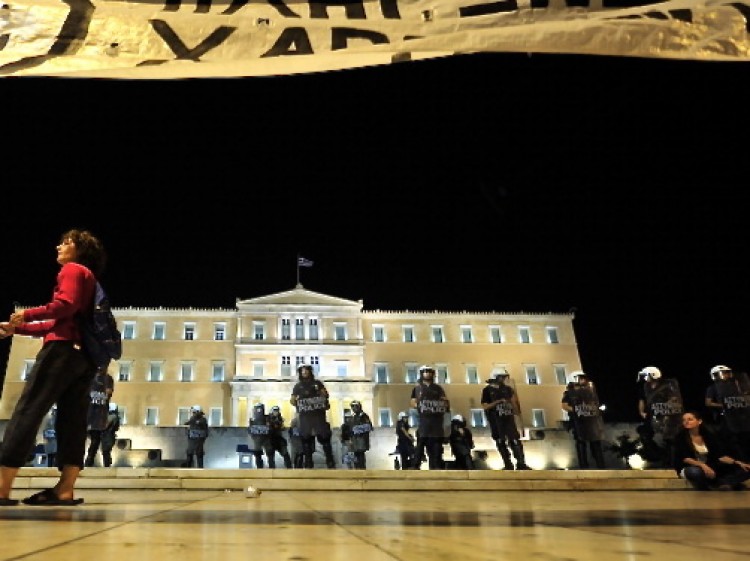
Greece took center stage again last week as it is becoming increasingly clear that the country will not be able to avoid a default. With a debt to GDP ratio of more than 160 percent it is depending on the delivery of a 110 billion euro (US$148 billion) bailout package funded by other European countries to survive.
Last Sunday, hopes for continued support for Greece out of Germany suffered another blow.
Local elections in Berlin saw heavy losses for the coalition government parties around Chancellor Angela Merkel, who has supported further funding for Greece but is getting less and less support from German voters on this matter and also faces some opposition within members of her own coalition government.
Germany’s Parliament on Thursday is voting on the expansion of the EFSF (European Financial Stability Facility), an entity, which would then be able to better support ailing governments such as Greece or Ireland. Initially, the EFSF was planned to hold 440 billion euros (US$592 billion).
On Monday European banks also made headlines as a study by the German think tank DIW showed that the 10 biggest banks in Germany need 127 billion euros (US$171 billion) of new capital in order to weather eventual write-downs on their sovereign debt holdings. Three French banks were cited by two Reuters’s sources to have been denied foreign exchange and swaps trading from a big Chinese state bank, which was concerned about the sovereign debt crisis and counterparty risk. French banks also carry a large exposure to European peripheral debt and could therefore not meet existing obligations should they have to take severe write-downs.
Despite the focus on Greece, European markets were also stirred by Standard & Poor’s as the credit rating agency downgrading Italy from A+ to A with negative watch last Monday. The rating agency said, “Weaker economic growth performance will likely limit the effectiveness of Italy’s revenue-led fiscal consolidation program,” in its rationale for the downgrade. Italy has the largest amount of debt outstanding of any European nation and the rising risk premium on the debt forced the government to announce a set of austerity measures last week.
Fears of an institutional bank run intensified last Tuesday as it became known that Siemens AG, a large German industrial company, withdrew some funds from the French bank Societe Generale in July, although the company later said that this action had nothing to do with the alleged problems at the French bank.
Tuesday also saw another setback for the EFSF illustrating the difficulty of decision making in the European Union, where all of the 17 eurozone members have to ratify the agreement: The Slovenian government collapsed after a vote of confidence loss over the EFSF. This delays the whole ratification process until 2012, despite Slovenia only representing less than 1 percent of the facility’s funding.
Markets came under even more pressure as headlines from an interview with German government adviser Lars Feld with a German newspaper were released. He openly admitted, “Restructuring Greece’s debt would cause ‘limited’ reaction in financial markets because they have been expecting a Greek default for some time.” Previously, most officials have avoided talking about a default explicitly.
Fitch credit ratings agency echoed Feld’s words as it also released a statement saying that Greece will “probably default” albeit without leaving the eurozone. All this came amongst a downgrade of European growth forecasts by the IMF from 1.7 percent to 1.1 percent for 2012.
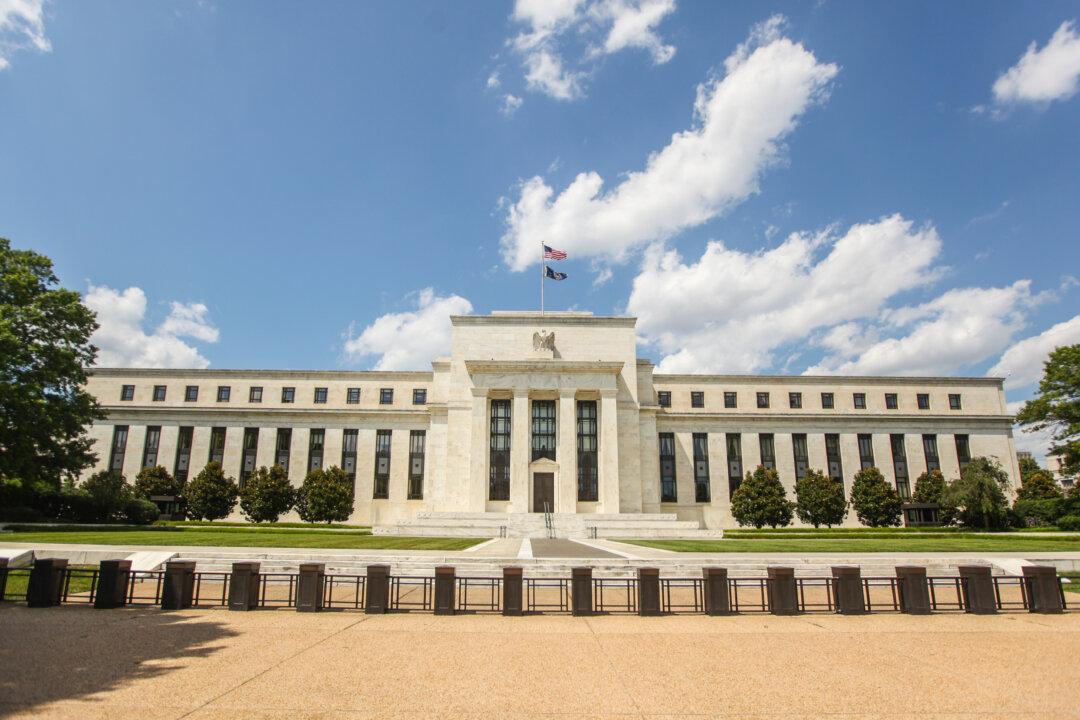
Last Wednesday the focus naturally shifted across the Atlantic to the Federal Reserve decision on “Operation Twist,” but markets in Europe remained tense as the European Central Bank (ECB) confirmed that one bank had to access its emergency dollar funding line with the Fed for US$500 million. Banks only do this if they cannot obtain funds in the interbank lending market, where the rates are generally lower, but have also exhibited severe stress in recent weeks. Thus, such an action raises concerns that banks do not have adequate funding.
This concern was intensified again as the insurance company Lloyds of London reportedly pulled deposits from several peripheral economies to reduce its risk: “There are a lot of banks who, because of the uncertainty around Europe, the market has stopped using to place deposits with” said Luke Savage, the finance director of the world’s oldest insurance market in a telephone interview with Bloomberg News. “If you’re worried the government itself might be at risk, then you’re certainly worried the banks could be taken down with them,” he added.
Additional pressure on the eurozone came from the IMF, which followed up on its growth downgrade and released a statement saying that the European banks would need at least 300 billion euros (US$404 billion) in additional capital to be able to absorb potential sovereign credit write-downs. S&P credit ratings agency also downgraded 15 Italian banks after its downgrade of Italy the day before.
Positive news came from Greece, which after discussions with the ECB, the IMF and the EU announced further austerity measures. It promised to cut pensions for people under 55 by 40 percent and lay off 30,000 government employees until the end of the year to secure much needed loans from the above named institutions.
The G-20 meeting in Washington last Thursday also tried to calm frantic markets as French Finance Minister Baroin said that the G-20 remains committed to a “strong and coordinated” response. He got further support from Japan’s Finance Minister Azumi who said that Japan “may aid EFSF if need for more capital arises.” These statements were made after rumors emerged that Greece was preparing for an orderly default, which would involve losses on its bonds of up to 50 percent instead of the 21 percent envisioned by the second bailout package passed on July 21 this year.
Last Friday, German finance minister added some substance to this rumor saying that there might be the need to revise the second Greek bailout package as Greece announced that they will have to reduce their military budget for EU and NATO missions due to the severe economic conditions in the country.
While Friday of this week marked the height in volatility when it came to market moves, the rumors certainly did not stop on Saturday. According to Sky News, G-20 sources meeting in Washington said that the ministers are now preparing for an “orderly” default of Greece after the next G-20 meeting in Cannes on Nov. 4.
According to sources of The Telegraph this will likely include a 50 percent haircut on Greek government bonds. Greece could be kept afloat with emergency funding while the authorities recapitalize the banks and prepare their economies for default. After that, Greece may be kept in the eurozone and would receive a new bailout package. There has been no official release confirming these rumors.