
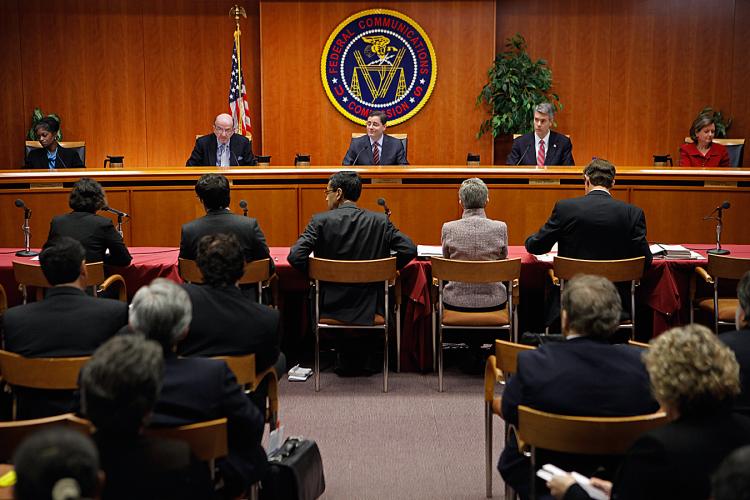
The first rules for the Internet were laid down by the Federal Communications Commission (FCC) on Dec. 21, adhering to Net Neutrality laws. The open Internet order was passed in a three-to-two vote by the FCC.
The FCC claimed the rules act “to preserve the Internet as an open network enabling consumer choice, freedom of expression, user control, competition and the freedom to innovate,” in a report.
It includes three central rules. The first rule requires transparency. It states that anyone “engaged in the provision of broadband Internet access service” will need to “publicly disclose accurate information regarding the network management practices, performance, and commercial terms of its broadband Internet access services” in a manner that is enough for customers to “make informed choices regarding use of such services and for content, application, service, and device providers to develop, market, and maintain Internet offerings.”
The second is that nobody can block “lawful content, applications, services, or non-harmful devices,” on broadband Internet. The standards are somewhat lower for mobile broadband Internet, however, and only lay down that nobody can “block consumers from accessing lawful websites,” and nobody can “block applications that compete with the provider’s voice or video telephony services.”
The third rule states that nobody “engaged in the provision of fixed broadband Internet access service,” can “unreasonably discriminate in transmitting lawful network traffic over a consumer’s broadband Internet access service.”
The laws sprouted from a public process launched by the FCC in 2009 to find out what allows the Internet to grow into a platform to support the U.S. economy and “civic life, and to foster continued investment in the physical networks that enable the Internet,” according to the FCC.
“This process has made clear that the Internet has thrived because of its freedom and openness—the absence of any gatekeeper blocking lawful uses of the network or picking winners and losers online,” it states, explaining that this is attributed to people being able to launch new businesses and technologies online without needing permission.
It adds, however, that this openness also “promotes competition,” and “broadband providers have taken actions that endanger the Internet’s openness by blocking or degrading disfavored content and applications without disclosing their practices to consumers.”
Others claim the rules will damage Internet freedom. The rules were declared “inadequate and riddled with loopholes” by the Media Access Project (MAP), a non-profit, public interest law firm.
“There is a reason that so many giant phone and cable companies are happy, and we are not. These rules are riddled with loopholes,” said MAP Senior Vice President and Policy Director Andrew Jay Schwartzman in a statement.
He said the rules “foreshadow years of uncertainty and regulatory confusion, which those carriers will use to their advantage,” adding “Those seeking to innovate and invent new uses for digital technologies face the prospect of being blocked, bilked, or intimidated by the carriers who control the pipes.”
People who use the Internet for things such as gaming, entertainment, and artistic and social expression “will be denied the full benefits of the Internet,” Schwartzman said.
The FCC claimed the rules act “to preserve the Internet as an open network enabling consumer choice, freedom of expression, user control, competition and the freedom to innovate,” in a report.
It includes three central rules. The first rule requires transparency. It states that anyone “engaged in the provision of broadband Internet access service” will need to “publicly disclose accurate information regarding the network management practices, performance, and commercial terms of its broadband Internet access services” in a manner that is enough for customers to “make informed choices regarding use of such services and for content, application, service, and device providers to develop, market, and maintain Internet offerings.”
The second is that nobody can block “lawful content, applications, services, or non-harmful devices,” on broadband Internet. The standards are somewhat lower for mobile broadband Internet, however, and only lay down that nobody can “block consumers from accessing lawful websites,” and nobody can “block applications that compete with the provider’s voice or video telephony services.”
The third rule states that nobody “engaged in the provision of fixed broadband Internet access service,” can “unreasonably discriminate in transmitting lawful network traffic over a consumer’s broadband Internet access service.”
The laws sprouted from a public process launched by the FCC in 2009 to find out what allows the Internet to grow into a platform to support the U.S. economy and “civic life, and to foster continued investment in the physical networks that enable the Internet,” according to the FCC.
“This process has made clear that the Internet has thrived because of its freedom and openness—the absence of any gatekeeper blocking lawful uses of the network or picking winners and losers online,” it states, explaining that this is attributed to people being able to launch new businesses and technologies online without needing permission.
It adds, however, that this openness also “promotes competition,” and “broadband providers have taken actions that endanger the Internet’s openness by blocking or degrading disfavored content and applications without disclosing their practices to consumers.”
Others claim the rules will damage Internet freedom. The rules were declared “inadequate and riddled with loopholes” by the Media Access Project (MAP), a non-profit, public interest law firm.
“There is a reason that so many giant phone and cable companies are happy, and we are not. These rules are riddled with loopholes,” said MAP Senior Vice President and Policy Director Andrew Jay Schwartzman in a statement.
He said the rules “foreshadow years of uncertainty and regulatory confusion, which those carriers will use to their advantage,” adding “Those seeking to innovate and invent new uses for digital technologies face the prospect of being blocked, bilked, or intimidated by the carriers who control the pipes.”
People who use the Internet for things such as gaming, entertainment, and artistic and social expression “will be denied the full benefits of the Internet,” Schwartzman said.