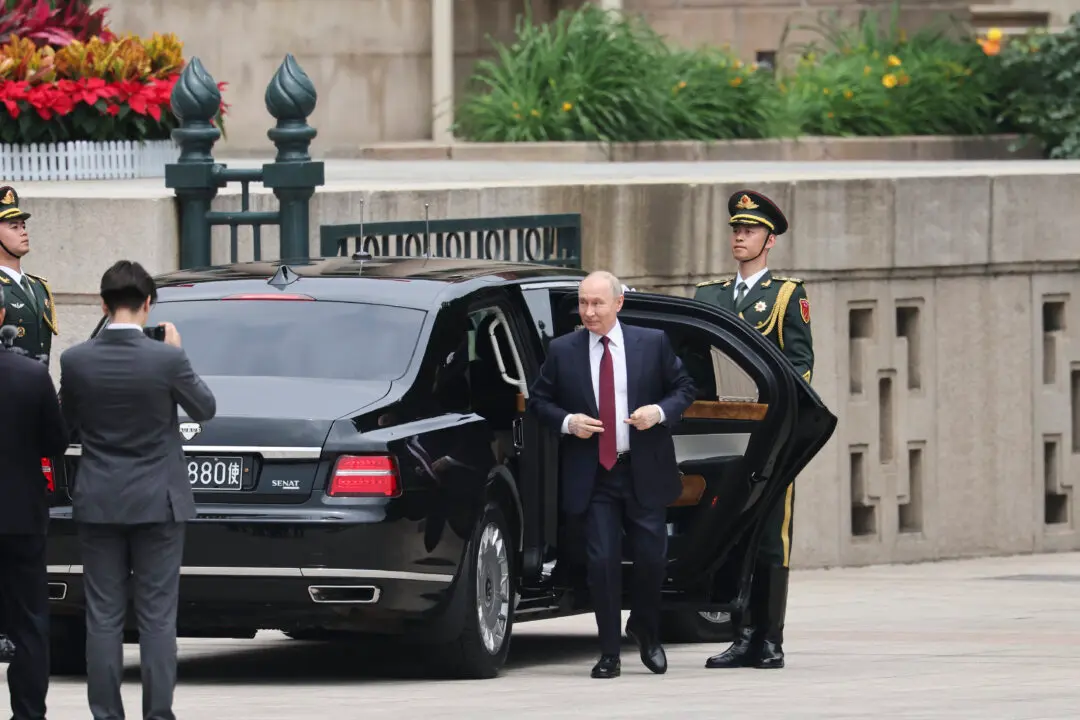
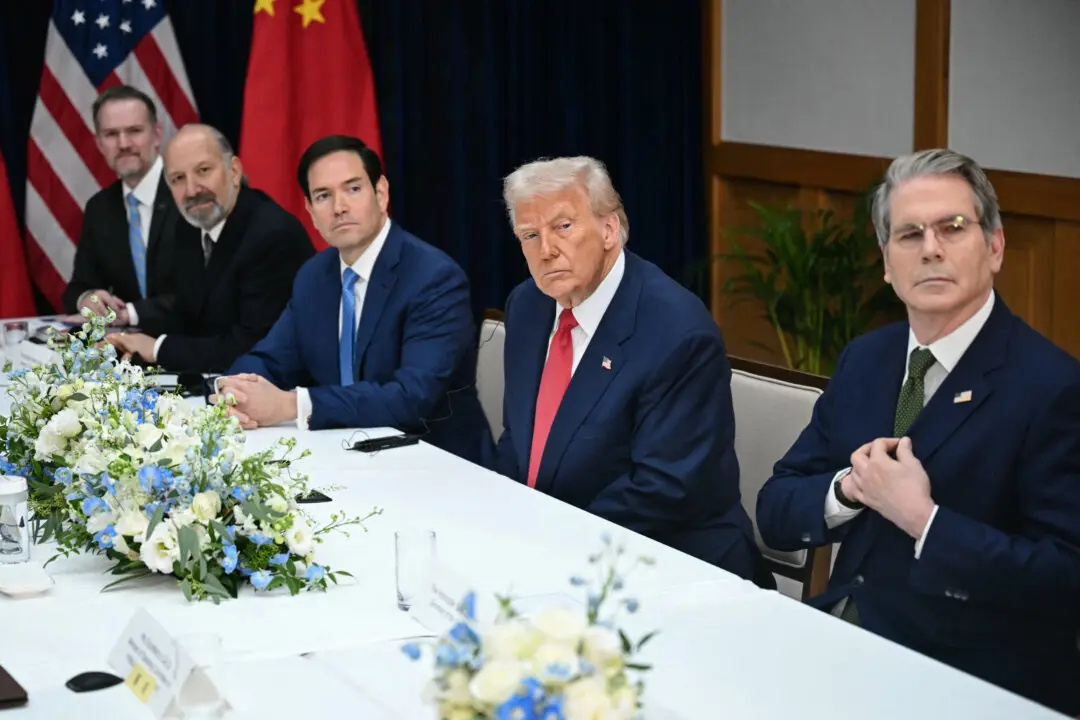
Cai Qi, widely regarded as the Chinese Communist Party’s (CCP’s) de facto No. 2 figure, has taken on another powerful title: president of the Central Party School. As one of Chinese leader Xi Jinping’s most trusted allies, Cai has long overseen the CCP’s day-to-day operations as director of the Party’s General Office, effectively serving as Xi’s chief steward and gatekeeper.
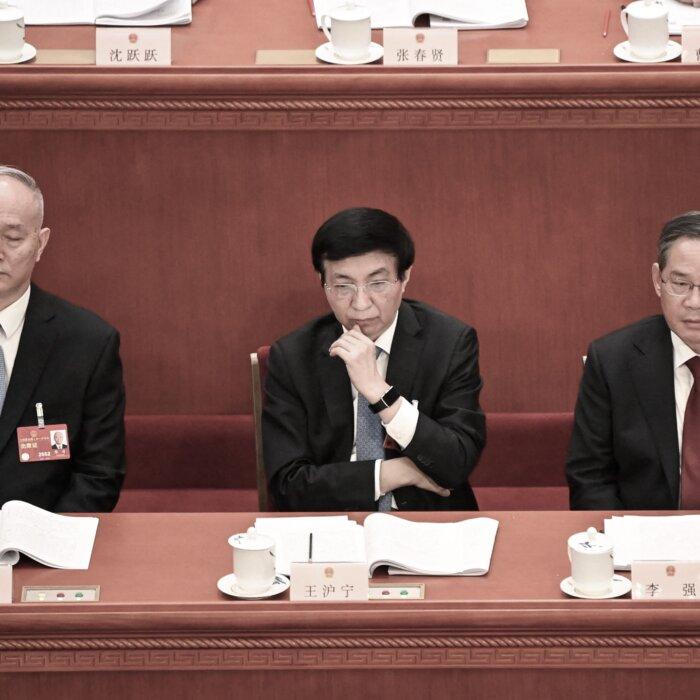
Although Cai ranks fifth within the Politburo Standing Committee, many analysts believe that his practical influence exceeds that of higher-ranked colleagues such as Premier Li Qiang, China’s second-highest official; Zhao Leji, chairman of the rubber-stamp National People’s Congress; and Wang Huning, the Party’s chief ideologue and chairman of the Chinese People’s Political Consultative Conference. As a result, Cai is often seen as the most powerful official after Xi himself.
Cai’s Appointment May Reflect Xi’s Sense of Political Risk
Cai replaced Chen Xi as president of the Central Party School. The change was not announced in a formal Party statement. Instead, it emerged from footage aired by state media outlet China Central Television on June 5, showing Cai attending a graduation ceremony in his new role. The school’s official website has also been updated to list him as president.Many observers view the move as a restoration of the Central Party School presidency to the Politburo Standing Committee, the CCP’s highest decision-making body.
The Central Party School traces its roots to the Central Institute of Marxism-Leninism. Its political importance has varied over time.

During the founding of the People’s Republic of China (PRC), as the CCP transitioned from a revolutionary movement to a governing party, the institution held exceptional significance. Chinese leader Mao Zedong personally served as its head, while Liu Shaoqi—then one of the CCP’s most influential leaders and later chairman of the PRC—also led the school during this pivotal period.
However, after 1953, the position was increasingly assigned to less prominent officials, reflecting Mao’s apparent belief that communist rule had become secure and that the most difficult phase of political consolidation had passed. Cadre training became a more routine administrative function.
After the Cultural Revolution (1966–1976), the Central Party School was revived under Hua Guofeng, who served as both the CCP leader and the school’s president. This move reflected an urgent need to retrain senior officials, secure their loyalty to the new leadership, and adapt the Party to the post-Cultural Revolution political order.
The Central Party School president’s rank rose again in 1989, when Politburo Standing Committee member Qiao Shi assumed the position. Although his appointment preceded the Tiananmen Square massacre, the political turmoil of that year had already heightened concerns among Party leadership.
For years afterward, the post remained in the hands of Standing Committee members, including both Hu Jintao and Xi during their periods as designated successors. Only during Xi’s second term was the role downgraded to Politburo member Chen, a move widely interpreted as a sign of Xi’s growing confidence in his political control.
Viewed historically, the rank of the Central Party School president appears closely tied to how secure the leadership feels about both political conditions and the loyalty of senior officials. The greater the perceived instability, the more senior the official selected to oversee cadre education.
The Central Party School’s primary mission is to train senior officials and ensure political alignment with the Party center. Cai’s appointment may therefore indicate that Xi seeks to reinforce ideological discipline and loyalty among senior cadres. It also underscores the extraordinary level of trust he places in Cai.
The Keeper of the CCP’s Most Sensitive Secrets
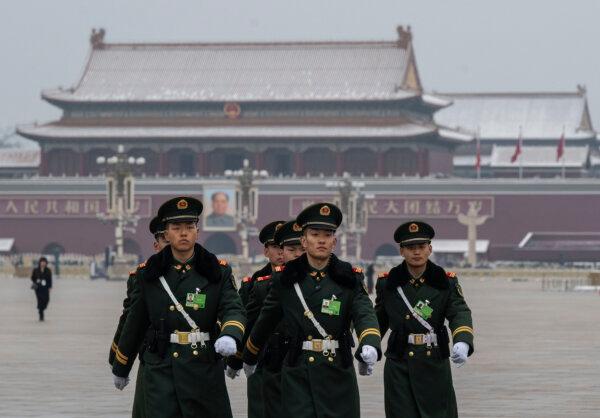
The director of the CCP General Office is entrusted with many of the Party leadership’s most closely guarded secrets and also has the authority to mobilize the Central Guard Bureau, the security force responsible for protecting China’s top leaders.Since the founding of the PRC, there have been at least two major instances in which the Party’s security apparatus was used to remove very senior political figures whose positions seemed unassailable at the time.
The first was the arrest of the Gang of Four in 1976. The operation was orchestrated by then-Party Chairman Hua and carried out through Wang Dongxing, director of the General Office, who mobilized the central security apparatus to detain the group.
The second was the detention of Zhang Youxia and Liu Zhenli, allegedly directed by Xi. In both cases, senior Party figures were taken into custody without any publicly disclosed legal or Party disciplinary process beforehand.
For that reason, the General Office has long been regarded as one of the most critical nodes in the CCP’s power structure.
Why the No. 2 Position Can Be the Most Dangerous
With the partial exception of the reform era, the CCP elite’s politics have often been shaped by struggles over power and ideology. In such periods, the second-most powerful figure frequently occupies the most precarious position.Liu Shaoqi helped consolidate Mao’s authority during the Yan’an Rectification Movement, a political and ideological campaign from 1941 to 1945 that enabled Mao to establish himself as the CCP’s undisputed leader. After 1949, Liu Shaoqi became the regime’s second-ranking leader. Yet during the Cultural Revolution, he was purged and ultimately died under harsh conditions.
Lin Biao likewise played a central role in elevating Mao’s authority, particularly within the military, and was formally designated Mao’s successor. Nevertheless, he eventually fell from favor and died in a mysterious plane crash after an alleged attempt to flee China.
These cases suggest that becoming a leader’s most trusted lieutenant offers no guarantee of long-term security. On the contrary, proximity to supreme power can increase the risk of becoming a future target.
Xi appears no less wary of potential rivals than Mao was. Although he has already sidelined or removed all obvious successors, this does not necessarily mean that he will stop identifying new political threats. Whether such figures actually oppose him may be beside the point. Neither Liu Shaoqi nor Lin openly challenged Mao’s authority, yet both ultimately became targets of political campaigns.
The structural dilemma is that the No. 2 figure must wield a certain degree of authority. In carrying out decisions and managing affairs, his views may diverge from those of the “big boss,” potentially providing the very grounds for the “boss” to take him down.