It’s the fourth-largest box office money maker in history for an R-rated film’s first week. It scored a 94 percent approval rating from film critics and a 97 percent approval rating from audience members on Rotten Tomatoes. Tickets for its IMAX premiere sold out a year in advance, with scalpers getting more than $1,000 for $35 tickets. By all accounts, it is a blockbuster of epic proportions (pun intended). I’m talking about Christopher Nolan’s “The Odyssey,” of course, the movie everyone has been talking about since (and before) its official opening on July 17.
The praise heaped upon “The Odyssey” seems, for the most part, genuine and thoughtful. Okay, loving the film because Matt Damon plays Odysseus is pedestrian, but enjoying the cinematography, the effects (Nolan famously refuses to use CGI unless absolutely necessary), the ambitious score by Ludwig Göransson, and the film’s size and scope (said to properly befit an epic) are all legitimate criteria for evaluating the worth of a film.
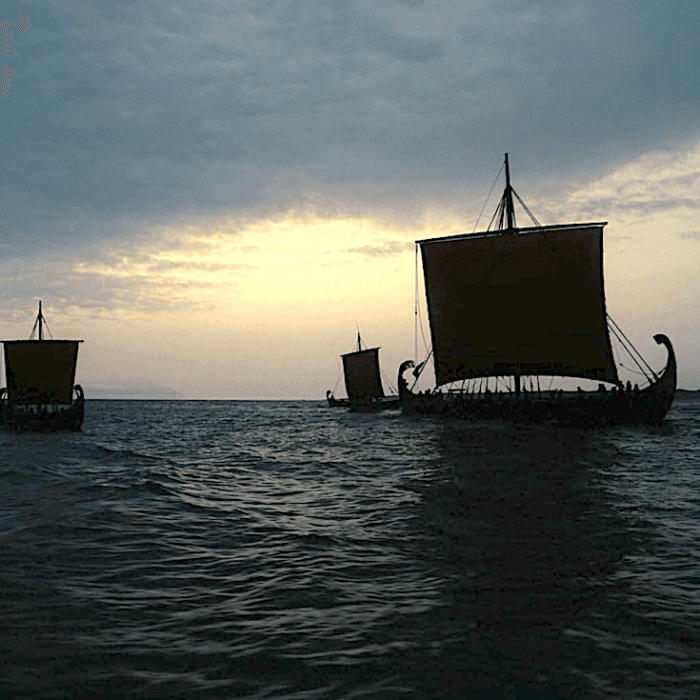
Despite all the positive reviews, “The Odyssey” is not without its detractors, and I think their pushback has merit. Some audience members have complained that the film, at just less than three hours, is overly long and that there have been accounts of patrons leaving the theater, unable to overcome boredom. I file this under “You Can’t Please Everyone.” More thoughtful negative comments complained about the woke casting: “white armed” Helen of Troy, for example, is played by black actress Lupita Nyong’o (who has wasted no time in labeling Homer a misogynist); the anachronistic dialogue (“My dad is coming home,” Telemachus said); the Viking ships and Roman helmets; the steel armor in the Bronze Age (a character actually said, “the Age of Bronze is ending”); the exclusion of all male gods, particularly Zeus and Poseidon, central characters in Homer’s poem; and the feminist reading of the poem based on the translation by Emily Wilson.
A little more troubling is the inclusion of a character, Sinon, who does not appear in either “The Odyssey” or “The Iliad” (but you will find him in Virgil’s “Aeneid” and Dante’s “Inferno”). Sinon, played by Elliot Page, a transgender performer whose casting was the source of some controversy (first because he was incorrectly identified as playing Achilles and then because of the casting of a transgender as a Greek warrior). The question, however, is why Nolan chose to include Sinon at all. Nolan claims it is to reclaim the status of Sinon, a notorious traitor in “The Aeneid,” to shine a damning light on Odysseus’s own failings, and to expand Homer’s world to create a fuller mythological world. Despite these explanations, I still wonder “why?” I’m not convinced Homer needs support from Dante in creating a rich and fabulous world.
But the greatest concern many other critics and I have with Nolan’s “The Odyssey” is in the depiction of the central character, Odysseus. Homer’s brave, arrogant, resourceful, scheming, and sometimes cheeky warrior becomes, in political commentator and podcaster Matt Walsh’s view, “an anachronistic whiney, solemn shell of a man plagued by ‘trauma’ and ‘guilt.’” Scholar and translator Daniel Mendelsohn argued that the film’s Odysseus is simply another in the line of Nolan’s tortured characters (Oppenheimer comes to mind), haunted by their past. This Odysseus appears nowhere in Homer.
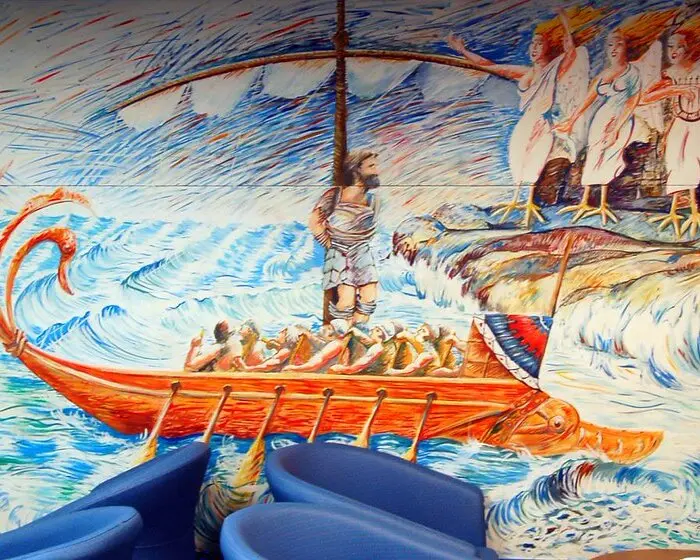
Edith Hall, professor of classics and a leading authority on Greek drama and epics, criticized the depiction of Odysseus, saying that Nolan’s version “removes the dangerous edge that makes Odysseus Odysseus.” Interestingly, most commentators with these reservations about the film (except Walsh) found the structure and look of the film to be praiseworthy.
- It’s not a terrible thing to have people talking about “The Odyssey.” Better they should be talking about a classic piece of Western literature than the umpteenth offering of the Marvel universe.
- If there’s one thing we need in contemporary America, it is true heroes. Despite his shortcomings, the Odysseus of Homer is a hero and not simply a battlefield hero. Nor is he the weak and emasculated Odysseus of Nolan’s film. Rather, he is the tested, cunning, long-suffering, and ultimately triumphant warrior who is driven by the love of and longing for his family. Seeing this film, especially as a family outing—it is rated “R” but there really is no gore or objectionable language—may make for great conversations on what a hero should be. My guess is that people will be innately more drawn to the classic hero than to the modern conception of the “hero,” whose flaws make him rather anti-heroic and therefore somehow human. We all need some superhuman traits to look up to sometimes. In any event, it makes for great conversation.
- We all know that, however faithful film adaptations try to be to their original sources—if they try at all—they always leave something out that enriches the book but cheapens the film. This is certainly the case with Nolan’s “The Odyssey,” as a number of Homer’s episodes are watered down or excluded from the film altogether. For example, the “Nobody” trick in the Cyclops episode is not included, although the Cyclops is. Perhaps the film will encourage others to read Homer’s poem or merely to learn more about it. There are even simple translations geared for children. We can use the film as a jumping-off point to a greater interest in Homer, ancient Greece, or the oft-attacked Western civilization, which has been beaten but not (yet) destroyed.