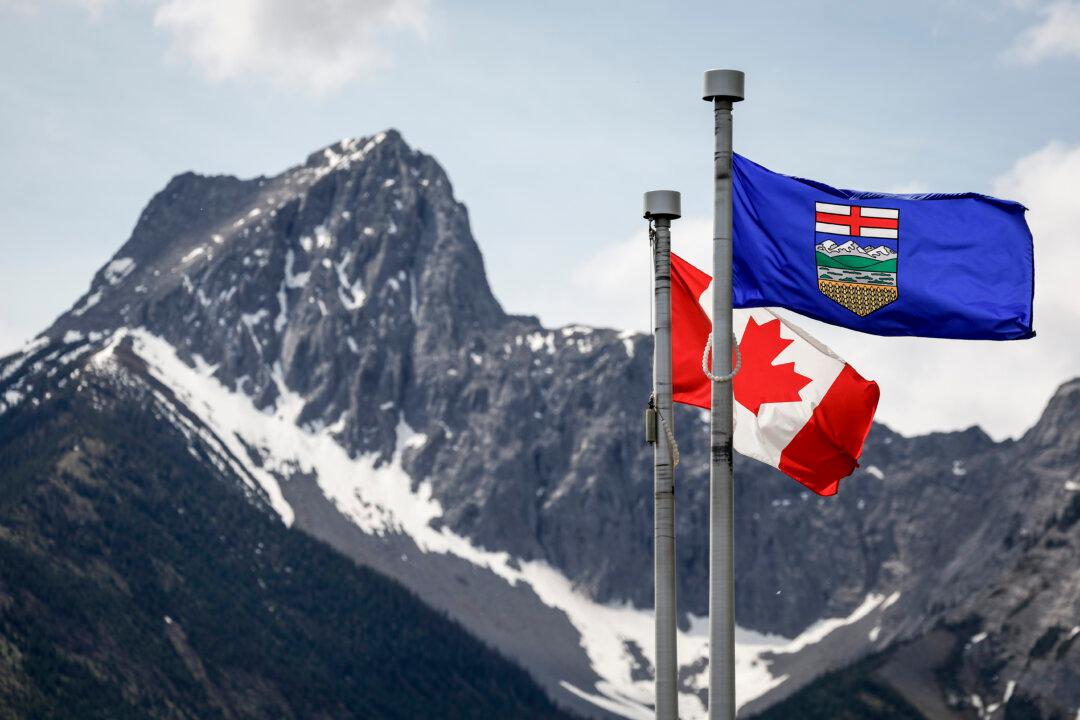
When judge Shaina Leonard ruled last month that an Alberta independence petition couldn’t advance without indigenous consultation, Premier Danielle Smith mused about deploying the notwithstanding clause. “A single judge cannot override what 700,000 people have said they want,” she said.
It underscored what a legal-political hot potato the clause has become. It’s either a “nuclear option” or a constitutional counter against “judicial autocracy.”
Intended as a protection against judicial overreach by the courts, its future is now, ironically, being decided by the Supreme Court of Canada—which will shape how federal and provincial governments use the notwithstanding clause for years to come.
“Provincial governments ... have turned what its drafters intended to be an emergency safety valve into a ‘dagger pointed at the heart of the Charter,’” columnist Andrew Coyne recently wrote. The clause, he went on, was intended only in “non-controversial circumstances” and in the “unlikely event of a decision contrary to the public interest.”
Not so. Such detractors ignore what two of the founding fathers of the Charter of Rights and Freedoms—former Saskatchewan NDP Premier Alan Blakeney, and former Alberta Progressive Conservative Premier Peter Lougheed—actually said about it.
“We needed to have the supremacy of the legislature over the courts,” Lougheed said in 1982. “We didn’t want ... public policy to be dictated or determined by non-elected people.”
Blakeney said the Clause was intended to ensure that the state could, for “economic or social reasons” or “because other rights were found to be more important, choose to override a Charter-protected right.” There would be instances, he said, when “rights collide,” but Charter rights are “not more important than other rights.”
It’s a sign of desperation that provincial governments have had to resort to invoking the notwithstanding clause simply to make policy and pass legislation on everything from back-to-work legislation to school choice—as they contend with the increasing politicization of the Charter and the courts.
“It is thanks to the unamendable 1982 Constitution that the Courts now rule Canada,” David Warren wrote in 2003. “It took them more than a decade to discover how much power [Pierre] Trudeau’s Charter had given them, and taken away from Parliament. Canada is going to hell in a handcart. And it’s not just any handcart. It’s the Charter of Rights, pulled by the ghost of Pierre Trudeau.”
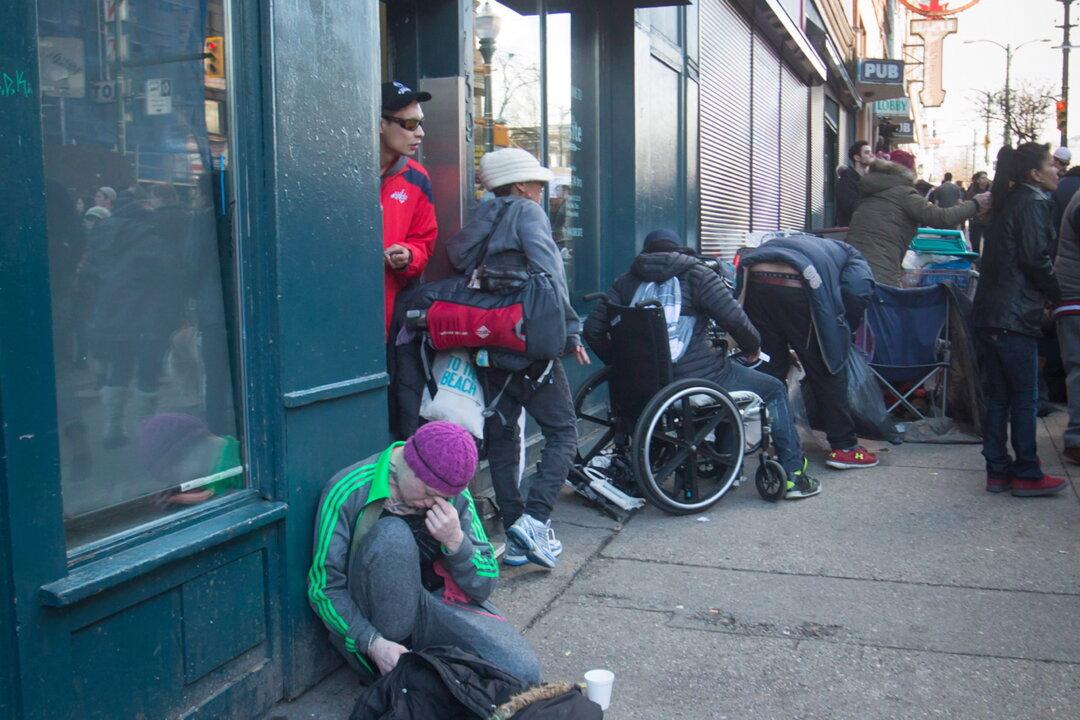
In recent months alone, judges have used the Charter’s Section 7 (“life, liberty and security of the person”) to empower child activists to take on the climate policies of the entire province of Ontario. Section 7 has also been used to prevent homeless encampments from being dismantled until every “unhoused” member has been found somewhere to live, the removal of bike lines, and the closure of drug consumption sites near preschools.
Such increasing court overreach is “regrettable,” says retired Supreme Court Justice John Major. “Judges now interfere in matters of public policy, which creates unnecessary conflict between the courts and Parliament.”
The late Supreme Court Justice Bora Laskin once said: “A judge has no freedom of speech to address political issues which have nothing to do with judicial duties. Abstention guarantees independence.”
In contrast, current Supreme Court Chief Justice Richard Wagner publicly opined in 2022 that the Freedom Convoy amounted to “anarchy” and “forced blows against the state,” which should be “denounced with force.” Wagner has now refused to recuse himself from presiding over the appeal of the Emergencies Act.
Rights are clearly in the eyes of the beholder. Federal Justice Minister Sean Fraser has warned that “our future downfall as a nation, should it ever come, is not going to be at the hands of some despot on the other side of the world, but a future government empowered by an erosion of our rights.”
We must also not forget that, for all the prevailing discontent about the use of the notwithstanding clause by a few provinces, Quebec has invoked it 16 times—and, right out of the constitutional gate, between 1982 and 1985, the province notwithstood every single piece of federal legislation.
Nevertheless, its importance is irrefutable. “Canada is not a kritarchy,” Saskatchewan Court of Appeal Justice Neal Caldwell wrote in his eloquent dissent in Saskatchewan (Minister of Education) v. UR Pride for Sexuality and Gender Diversity. “The judicial voice must not toll louder than the ballot.”
Our only hope is that, because it is Quebec arguing for the notwithstanding clause at the Supreme Court—and not Alberta or Saskatchewan—Justices will exercise truly sober second thought. If Quebec wins, as it usually does, it will protect the future of the notwithstanding clause and, along with it, nothing short of parliamentary sovereignty in Canada.