If you grew up in America in the middle of the 20th century, you remember a world where change was steady, but you could keep up with it. The television set entered the living room. The rotary phone gave way to push buttons, then cordless, then to the first cell phones. The family typewriter was replaced by a home computer.
These shifts were big, but they happened over years. There was time to adapt, to learn, and to keep a sense of stability.
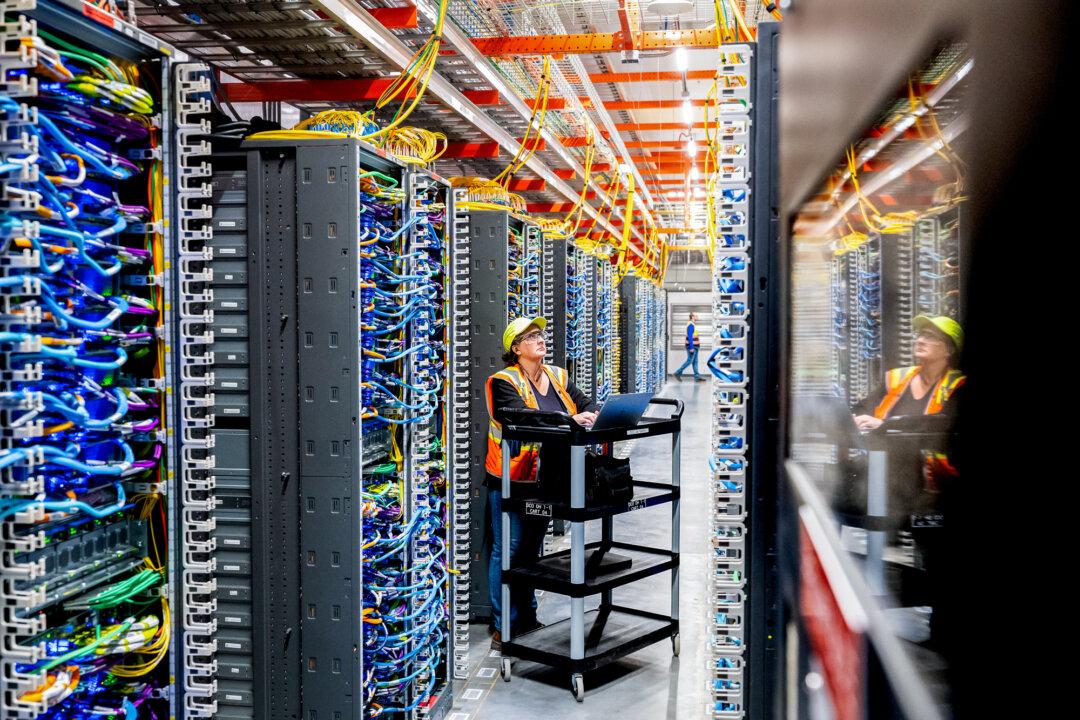
But sometime in the past 20 years, the pace of change quietly shifted gears. Without fanfare, our daily lives were pulled into the hidden machinery of algorithms and big data. Social media didn’t just connect friends; it studied every click and scroll to keep us hooked. Workplaces didn’t just digitize; they tracked keystrokes, harvested metrics, and optimized labor with dashboards.
Many industries flourished in this new age of information technology. Doctors gained better diagnostic tools, teachers expanded access to knowledge, businesses reached new customers, and even farmers found ways to improve crop yields. These were genuine gains, and they explain why so many eagerly adopted the new tools. But concerns were voiced too quietly, and often too late. For every benefit of efficiency, a little more of human judgment and connection was quietly outsourced. At first, it was only tasks. But early adopters began to delegate something deeper—their sense of purpose—to the machine. And inspired by their vision, others soon followed suit.
That era prepared the ground for what we are witnessing now.

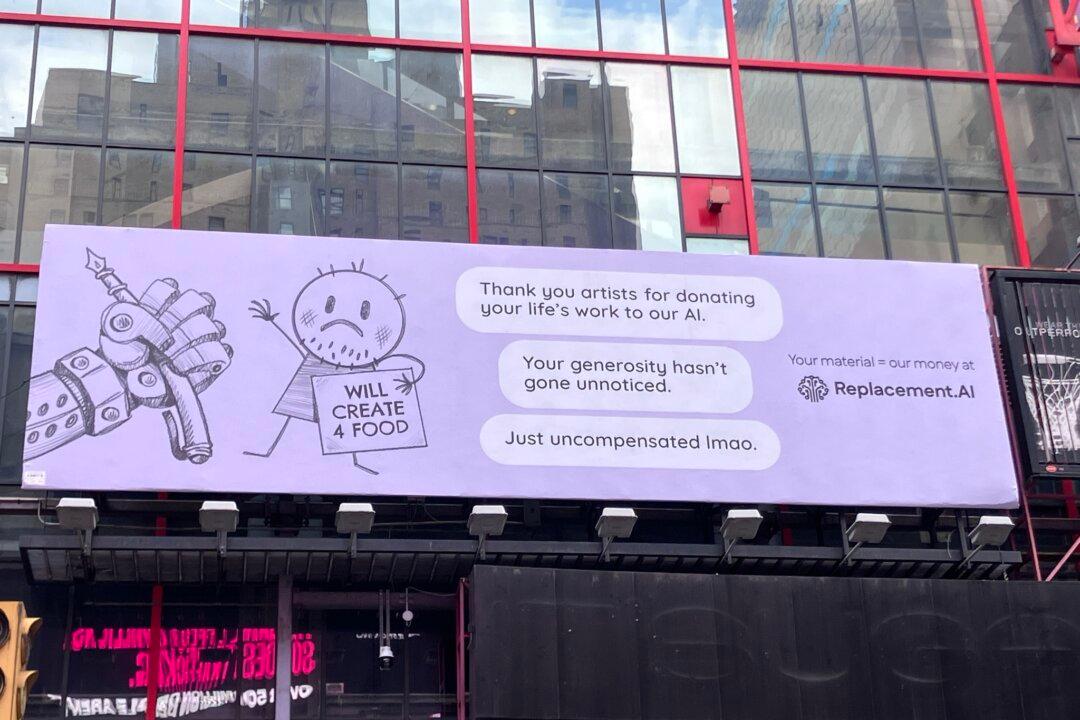
Today, the curtain has been pulled back, and artificial intelligence isn’t trickling into our lives the way past technologies did. It is pouring in at full force. Overnight, programs appear that can write your emails, draft legal briefs, design ad campaigns, diagnose illnesses, or simulate a loved one’s voice. Kids are using it to do their homework, and teachers can no longer tell if essays were written by students or by a machine. Big corporations and governments are delegating decision-making to machines more than they are willing to admit. Talented young freelancers I know, who had just stabilized their careers, suddenly found their skills replaced by new AI tools. Like a growing number of white-collar workers, they now face the burden of re-skilling from scratch to pay the bills, haunted by the fear that their next field of choice could be just as easily swept away.
These are not abstract changes. They are the lived reality of people trying to find their place in a world that feels like it’s moving too fast. To some, this is the dawning of humanity’s great augmentation—our chance to extend intelligence, creativity, and purpose by merging with machines. But for those who find meaning in life regardless of technological advances, this forced digital augmentation feels more like dilution: the thinning out of what makes human work, effort, and creativity meaningful.
For those who were unaware and unprepared, it now feels like a freefall. Tech companies are pushing AI into every corner of life at breakneck speed. Governments are investing billions of dollars to fuel and capture their power. Nations are treating it as the next decisive weapon in the way nuclear arms once were. On the surface, this rush looks like a matter of economics and geopolitics—who will profit, who will dominate, who will win. But the deeper reason it feels unstoppable is not about money or power. It is about human nature itself.
Humans have never been satisfied with survival alone.
We are meaning-seeking beings. Viktor Frankl, a Holocaust survivor and psychiatrist, wrote that life is never made unbearable by circumstances but only by lack of meaning and purpose. Augustine echoed this truth 15 centuries earlier when he confessed, “Our hearts are restless until they rest in You.” Aristotle called happiness “the meaning and the purpose of life, the whole aim and end of human existence.” And the Buddha taught, “You yourselves must strive; the Buddhas only point the way.”
These voices, spanning cultures and centuries, converge on one truth: Meaning is discovered within the soul. It is strengthened through struggle, cultivated in virtue, and confirmed in conscience. It is never delivered by an external system. It cannot be augmented by code. And when we try, we do not enhance humanity, we dilute it.
For most of history, people lived with that understanding. A farmer did not find purpose in the plow but in providing for his family and serving his God. A soldier did not find meaning in the sword but in defending his nation and fellow citizens. A mother did not find her worth in the cradle but in the children she raised and the values she passed on. Technology was always a servant to meaning, never its source.
The Founders of the United States shared this view. They rooted this nation in the belief that human value is not bestowed by the state or by machinery but by God Himself. Jefferson declared in the Declaration of Independence: “We hold these truths to be self-evident, that all men are created equal, that they are endowed by their Creator with certain unalienable Rights.” Madison warned that without virtue, liberty itself would fail. Washington spoke of religion and morality as the “indispensable supports” of political prosperity. They understood that human dignity comes from above, not from governments or inventions. They would have recoiled at the notion that humanity should be “upgraded” by fusing itself with a machine.
Yet as materialist ideologies took hold under communism, socialism, and even in the softer technocratic currents of the West, the language of the soul was stripped away. Humans were reduced to units of productivity, valued only for what they produced. The hunger for meaning did not vanish. It migrated.
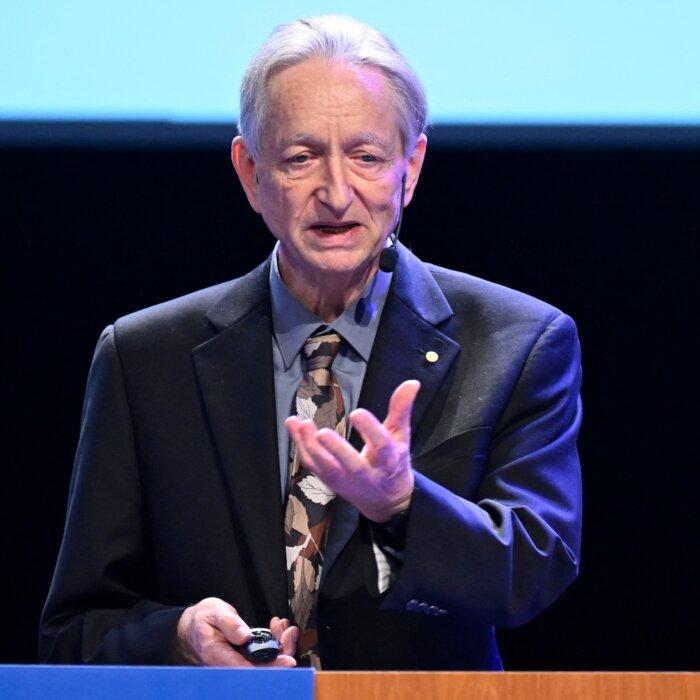
And today, it has migrated into technology, especially artificial intelligence. AI is no longer just a tool; it is being presented as salvation. Futurist Ray Kurzweil put it bluntly: “We’re going to be a combination of our natural intelligence and our cybernetic intelligence. ... We are going to expand intelligence a millionfold by 2045.” He spoke of “longevity escape velocity,” a moment when scientific progress gives us more years of life than time itself takes away—effectively defeating death. To Kurzweil and others, this is the ultimate augmentation of humanity. But if human worth comes from spirit, not circuitry, then this is not augmentation at all. It is dilution—humanity thinned out into machinery, mistaking computation for consciousness.
Technologists don’t all agree with Kurzweil and his followers.
Jaron Lanier, the philosopher of technology who coined the term “virtual reality,” cautioned: “I don’t think technology by itself improves people’s lives. ... Unless there’s commensurate ethical and moral improvements to go along with it, it’s for naught.”
He reminds us that technology can amplify, but it cannot redeem.
Religious leaders echo this warning. Ecumenical Patriarch Bartholomew has spoken against an “impending robotocracy,” affirming that “there is nothing more sacred than the human being, with whom God Himself shared His nature.” Pope Leo XIV has urged that the Church’s teaching on social justice confront AI just as Leo XIII addressed the upheaval of the Industrial Revolution, insisting that human dignity and labor never be subordinated to machinery.
These voices recognize that if technology claims to augment humanity while emptying it of its God-given value, it is no augmentation at all. It is dilution.
Where religion once promised eternal life, AI now promises digital immortality. Where philosophy once pointed to virtue as the path to flourishing, AI promises progress through code. Where nations once prayed for protection, they now seek dominance through algorithms. Where family and community once healed loneliness, AI offers companionship in the form of chatbots. These are not new dreams. They are the old longings of the human heart, dressed in silicon and code. And when we entrust them to machines, we dilute them.
That is why the freefall feels inevitable. The powerful are racing to control AI. Our brains, wired for efficiency, reward us for offloading effort to shiny new AI tools that depend on our use to strengthen and grow them. But most of all, our hearts are searching for meaning, and AI is the latest idol offered to fill that hunger.
The danger is not only in how AI might be misused. The deeper danger is that we will mistake what AI can never provide. No algorithm can give us a “why.” No machine can answer the restless cry for purpose. At best, AI can amplify the tools we already hold. At worst, it becomes a hollow substitute for the soul—an imitation of augmentation that ends only in dilution.
History shows that true meaning has never come from external technology. Not from the plow, not from the printing press, not from the internet. Each of these changed how we live. None of them changed the essence of why we live. Meaning comes from the same place it always has: the spirit, the conscience, and the inner seeking that no system, no ideology, and no machine can erase.
The future will not be defined by the intelligence of algorithms. It will be defined by the meaning we choose to embody. And our choices have never been more important.