Commentary
I keep seeing the same video about gene-edited cocoa reposted by two groups of people who normally agree on absolutely nothing: my most progressive friends and my most conservative farming friends.
That caught my attention.
The progressives are talking about indigenous seed sovereignty and corporate ownership of food. The conservative ranchers are talking about property rights, contamination, and farmer independence.
Which tells me this issue hits something deeper than politics.
Researchers and corporations are currently developing gene-edited cocoa trees designed to resist disease and increase yields. Some of this work uses CRISPR technology to alter the genetics of the tree itself.
A lot of people online are arguing about whether that is good or bad. But I think the bigger issue is ownership.
Years ago, I farmed lemons and avocados, so I understand selective breeding. Every Hass avocado tree in the world is genetically identical because every tree ultimately traces back to cuttings from the original Hass mother tree.
But avocados are not true to seed. If a Hass avocado cross-pollinates with a Bacon avocado and someone plants that seed, the resulting tree is genetically unique. If it produces incredible fruit, the farmer who grew it can patent it, propagate it, or sell it as a completely new variety.
That has always been normal agriculture.
The concern with gene-edited crops is different. The concern is that the genetics may still belong to a corporation even after pollen drifts naturally into neighboring farms and reproduces through the ecosystem itself.
And this is not theoretical. Farmers have already lived through versions of this with GMO corn and soy.
For years there have been lawsuits over patented genetics showing up in neighboring fields. Farmers have watched seed saving disappear, costs rise, farms consolidate, and independence slowly erode. At the same time, farmer suicide rates continue to haunt rural America and farming communities around the world. No, GMO crops are not solely responsible for that pain, but many farmers feel trapped in a system where more and more control moves away from the people actually working the land.
What strikes me is how differently we treat this issue compared to almost every other area of life.
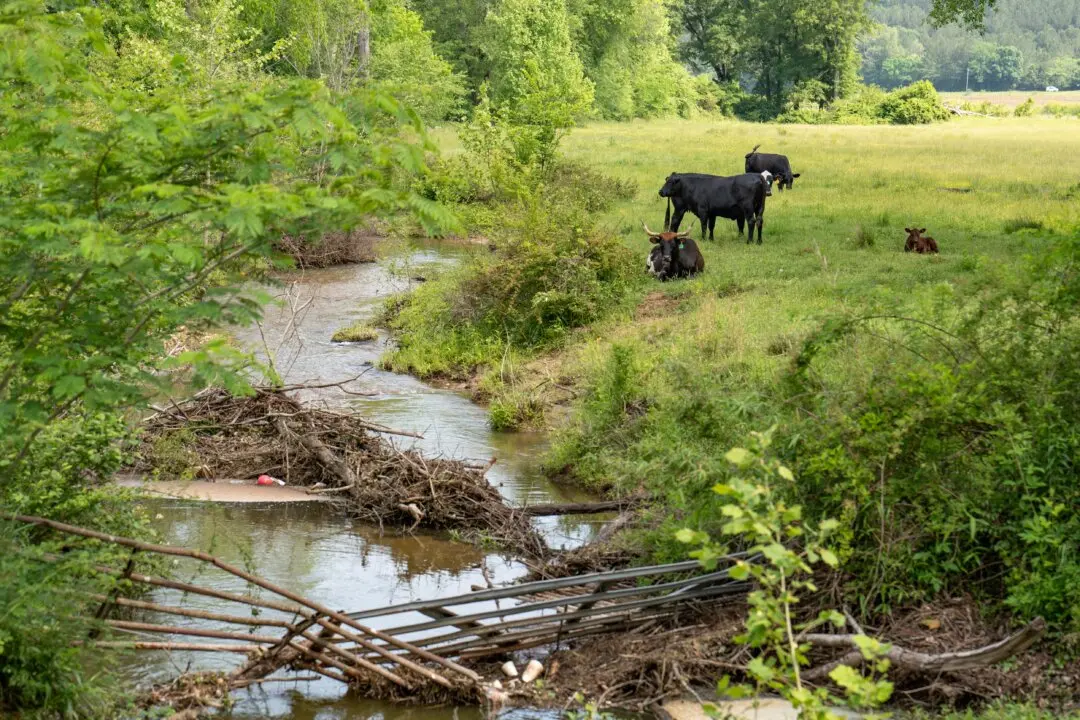
Last year one of my neighbors’ bulls got onto another neighbor’s property and impregnated several cows. That did not entitle the owner of the bull to any of the calves born to the neighboring rancher. They belonged to the owner of the mother cows.
Cows belonging to that same neighbor, along with another neighbor’s cows, have broken into one of my greenhouses. Both neighbors were responsible for the damage.
I own property in Hawaii where vines have grown onto neighboring land. That is my responsibility to remove.
Trees have fallen from my property onto neighbors’ fences in Hawaii, California, and Texas. Every single time, it was my responsibility to repair the damage.
I own Great Pyrenees, and anyone who owns them knows the hardest part is how much they like to roam. Here in Texas, people do not want strange dogs wandering near their livestock. It is my responsibility to keep my dogs contained.
So many of us instinctively understand this principle in everyday life: if something from your property crosses onto someone else’s property and causes damage, contamination, or disruption, responsibility generally falls on the person introducing the risk.
Yet somehow agriculture increasingly works in reverse.
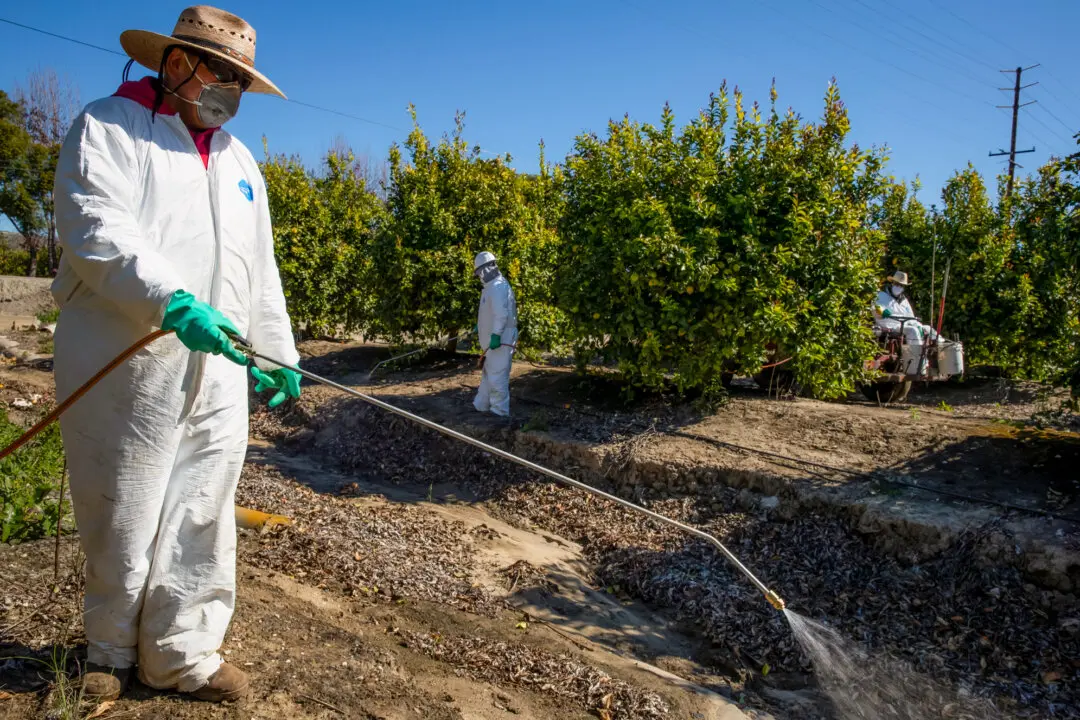
Organic farmers lose acreage to buffer zones. Farmers preserving heirloom genetics absorb the contamination risk. The burden often falls on the farmer trying to remain uncontaminated rather than on the system introducing the drifting genetics or chemicals into the ecosystem.
That feels fundamentally backwards to a lot of people across the political spectrum.
The papaya situation in Hawaii also felt different to a lot of people because it came out of university and public research trying to save local papaya farms after ringspot virus nearly wiped them out. That feels different than highly corporate GMO systems tied to aggressive patent enforcement and annual input dependency.
But even Hawaii became a flashpoint over contamination concerns and coexistence with neighboring farms.
And driving through Hawaii, you see exactly why this conversation becomes so complicated. Papayas grow wild everywhere. Birds spread seeds. Fruit falls and regrows. Pollen drifts through the jungle without regard for fences, contracts, or patents.
Plants are not software. They are living organisms interacting with open ecosystems.
I honestly do not think most people are scared of science. I think they are asking a much older and more human question: What does ownership mean once life starts reproducing on its own?
Because once genetically modified or gene-edited organisms begin spreading through living ecosystems, the lines between stewardship, ownership, contamination, and control become very difficult to define.
But I think the real question underneath all of this is simple.
Can human beings truly own life itself?
Or are we simply temporary stewards of seeds, land, animals, and genetics that ultimately belong to God and are meant to be passed from one generation to the next?