



It was a bold claim.
To those who might write it off as overstatement or biased, I’d say: not so fast. As the director of a nongovernmental organization that’s tracked the NY Times’ reporting on key issues related to my organization’s work for more than 25 years, I can say with all due gravitas that the president is right.
The NY Times is culpable for a pattern of coverage that has undoubtedly exacerbated human suffering, cost numerous lives, and weakened America’s vigilance against the encroaching threats posed by the Chinese Communist Party (CCP).
Rooted in ancient Buddhist traditions, Falun Gong includes meditation, gentle exercises, and moral teachings that espouse being genuine, compassionate, and resilient. These teachings resonated profoundly in 1990s China, drawing an estimated 70 million to 100 million adherents, according to official government figures at the time. The practice even received accolades from Chinese authorities, including awards for its founder, Mr. Li Hongzhi, for promoting health and ethical living.
In 1999, alarmed by Falun Gong’s independence and massive size, CCP leader Jiang Zemin launched a nationwide eradication campaign that continues today and involves mass detentions affecting millions, rampant torture, deaths by torture, and what some experts have termed a “cold genocide” through forced organ harvesting—killing tens of thousands annually to fuel a lucrative transplant industry.
The NY Times’ coverage— or lack thereof—of both the group and the CCP’s atrocities reveals not mere oversight but seemingly deliberate distortion that serves agendas far removed from the public good.
We’re talking about weaponized journalism; media power harnessed not to inform or protect but to amplify Beijing’s propaganda, which undermines our democratic resilience.
Ominous Beginnings and a Deafening Silence
The NY Times’ pattern began early.In 2001, amid a persecution campaign in which Falun Gong practitioners were rounded up en masse and subjected to brainwashing in extralegal “transformation” centers, NY Times publisher Arthur Sulzberger Jr. met then-CCP leader Jiang Zemin in Beijing.
Shortly after, nytimes.com was unblocked in China (temporarily), paving the way for a Chinese-language edition that today is the most popular such Western media site worldwide.
Coincidence? Perhaps, but the NY Times’ coverage of the CCP’s mistreatment of Falun Gong adherents plummeted discernibly after the meeting with CCP brass. Even as Amnesty International, Freedom House, and the U.S. State Department documented escalating horrors, NY Times reporting on that news was virtually nonexistent.
Contrast this with the newspaper’s peers. The Washington Post and The Wall Street Journal pursued on-the-ground investigations into the topic. The latter even earned a 2001 Pulitzer for exposing the CCP’s arbitrary detention, torture, and killing of Falun Gong practitioners.
The NY Times, meanwhile, opted for silence, which was exactly what Beijing wanted and was pressuring news organizations and diplomats worldwide to do.
According to the report, from 1999 to 2002, only two of 58 articles about Falun Gong featured original investigation; most stemmed from statements by China’s regime, in fact, and routinely adopted Beijing’s vilifying language.
Rarely did the NY Times allow readers a glimpse of who the victim was. In NY Times reporting from 1999 to 2023, Falun Gong’s key teachings were mentioned in just five of 159 articles. In their place, readers got defamatory soundbites from Beijing officials.
The NY Times’ lackluster coverage had the effect of bolstering false CCP narratives and allowed them to fester unchallenged in the West. By ignoring the suppression of 100 million people, the NY Times failed to alert Americans to the depravity of the regime, including the literal torturing to death of innocent grandmothers who tried to gather to meditate, and its penchant for ideological warfare—a threat now extending to U.S. soil via espionage, influence operations, and disinformation.
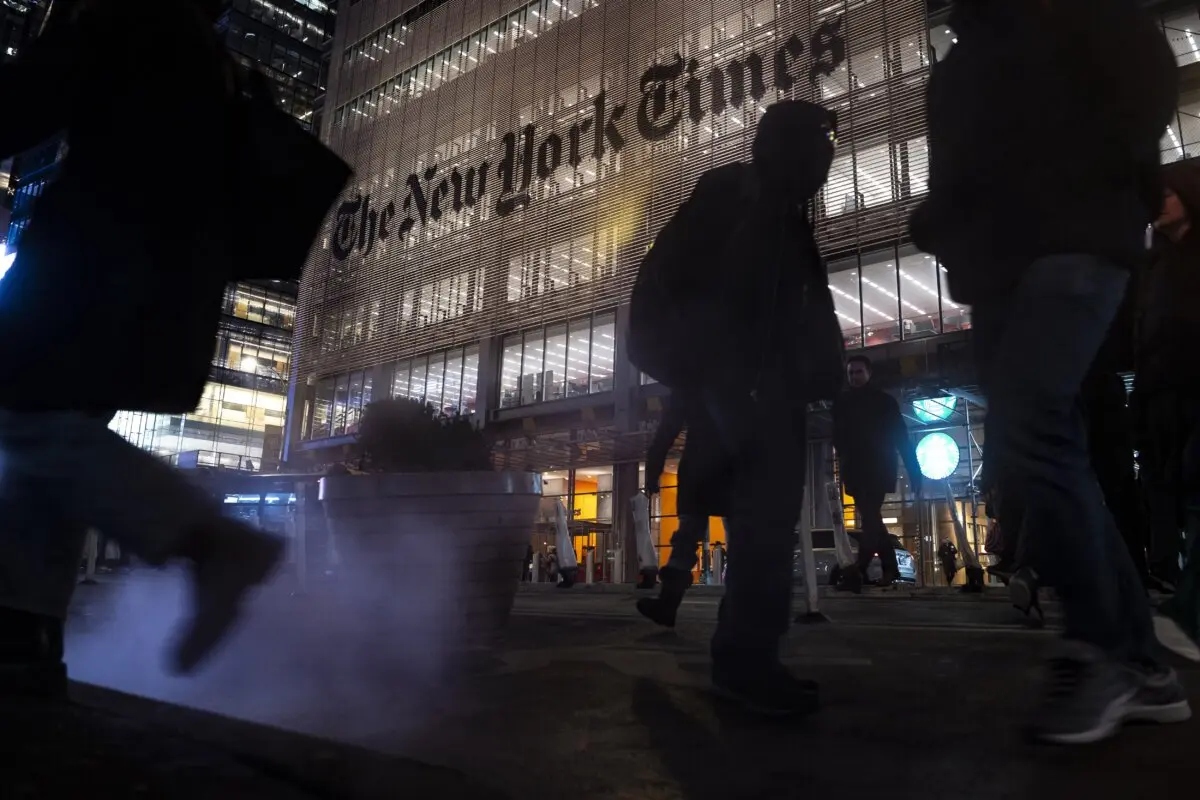
Following Beijing to Rewrite History
When the NY Times did report on Falun Gong, it often echoed CCP falsehoods.In early 1999, the NY Times cited official estimates of 70 million to 100 million practitioners. After the July 1999 crackdown, Beijing slashed this to 2 million to marginalize the group. Without explanation, the NY Times adopted the revision, ignoring its own prior reporting. Subsequent articles perpetuated the lie, erasing Falun Gong’s ubiquity across China’s heartland.
A Stark Discrepancy in Coverage
The NY Times’ failings become clearer when its reporting on the persecution of Falun Gong is compared to coverage of other persecuted groups in China.An example would be the plight of the Uyghurs, Tibetans, and residents of Hong Kong. The total combined population of all three groups is less than half of Falun Gong’s 100 million adherents. Falun Gong adherents, it should be added, are also found throughout China geographically and at every level of Chinese society.
Yet from 2009 to 2023, while the NY Times published 327 articles on Uyghur persecution and 210 on Tibetans, it published only 17 on Falun Gong. Its opinion pieces echo this bias: 27 for Uyghurs, 16 for Tibetans, and zero for Falun Gong.
These numbers show that the NY Times can track key persecuted groups in China and shine significant light on their plight. However, a clear exception exists with Falun Gong, raising questions about editorial priorities, directives, or biases.
The Forced Organ Harvesting Debacle
Nowhere are the NY Times’ failings more evident than in its dismissal of forced organ harvesting in China.Evidence for the horrific practice has been growing since the mid-2000s and includes accounts from whistleblowers, incriminating statistics, and analyses showing that prisoners of conscience—primarily Falun Gong practitioners—are blood-typed and executed on demand.
More than a dozen of the world’s foremost experts in organ transplantation abuses have documented these crimes in critically acclaimed books and authoritative publications such as the American Journal of Transplantation. So the phenomenon is well-known.
But the NY Times’ coverage—or lack thereof, once again—would lead readers to believe otherwise.
Consider the NY Times’ silence on the matter in 2019, the year a China Tribunal took place in England, chaired by Sir Geoffrey Nice QC and comprising legal, medical, and historical experts. The body concluded that forced organ harvesting was taking place in China on a “significant scale” and that Falun Gong practitioners were the primary victims. An estimated 60,000–90,000 such transplants were determined to be happening annually, costing at least 30,000 people their lives each year.
In the wake of the overwhelming evidence, nations and states have acted: Belgium (2021), the UK (2022), and Canada (2023) enacted measures aimed at putting a stop to this macabre practice; U.S. states including Texas (2023), Utah (2023), Idaho (2024), Arkansas (2025), and Tennessee (2025) enacted similar measures. In May 2025, the U.S. House of Representatives passed both the Falun Gong Protection Act and the Stop Forced Organ Harvesting Act, mandating reporting and punishments for forced organ harvesting crimes.
Outlets including Reuters, The Guardian, and Forbes covered the China Tribunal’s findings. The NY Times did not.
Did the NY Times just miss the story amidst a busy news cycle, perhaps? The evidence points to something far worse. Former NY Times correspondent Didi Kirsten Tatlow has testified that her editors actively blocked her pursuit of organ harvesting leads, and even disparaged Falun Gong in their communications. The NY Times actively buried the story, in other words, dismissing Falun Gong adherents as unworthy victims.
In other instances, the NY Times has done worse than bless Beijing with the gift of silence.
In an August 16, 2024, piece, the NY Times quoted one individual, Nicholas Bequelin—affiliated with Yale’s Paul Tsai China Center—to cast doubt on the reality of forced organ harvesting. The NY Times failed to disclose that the Tsai Center was funded by a $30 million donation from Alibaba co-founder Joseph Tsai, whose company has deep CCP ties. The NY Times also ignored the abundance of evidence presented by more than a dozen true experts on the topic, including the work of David Matas, Ethan Gutmann, and Matthew Robertson.
Framing American Companies With CCP Narratives
The NY Times’ most recent chapter in this unfortunate history hits closer to home—in New York, to be precise.The past two years have seen a barrage of NY Times coverage demonizing an American company that’s long been in Beijing’s crosshairs.
That company is Shen Yun Performing Arts—a great American success story known for its beautiful artistry as well as its courage in standing up to China’s communist regime. The New York company was founded by Chinese dissidents who practice Falun Gong, and who aren’t afraid to shine a light on Beijing’s worst abuses—including forced organ harvesting.
For its tenacity, the arts company has been subject to relentless efforts by Beijing to interfere with its operations worldwide—including heavy-handed diplomatic pressure on theaters around the world, coordinated sabotage of their tour buses, as well as graphic death and bomb threats. Yet the company has carried on, undaunted.
One would think this worthy of respect, if not sympathy, by the NY Times alongside the plight of China’s Uyghurs and Tibetans or its courageous democracy activists—all rightly supported and sympathized with by the paper.
But the NY Times could see no good in Shen Yun, and assigned some of its top reporters to spend more than a year digging for dirt on the New York company.
The NY Times relied on a handful of disgruntled former performers and portrayed the company in the worst possible light imaginable.
Nor did the NY Times tell readers that it was ignoring counterevidence to the claims, such as physician testimonials, medical records, and a petition from hundreds of Shen Yun performers who decried coverage like the NY Times’ as “gross distortions and false narratives about our work, our faith, and our way of life.”
The NY Times sensationalistic stories about Shen Yun seemed bent on scandalizing a community already burdened with persecution from Beijing.
The Broader Implications and a Way Forward
Trump’s claims about the NY Times gain a great deal of credibility in light of all this. The paper’s coverage of the Falun Gong, forced organ harvesting, and Shen Yun paints a consistent picture of self-censorship and flawed reporting at best and disinformation at worst.Disinformation, it should be added, in service of the world’s most powerful dictatorship and America’s sworn enemy. It does a disservice to the cause of American democracy, and to the virtues of a free press, while even going so far as to inflict financial and reputational damage on an American company and a beleaguered group that’s ruthlessly persecuted back in its homeland.
All of this should be cause for concern for any American, wherever they lie on the political spectrum.
Such weaponized journalism threatens national security by blinding us to authoritarian tactics and eroding our defenses. A free press remains essential, but we need the following checks to counter this threat.
First, mandate transparency: Require news outlets to disclose foreign ties, funding, or meetings with adversarial regimes such as Beijing, much like the Foreign Agents Registration Act (FARA) for lobbyists. The NY Times’ post-2001 silence after Sulzberger’s meeting with Jiang warrants scrutiny, as do ties between existing NY Times staff and communist China, especially for those whose work targets Beijing’s critics here in the United States. Legislation could compel such revelations.
Second, incentivize accountability through liability reform: Allow lawsuits for demonstrable falsehoods in human rights-related reporting, when the damages are more readily quantifiable in human suffering and lives lost as opposed to dollars and cents.
Third, foster competition: Support antitrust measures against media monopolies and agenda-setting outlets.
These measures would preserve important freedoms while curbing potential abuses, and help to ensure that journalism serves the people and contributes to the strength of our Republic.
Confronting the NY Times’ failures is an important step in the right direction.


