On our ranch in Texas, the animals live natural, good lives.
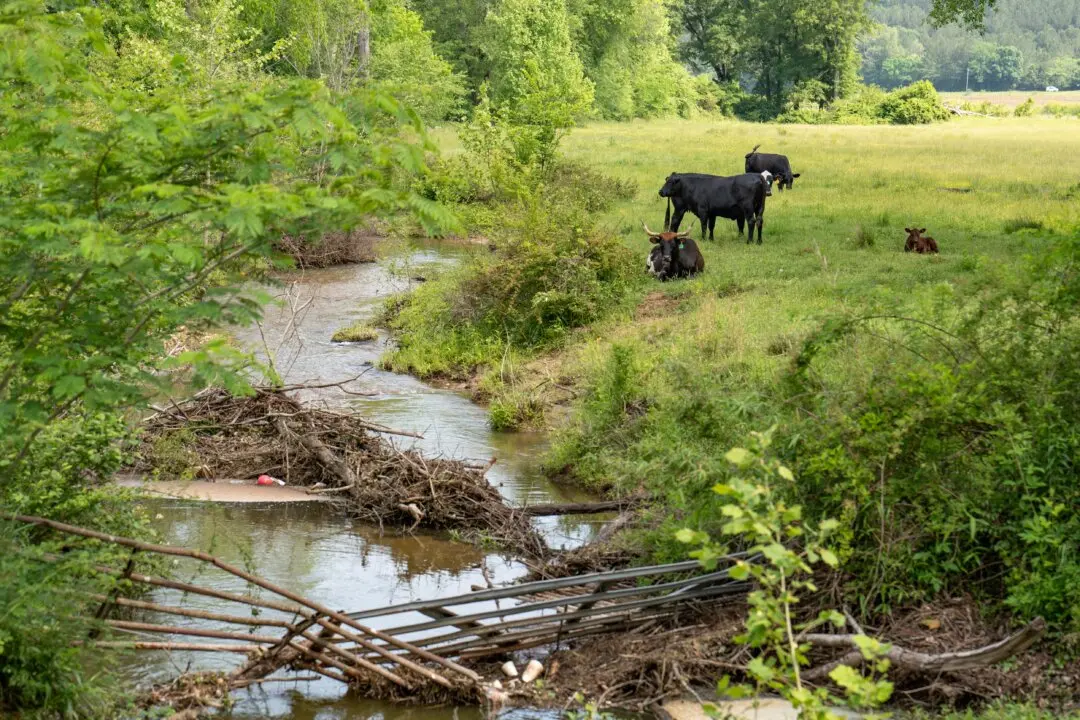
Our cows graze in an open pasture. Our pigs root and wallow. Our chickens scratch in the dirt and dust bathe in the sun. Birth is not forced or mechanized. It is seasonal and visible. Calves hit the ground in the early morning light. Piglets squeal and scramble toward their mothers. Hens settle into nests.
Life strains forward.
Even outside of ranches like mine, in systems I strongly disagree with, biology still pushes toward continuation. Cows in consolidated feedlots still cycle and conceive. Sows confined to small gestation crates still carry litters. Chickens in tight cages still lay an egg nearly every day. The conditions may be far from ideal, but reproduction persists.
In mammals, fertility typically only shuts down under extreme stress, starvation, disease, or severe toxicity. When it does stop, it signals that something is deeply wrong in the environment.

That is why I cannot ignore what is happening in human society.
Across much of the developed world, birth rates have fallen below replacement level. Testosterone levels are declining. Sperm counts have dropped dramatically over the past half-century. Fertility clinics are full.
In 2023, more than 1 million abortions were reported in the United States, according to the Guttmacher Institute. Each year, roughly half a million vasectomies are performed. These are not fringe numbers. They reflect decisions being made at scale about whether the next generation will exist.
Beyond biological challenges, many men and women are simply opting out of parenthood altogether.
That is historically unusual.
I have felt this shift personally. When I announced that I was pregnant with my third child, strangers on social media felt entitled to express their disappointment. They reminded me that I cared about the environment. They asked how I could call myself environmentally conscious and have more than two children. When I shared that I was expecting my fourth, a family member told me that I needed another child like I needed a hole in the head.
I have watched people online declare that if someone begins talking about her children, her pregnancy, or her married life, that is an immediate unfollow.
What is so threatening about celebrating life?
Some argue that having children should not be your greatest accomplishment. They say that it is ridiculous, that it is not an accomplishment at all. If you could go back and listen to me 20 years ago, I might have said something similar. I measured success in ambition, visibility, and achievement.
But that perspective often comes from people who have not carried a child, have not labored through birth, have not surrendered sleep, ego, comfort, and personal plans for the sake of a family. There is a difference between dismissing something and having lived it.
I do not believe that having children is my greatest accomplishment in the same way that building a business was. Starting over from nothing, working 18-hour days, following the Lord when it did not align with my plans, pushing through seasons that felt like life and death, that required willpower. That was one kind of accomplishment.
Motherhood is another kind entirely.
It is not an accomplishment in the sense of conquest. It is an accomplishment in the sense of surrender. It is a sacrifice. It is being reshaped by love. It is participating in the miracle of bringing a soul into the world. There is nothing casual about that.
I am 47 years old, and every month when I get my cycle, there is still a small flicker of disappointment. There is nothing more magical than feeling your body create life.
Yet we now live in a culture that treats that desire as optional at best and embarrassing at worst.
There is a popular social media personality known as Zoomie Komi, often called the girl with the list. She has built a following of millions of people by speaking openly about avoiding pregnancy. To be fair to her, she says she is not against mothers. She says she is against the expectation that women must become mothers and the circumstances in which some women feel pressured into it.
She is likable. She is funny. She is articulate. I started watching her content while researching this piece and lost 20 minutes of my life without realizing it. She is compelling.
And if I am honest, there is a younger version of me in her: the Los Angeles version, successful, confident, slightly smug, and certain that I understood things I had not yet lived.
I do not agree with her conclusions. But I understand the appeal.
An entire brand can now be built around resisting pregnancy. Around framing motherhood as something to escape. That alone tells us something about the cultural moment we are in.
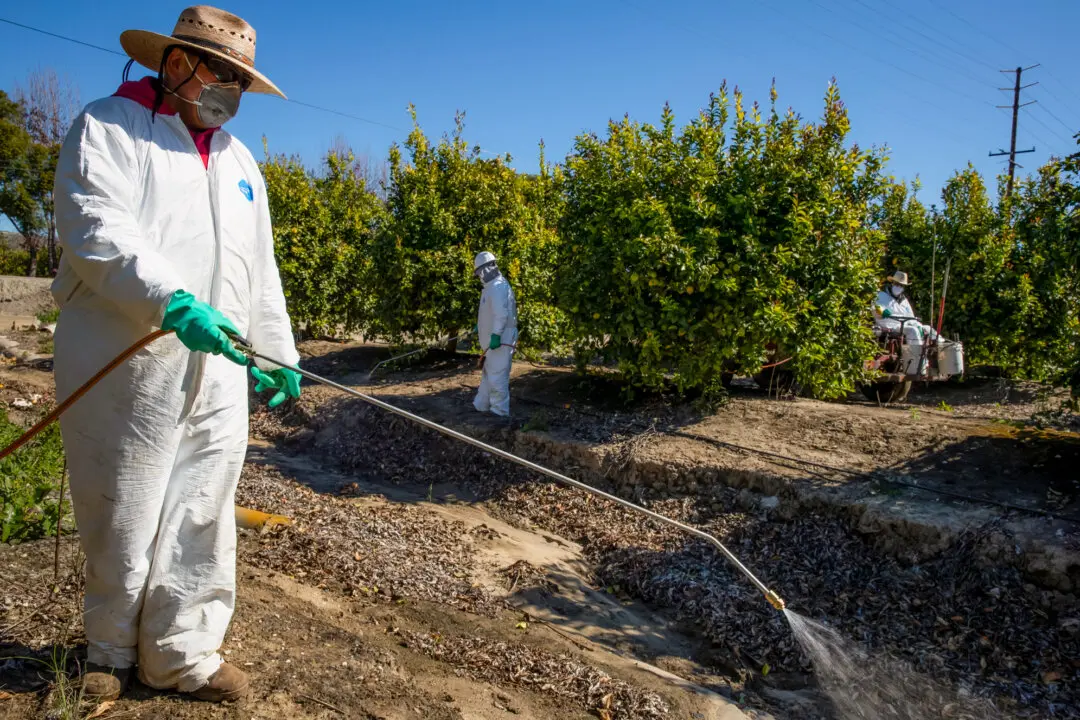
Part of this story is biological. We are awash in endocrine-disrupting chemicals. Plastics, pesticides, ultra-processed foods, chronic stress, sleep disruption, and metabolic dysfunction all affect hormones. Rising rates of polycystic ovary syndrome, thyroid disease, endometriosis, obesity, and low testosterone make conception more difficult for many couples. Some desperately want children and cannot have them. That reality deserves compassion and serious attention.
But there is another layer: meaning.
Humans do not reproduce on instinct alone. We reproduce within narratives. If a society tells its young people repeatedly that human beings are a burden, that children are carbon emitters, that motherhood derails ambition, that fatherhood is optional, and that the future is bleak, those messages take root.
Environmental discourse has often framed humanity itself as the problem. The most responsible choice, some argue, is to have fewer or no children. Young women are encouraged to prioritize career first and fertility later, if at all. Young men are told that traditional provider roles are outdated. Housing costs soar. Child care is expensive. Communities fragment.
When people do not feel economically secure, socially supported, or hopeful about the future, they hesitate to bring children into it.
On the ranch, life operates in cycles. Birth, growth, death, renewal. Calves stand within hours. Piglets jostle for milk. Chicks break through shells and begin scratching for food. The drive toward continuation is woven into creation itself.
If fertility declines in a herd, a farmer investigates immediately: Is there a mineral deficiency, toxin exposure, chronic stress, or poor nutrition? Something in the system is off.
When fertility declines across an entire culture, biologically and psychologically, we should be just as attentive.
Are we disrupting our hormones? Yes. Are we economically straining young families? Often. But have we also absorbed a story about ourselves that makes continuation feel irresponsible?
Every one of us exists because thousands of people before us chose life. Through war, famine, uncertainty, and hardship, they believed in a future enough to create one. We are statistical miracles. Yet for the first time in many modern societies, a growing number of people are saying that the line stops with me.
In nature, reproduction slows only when survival is threatened. In humans, it can also slow when hope is.
When reproduction falters, it is a warning.
We would be wise to listen.