Commentary
Since the election of President Donald Trump, Europeans have been vocal in their criticism of nearly every U.S. policy issue, often professing that “transatlantic relations are over” and “this government does not care much about the fate of Europe.”
This negative sentiment, echoed by politicians and amplified by a biased media landscape, has led to a rapid decline in European trust toward their longest-standing ally.
Amid their frustration over differences in perspective, Europeans should pause and consider the underlying goals of current U.S. foreign and defense policy, rather than resorting to cheap insults.
While there has indeed been a seismic shift in transatlantic relations, this change should be regarded as positive. The Trump administration believes that the United States’ allies must strengthen themselves, as peace can be achieved only through strength.
The US Has Been Carrying the Weight
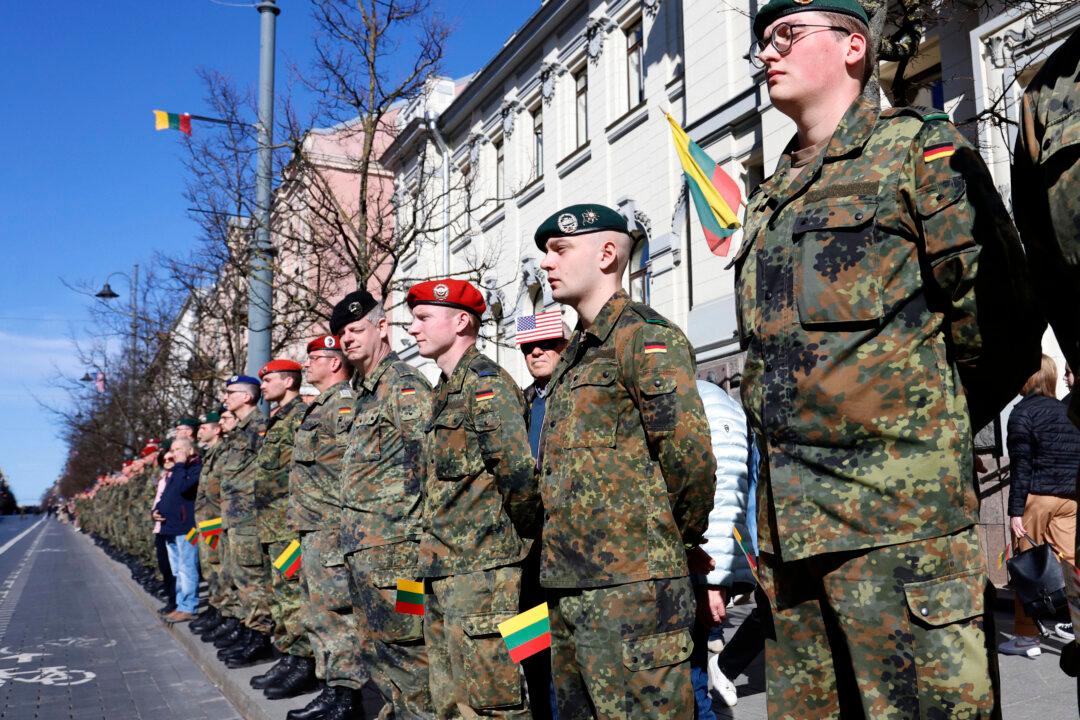
Since World War II, the United States has consistently maintained hundreds of thousands of soldiers in Europe to deter first Soviet, then Russian, aggression. They helped rebuild Western European economies through the Marshall Plan and provided the nuclear umbrella for the continent. Despite these sacrifices, concerns about burden-sharing are unfortunately not a new issue. Even during the early years of the NATO alliance, when significant threats loomed over the European continent, the United States spent disproportionately more on defense.After the collapse of the Soviet Union, many European countries reduced their defense spending, relying on the “peace dividend” and assuming that U.S. protection would continue. In 2006, NATO defense ministers formally agreed that members should aim to spend at least 2 percent of their gross domestic product on defense to ensure military readiness. However, compliance remained low, and the same impulse continued through the Obama years.

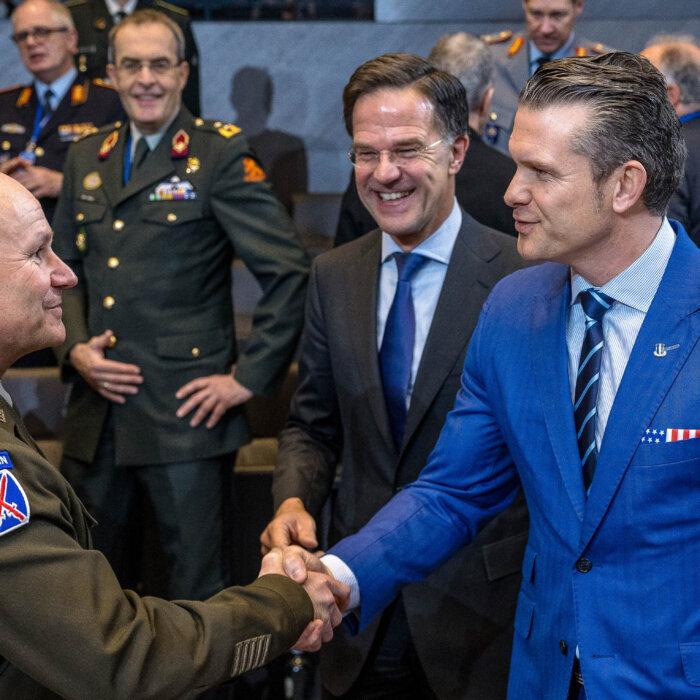
During the first Trump administration, NATO members finally started taking the warnings more seriously, albeit reluctantly at first. Today, even NATO Secretary General Mark Rutte acknowledges the impact, stating, “President Trump, thanks to him, we pushed up the defense spending.”
The US Can’t Be as Generous as It Was
Europeans take pride in their welfare states, but they should acknowledge that these were subsidized by the U.S. security guarantee, which reduced Europe’s defense spending concerns and enabled investment in other areas. Unfortunately, times are changing, and given the geopolitical threat posed by the rise of Communist China, the United States can no longer be as generous as it once was. This reality, underscored by Secretary of State Marco Rubio at the foreign ministers conference in Brussels earlier this month, means that Europe must step up its efforts.The US Won’t Leave Europe High and Dry
Shifting priorities doesn’t mean that the United States is leaving Europeans defenseless. Rubio has clearly acknowledged the Trump administration’s commitment to NATO, despite anxious comments to the contrary.The current geopolitical moment necessitates that the United States focus its efforts on the rise of China. For this vision to succeed, European NATO members will need to assume responsibility for the bulk of conventional deterrence in Europe. This should not be seen as a burden but as a reality of life and an opportunity for greater operational autonomy for European NATO members.
American conservatives do not want a Europe that is fully dependent on the United States. Instead, they are seeking to build up a strong and prosperous Europe that can project power in its own neighborhood and act as a force for stability with minimal U.S. assistance.
Europeans should welcome this and rise to the occasion.
Reprinted by permission from The Daily Signal, a publication of The Heritage Foundation.
Views expressed in this article are opinions of the author and do not necessarily reflect the views of The Epoch Times.