



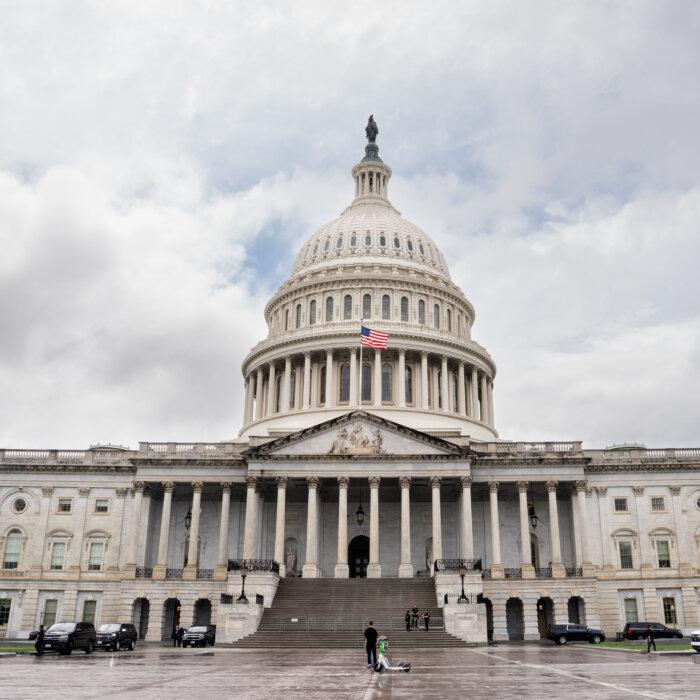
The U.S. House of Representatives has taken a clear, bipartisan stand against one of the most disturbing human rights crimes of our time: state-sanctioned forced organ harvesting in China.
Delay is not neutrality; it is acquiescence. The Senate must act.
Multiple independent investigations have concluded that Falun Gong practitioners have become the primary victims of China’s forced organ harvesting system. The reasons are chillingly pragmatic: They are nonviolent, systematically demonized, and held in large numbers outside the protection of the law. In other words, they are defenseless. This is not persecution gone awry; it is persecution engineered for exploitation.

Forced organ harvesting is not an abstract allegation, nor a matter of political disagreement. It is a crime against humanity. Prisoners of conscience are subjected to medical testing not to preserve life, but to prepare for death. They are killed on demand so their hearts, livers, kidneys, and corneas can be sold. This practice annihilates every principle that underpins medical ethics, human dignity, and the rule of law. A system that turns healers into executioners and hospitals into killing grounds is not merely corrupt—it is morally inverted.
Legislatures around the world have taken notice. The U.S. Congress has held hearings and passed resolutions condemning forced organ harvesting in China. The European Parliament has done the same. These actions reflect a growing international consensus: This crime is real, ongoing, and intolerable. The Falun Gong Protection Act advances that consensus by moving beyond words to accountability—imposing sanctions on those responsible and signaling that impunity will not be endless.
History is unambiguous in its verdict on such moments. Atrocities do not persist because they are hidden; they persist because they are ignored. The most enduring shame is not borne by the perpetrators alone, but by those who knew and chose not to act. Silence, when human lives are being systematically destroyed, is not caution—it is a moral failure.
The Falun Gong Protection Act is not about ideology or geopolitics. It is about drawing a line that must never be crossed: Human beings must never be reduced to a source of spare parts for the state. Forced organ harvesting is an assault on the sanctity of life itself and a direct challenge to the ethical foundations of modern medicine and international order.
The U.S. Senate now faces a test of moral leadership. Passing this act promptly would send a clear message—to victims, to perpetrators, and to the world—that the United States will not avert its eyes from crimes against humanity, regardless of political pressure or economic inconvenience.
Silence enables atrocity. Action affirms humanity. The Senate should pass the Falun Gong Protection Act without delay.
