This copy is for your personal, non-commercial use only. Distribution and use of this material are governed by our Subscriber Agreement and by copyright law. For non-personal use or to order multiple copies, please contact The Epoch Times Reprints.
Soleil Hoefer competes for Prosser High School in Washington state, where she was named Female Track & Field Athlete of the Year three times. Courtesy of Jessica Hoefer
Our culture has a bad relationship with spoilers. When the newest and biggest movie hits theaters, no one wants to be told the ending before getting the chance to watch it unfold.
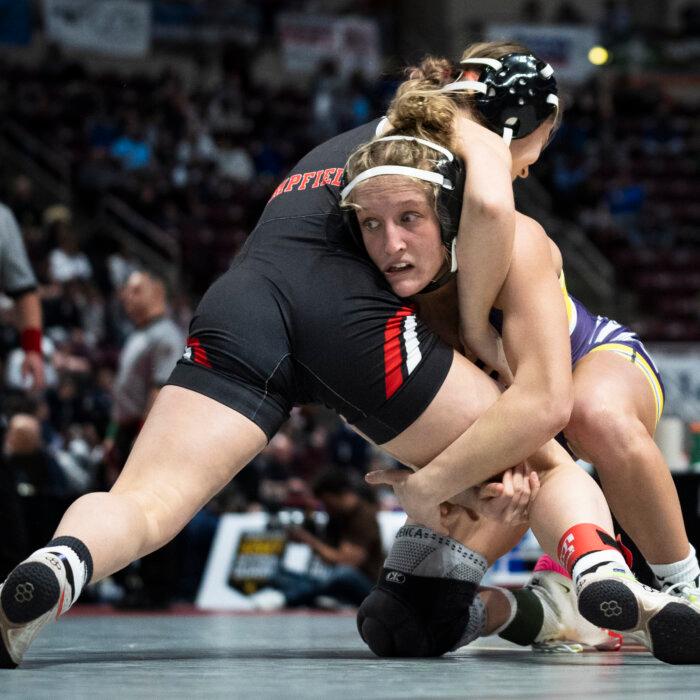
Spoilers can ruin athletic events, too. Knowing the outcome of a game or race takes away the thrill and drama of watching a live match. Even worse is knowing the ending before it even starts. That’s what I had to face as a female high school athlete in the state of Washington, and it’s what girls in other states have faced in a pair of cases to be argued—one by West Virginia Attorney General J.B. McCuskey and another by Idaho Attorney General Raúl Labrador—on Jan. 13 at the U.S. Supreme Court.
My state allows male students who identify as female to compete in high school women’s sports, resulting in skewed results and lost opportunities for actual girls. This became personal for me when a male athlete who had previously competed in the high school boys category began dominating the girls 400-meter race, one of my track events. This athlete went on to win the state championship in the girls 400-meter race two years in a row, including this past May.
I know the hard work it takes to become a standout athlete. I was named Female Track & Field Athlete of the Year three years in a row by my high school’s coaching staff. I’ve put in countless hours and made a lot of sacrifices to become the athlete I am today. But all of that feels like a waste of time when girls sports are opened to male athletes who possess natural advantages because my state’s leaders prefer an agenda over us girls.
Having graduated high school, I now compete at Walla Walla Community College on a soccer scholarship, an opportunity I get because of Title IX. I would never have received a college soccer scholarship if a school had to choose between me and a male athlete. I worry for the girls, including my sister, who will play competitive sports after me. Will they have the same opportunities I had, or will they be displaced and lose opportunities for recognition and scholarship because they are forced to try to vie against male athletes with biological advantages?
I know that I’m not the only girl who has these concerns. In fact, one of these women is part of one of the cases pending before the U.S. Supreme Court. When the American Civil Liberties Union filed a lawsuit against West Virginia’s law that protects women’s sports, Lainey Armistead—then the team captain for the West Virginia State University women’s soccer team—took action to make sure that her own voice was heard in the lawsuit. Because of Armistead’s courage, the outcome of her case could end up protecting opportunities for girls across the country.
The grown-ups in the room have to be responsible and look at the evidence, both from the scientific standpoint and the athletic results staring them right in the face. And I’m thankful for the people who have taken a stand for women and girls to compete fairly.
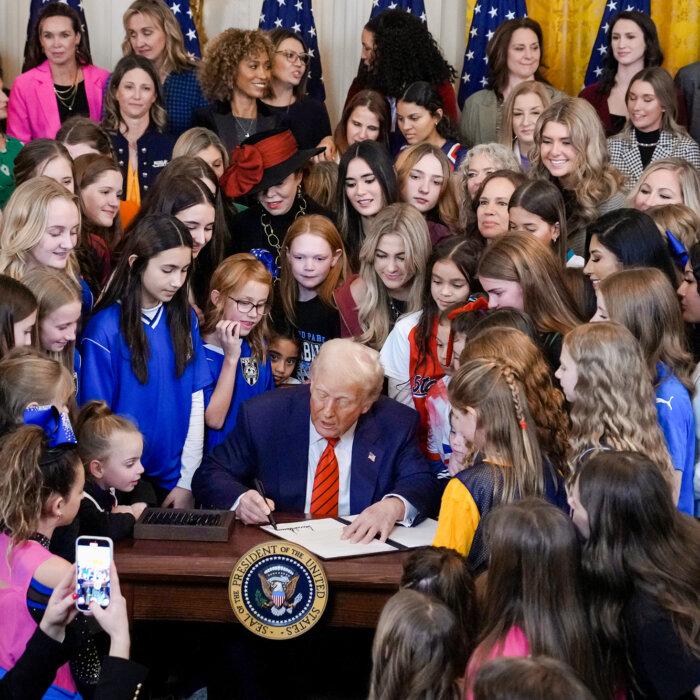
In the southern part of my state, the Kennewick School Board voted 4–0 to file a complaint with the U.S. Department of Education about the male athlete dominating girls track and field. President Donald Trump also signed an executive order saying that Title IX prohibits biological males from competing in women’s sports. Attorneys with Alliance Defending Freedom, the same group that represents Armistead, helped me file my own complaint about Washington state’s policies to the Department of Education.
For now, the best we can do is keep pushing forward to victory for women and girls. We need the win now, as do the young girls who will take up the starting blocks after we finish our own academics careers. We hope that the Supreme Court will do the right thing and uphold the state laws in Idaho and West Virginia that protect women’s sports, so that other states that have similar laws will also be free to keep women’s sports for women.
Women’s sports don’t have to be spoiled by unfair advantages. When it comes to preserving Title IX, I hope that we’re all on the same team.
Soleil Hoefer is a freshman at Walla Walla Community College in Washington, where she plays soccer. She is a graduate of Prosser High School, where she competed in track and soccer.