This is not primarily a cost-saving exercise. It is a deliberate strategic break from a model of global governance that increasingly perpetuates problems rather than resolving them, and that relies on the continuous expansion of mandates, budgets, and crises to justify its own existence.
What the United States Is Actually Saving
Using the most recent consolidated U.S. government contribution tables, a conservative reading shows that the United States was spending at least $90 million per year on a subset of the 66 organizations now being exited. That figure is a lower bound, based only on clearly identifiable fiscal year 2023 obligations tied to a handful of the largest recipients.Among the biggest recipients of recent U.S. funding on the withdrawal list were the United Nations Population Fund, the U.N. Framework Convention on Climate Change, U.N. Women, and U.N.-Habitat. Together, just these four entities account for the bulk of the identifiable spending in the conservative estimate above, with the population fund alone receiving tens of millions of dollars annually from the United States.
Climate-related bodies illustrate particularly clearly what Washington is stepping away from. U.S. funding for the UNFCCC secretariat and associated climate processes has typically run into the low tens of millions of dollars annually, largely through voluntary contributions. These funds do not finance emissions reductions or energy innovation directly; they support the administrative machinery of global climate governance—conferences, reporting frameworks, expert panels, working groups, and compliance processes that expand year after year regardless of measurable climate outcomes.

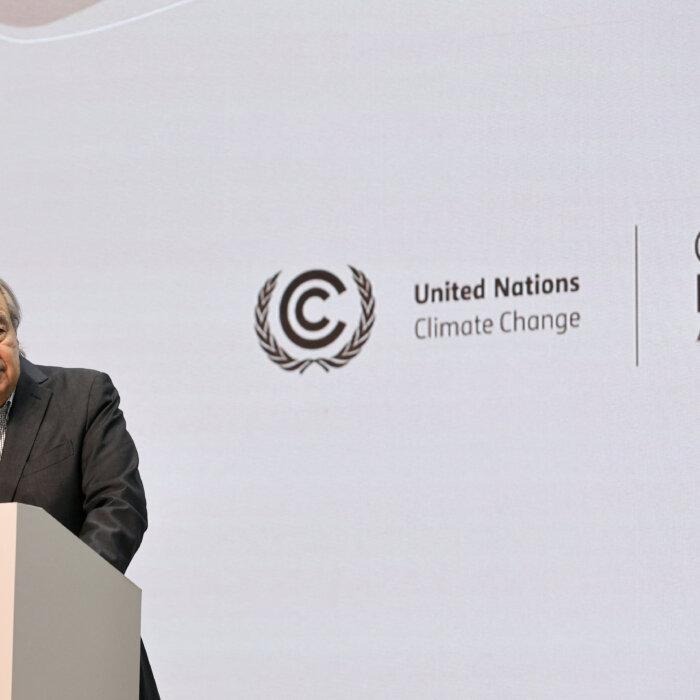
This design is not accidental. Climate institutions are structured around process rather than resolution. There is no condition under which the UNFCCC can declare success and wind itself down. Progress justifies more funding; failure justifies even more.
The conservative $90 million estimate excludes dozens of smaller agencies among the 66, indirect funding routed through multi-donor trust funds, and future escalations embedded in open-ended commitments. In other words, $90 million is not the headline; it is the floor.
Why These Organizations Were Chosen
The administration did not withdraw randomly. The organizations selected for exit share a common institutional pathology. Bodies created to solve specific, technical problems have gradually evolved into permanent advocacy platforms. Climate secretariats, population agencies, and norm-setting bodies rarely declare success because success would undermine their relevance and funding base.Funding models reinforce this dynamic by rewarding the identification of ever-expanding risks rather than measurable improvement. In climate policy, each missed target becomes justification for additional conferences, additional frameworks, and additional global coordination. Over time, this has produced institutions with weak performance metrics but strong moral authority.
Critics of the withdrawals often reveal this logic unintentionally. Climate advocates quoted in The Guardian warned that leaving U.N. climate bodies would “undermine global cooperation” and abandon “decades of climate leadership.” That concern is revealing. It treats participation itself as the achievement, rather than emissions reductions, energy resilience, or adaptation outcomes.
Operational priorities within these institutions are increasingly shaped not by member states but by earmarked voluntary funding aligned with philanthropic and NGO agendas. The result is a growing detachment between these bodies and the national priorities of the governments that finance them.
The Strategic Signal Washington Is Sending
Trump’s move signals a return to an older, now unfashionable principle: Institutions should exist to solve problems, not to manage them indefinitely.Political critics have framed withdrawal itself as irresponsible. Rep. Gregory Meeks (D-N.Y.), for example, described a previous Trump exit from UNESCO as “reckless” and harmful to American interests. But that criticism rests on an assumption that Trump is deliberately challenging—that continued membership and funding automatically translate into influence or success.
By stepping away, the United States is reasserting sovereignty over policy priorities rather than outsourcing them to consensus-bound bodies. It is forcing a reckoning inside international organizations that have become dependent on U.S. funding while remaining resistant to U.S. scrutiny. It is also demonstrating that withdrawal is possible, breaking the assumption that once a country joins a global institution, exit is unthinkable.
Why This Matters Beyond the Dollar Figure
Critics argue that the United States risks losing influence. But influence that can be exercised only by writing ever-larger checks to institutions that do not change behavior or outcomes is not influence; it is subsidy.For decades, the operating assumption of global governance has been that problems must be managed centrally, indefinitely, and precautionarily. This model produces expanding bureaucracies, shrinking tolerance for empirical challenge, and a permanent politics of fear. Climate governance has become the clearest example of this logic, but it is far from the only one.
Stepping away disrupts that equilibrium.
What Comes Next
The question is not whether the United States can afford to leave these organizations. It is whether it can afford not to.A global climate, health, or development system that depends on the continuous escalation of crisis narratives is structurally incapable of declaring success. Trump’s decision confronts that reality directly.
The savings—tens or even hundreds of millions of dollars—are real. But the larger gain is conceptual: the restoration of the idea that institutions are tools, not moral authorities.
That, more than the budget line, is what has changed.